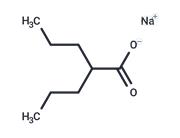
| Name | Valproic Acid |
| Description | Valproic Acid (2-Propylpentanoic Acid) is an HDAC inhibitor that suppresses HDAC1 activity and induces HDAC2 degradation, exhibiting oral bioavailability. Valproic Acid activates Notch1 signalling and inhibits the proliferation of small cell lung carcinoma cells, making it applicable for research into epilepsy and bipolar disorder. |
| In vitro | METHODS: Esophageal squamous cell carcinoma (ESCC) cell lines TE9, TE10, TE11, and TE14 were treated with Valproic Acid (0.01-5 mM) for 72 h, and cell viability was assayed using MTT Assay.
RESULTS: Valproic Acid inhibited the viability of all ESCC cells in a dose-dependent manner. The IC50 values of Valproic Acid ranged from 1.02-2.15 mM in each cell line. [1]
METHODS: Mouse teratoma cells, F9, and human cervical cancer cells, HeLa, were treated with Valproic Acid (0.25-5 mM) for 4-24 h. The expression levels of target proteins were detected by Western Blot.
RESULTS: Only trace amounts of acetylated histones were detected in untreated F9 or HeLa cells. Treatment with Valproic Acid at concentrations as low as 0.25 mM increased the amount of acetylated histone H4, and significant acetylation was found with 2 mM Valproic Acid. [2] |
| In vivo | METHODS: To study the effects on Machado Joseph disease (MJD), Valproic Acid (200 mg/kg) was administered intraperitoneally to the CMVMJD135 mouse model five times per week for twenty-five weeks.
RESULTS: Chronic Valproic Acid treatment had limited effects on motor deficits in these mice, observed primarily in the late stages of locomotor swimming, beam swimming, rotational bar and spontaneous motor activity tests, and did not alter ATXN3 inclusion body loads and astrocyte proliferation in affected brain regions. [3]
METHODS: To assay antitumor activity in vivo, Valproic Acid (500 mg/kg, 10% DMSO 25% w/v Kleptose HPB buffer) was administered by gavage to BALB/c nude mice harboring the human AML tumor, Kasumi-1, once daily for twelve days.
RESULTS: Valproic Acid inhibited tumor growth in mice transplanted with Kasumi-1 cells. At the end of the experiment, the incidence of IR in the Valproic Acid group was 57.25%. [4] |
| Storage | Pure form: -20°C for 3 years | In solvent: -80°C for 1 year
Shipping with blue ice/Shipping at ambient temperature. |
| Solubility Information | 5% DMSO+95% Saline : 5 mg/mL (34.67 mM), Solution.
DMSO : 100 mg/mL (693.43 mM), Sonication is recommended.
H2O : 1 mg/mL (6.93 mM), Sonication and heating are recommended.
|
| Keywords | Valproic Acid | SodiumChannel | Sodium Channel | small cell lung cancer | SCLC | proteasomal | Notch1 | Notch | Mitophagy | Mitochondrial Autophagy | migraine | Inhibitor | inhibit | Human immunodeficiency virus | HIVProtease | HIV Protease | HIV | Histone deacetylases | hepatic fat accumulation | headaches | HDACs | HDAC1 | HDAC | Gammasecretase | GABAReceptor | GABA Receptor | GABA | epilepsy | Endogenous Metabolite | degradation | bipolar disorder | Autophagy | Apoptosis | anticonvulsant | anticancer |
| Inhibitors Related | Sucrose | Aceglutamide | Hemin | Nicotinamide riboside malate | DL-Lysine | D(+)-Raffinose pentahydrate | Guanidine hydrochloride | Malic acid | Glycerol | Thymidine | Corn starch | Gluconate Calcium |
| Related Compound Libraries | Traditional Chinese Medicine Monomer Library | Pain-Related Compound Library | Membrane Protein-targeted Compound Library | Neuroprotective Compound Library | Inhibitor Library | Anti-Cancer Approved Drug Library | Natural Product Library for HTS | FDA-Approved Drug Library | Anti-Aging Compound Library | Anti-infective Natural Product Library | Bioactive Compounds Library Max | Anti-Cancer Active Compound Library |



 United States