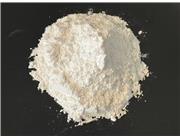
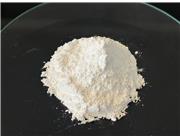
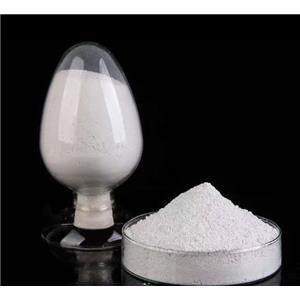
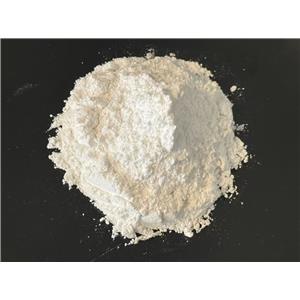
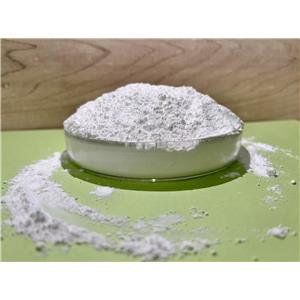
Product Introduction: White powder, high temperature resistant and non migratory phosphorus containing organic zinc salt flame retardant. It melts at high temperatures and is conducive to melting and blending with polymers. It will not block the nozzle holes and is particularly suitable for halogen-free flame retardant of PET fiber fabrics and nylon systems. It has good compatibility with the matrix resin and can also be used for PBT and PET injection molding. The processing temperature of 200 degrees is in a molten state, which is more suitable for dispersed processing. Product application: ZDP is synthesized using imported raw materials to produce permanent flame-retardant polyester products such as polyester chips, long fibers, short fibers, and films. The resulting flame-retardant polyester chips have good color, spinnability, fiber strength, and dyeing properties. Spinning processing can be carried out through any spinning system. Can completely replace Klein's OP950. Technical specifications: Appearance: White dispersible powder, moisture and low volatile matter/% (w/w)<0.5 bulk density/kg/m3, decomposition temperature (℃) 1% weight loss>380. Effective substance content: 99 (%). Phosphorus content/% (w/w) 19.5-21.0. Zinc content/% (w/w) 20.5~22.0. Appearance: White dispersible powder, moisture and low volatile matter/% (w/w)<0.5 bulk density/kg/m3, decomposition temperature ('C) TGA 1% weight loss>380. Effective substance content: 99 (%). Phosphorus content/% (w/w) 19.5-21.0. Zinc content/% (w/w) 20.5~22.0. It is recommended to use it to make polyester fabrics have more stable flame retardant properties. You can first make 40% PET flame retardant masterbatch, and then add the masterbatch to PET. It is recommended to add 4% -6% flame retardant to achieve a fabric oxygen index of over 30%. Users should choose appropriate dyeing and finishing conditions to ensure that the final product achieves the best permanent flame retardant performance. Packaging and storage: 25KG/bag, sealed and stored, do not get damp.




 China
China