PuriActives® Crystal Retinal: The Next-Generation Vitamin A Solution
INCI Name: Cyclodextrin (and) Rubus Chamaemorus (Cloudberry) Seed Oil (and) Retinal
Core Positioning: A stabilized, high-efficacy retinoid that achieves single-step conversion via supramolecular protection technology.
Ⅰ. Retinoid Metabolic Advantage: High Efficiency, Direct Action
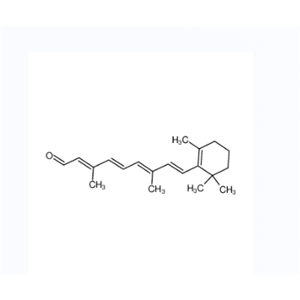
1. Retinaldehyde (RAL): The Ideal Bridge Between Efficacy and Tolerability
All topical retinoids must convert to Retinoic Acid (RA) within the skin to activate nuclear receptors and exert biological effects.
Retinaldehyde (RAL) is only one oxidation step away from the active form, granting it:
● Faster Speed: Claimed to have an 11x faster conversion rate than Retinol (which requires two steps), offering higher bioavailability potential.
● Dual Efficacy: Provides both anti-aging benefits and a direct bacteriostatic effect against C. acnes.
● Clinical Proof: Demonstrated non-inferior efficacy to 0.05% Retinoic Acid in reducing wrinkles.
Metabolic Pathway Comparison:
Component | Steps Required to Convert to Retinoic Acid (RA) | Activity |
Retinol | 2 Steps (must first convert to Retinal) | Precursor |
Retinaldehyde (RAL) | 1 Step (direct oxidation) | Active Intermediate |
Retinoic Acid (RA) | 0 Steps | Active Form |
Ⅱ. The Crystal Retinal Stabilization System
The superior efficacy of Retinaldehyde is accompanied by its inherent instability. PuriActives® utilizes a unique triple protection system to ensure active stability and controlled release.
1. Protection: The Cyclodextrin "Crystal Cage"
Retinaldehyde is physically sequestered within the hydrophobic cavity of Cyclodextrin, forming a molecular inclusion complex. This "Crystal Cage" barrier effectively guards against light, heat, and atmospheric oxidation, guaranteeing superior long-term potency.
2. Carrier: Cloudberry Lipid Shield
Rubus Chamaemorus (Cloudberry) Seed Oil serves as an active lipid carrier. Rich in essential fatty acids (Omega-3 and Omega-6), it ensures homogeneous dispersion and naturally supports skin barrier health.
3. Release: Controlled Mechanism on Skin
Upon contact with skin moisture and enzymes, the inclusion complex reversibly and gradually releases the RAL. This controlled availability ensures sustained efficacy while significantly minimizing the potential for retinoid irritation or "purging," thereby enhancing tolerability.
Ⅲ. Clinical Efficacy and Data Highlights
1. Photoaging and Anti-Wrinkle
● Key Finding: 0.05% RAL achieved non-inferior efficacy to 0.05% Retinoic Acid in reducing wrinkle depth and skin roughness over 18 weeks.
● Mechanism of Action: Stimulates Dermal Collagen Synthesis (Type I and III) and upregulates CRABP-II.
● Tolerability: The system leads to significantly lower rates of dermatitis (erythema/scaling) compared to direct Retinoic Acid application.
2. Acne and Blemish Control
● Key Finding: 0.1% RAL significantly reduced both non-inflammatory (comedones) and inflammatory lesion counts in subjects with mild-to-moderate acne.
● Mechanism of Action: Combines comedolytic action with a direct bacteriostatic effect against C. acnes.
● Product Positioning: An ideal solution for adult acne, simultaneously addressing blemishes and early signs of aging.
Ⅳ. Formulation Guidance and Regulatory Compliance (SCCS Reference)
Parameter | Value | Notes |
System Use Level (Raw Material) | 0.5% - 5.0% | Applicable for the formulation system. |
Pure RAL Yield (Maximum) | 0.5% | The maximum pure Retinaldehyde concentration provided by the raw material. |
Recommended Target (EU Face) | 0.05% - 0.1% Pure RAL | Aimed to comply with the EU SCCS safety threshold of 0.3% Retinol Equivalent (RE) for leave-on face products (SCCS/1639/21). |
Disclaimer: This information is for ingredient marketing purposes only. Final product formulation and claims must be verified by a qualified toxicologist and comply with all regional regulatory bodies (e.g., EU SCCS, FDA).