2-Bromochlorobenzene: Aromatic Intermediate & Computational Model
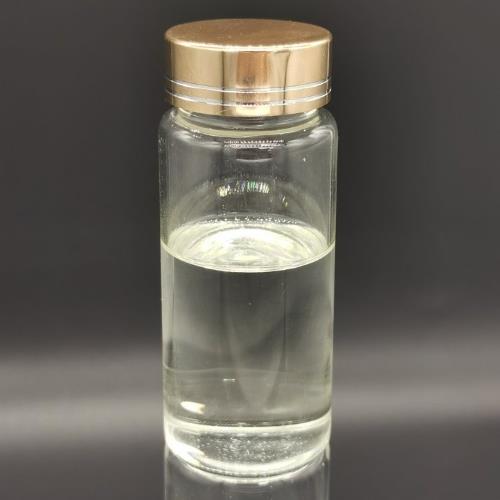
2-Bromochlorobenzene is widely used in organic synthesis due to its unique properties and versatile applications. One of the most common methods for synthesizing this material involves the reaction between chlorobenzene and bromine. This reaction, known as electrophilic aromatic substitution, occurs under specific conditions and requires the presence of a Lewis acid catalyst, such as iron or aluminum chloride. The bromine atom replaces one of the hydrogen atoms in the benzene ring, resulting in the formation of 2-Bromochlorobenzene.
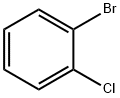
Molecular Structure and Vibrational Analysis of 1-Bromo-2-Chlorobenzene
Aromatic compounds such as benzene derivative compounds are commonly used for chronic inflammation treatment products in pharmaceutical products. Benzene is frequently used as an industrial solvent, especially for degreasing metal. Chlorobenzene like 2-Bromochlorobenzene is an important industrial solvent and a widely used intermediate in production of commodities such as herbicides, dyestuffs, and rubber. In this study, molecular geometry, optimized parameters, and vibrational frequencies are computed and the performance of the computational methods for ab initio (HF), hybrid density functional methods B3LYP at 6-31G+ (d, p) and 6-311G++ (d, p) basis sets are compared. These methods predict relatively accurate molecular structure and vibrational spectra with moderate computational effort. In particular, for polyatomic molecules the DFT methods lead to the prediction of more accurate molecular structure and vibrational frequencies than the conventional ab initio Hartree-Fock calculations. HF/DFT calculations for 2-Bromochlorobenzene are performed using GAUSSIAN 03 W program package on Pentium IV processor personal computer without any constraint on the geometry.
Complete vibrational analysis has been made in the present work for proper frequency assignments for 2-Bromochlorobenzene. The equilibrium geometries have been determined and compared with experimental data. Anharmonic frequencies are determined and analyzed by DFT level of theory utilizing 6-31G+ (d, p) and 6-311++G (d, p) basis sets. Good agreement between the calculated and experimental spectra was obtained. The HF/DFT spectra showed better agreement with experimental spectra. The FT-Raman and FT-IR spectra for 1-bromo- 2-Bromochlorobenzene have been recorded in the region 4000–100 cm−1. However, the difference between the observed and scaled wavenumber values of C–C fundamental is very large, because of the presence of the C–Cl and C–Br bonds. The detailed anharmonic frequencies assignment of 1-B-2-CB, presented in this work, has clarified several ambiguities in the previously reported investigation of the experimental spectra. Computed vibrational analysis showed the standard deviation of computational frequencies.
Dissociative electron attachment to 2-Bromochlorobenzene
Dissociative electron attachment (DEA) to molecules is a reaction relevant in many fields of basic and applied science. The study of temperature effects becomes particularly interesting in cases where competitive reaction channels are available. In this contribution we study DEA to 2-Bromochlorobenzene and 3-Bromochlorobenzene in the electron energy range from 0 to 2 eV and in the gas temperature range from 377 to 583 K. The experiment consists of a crossed electron/molecular beam arrangement with a mass spectrometric detection for the anions formed. As shown below the temperature dependence of the DEA cross-sections in the low electron energy range shows a similar behaviour for both molecules. In the energy range from about 0 to 2 eV the fragment ions Br− and Cl− are the only negative ions observable in DEA to 2-Bromochlorobenzene and 3-Bromochlorobenzene. No molecular anion can be observed within the time frame of the measurement and the sensitivity range of the apparatus.[2]
Here we explored the different π* → σ* channels taking into account the various molecular vibrations such as the in-plane (ip) and out-of-plane (oop) bending, and bond stretching modes. 2-Bromochlorobenzene is selected as an example and the potential energy as a function of the C–Cl or C–Br distance (the rest of the molecule being kept at the equilibrium geometry and not reoptimized) is calculated for the π* resonance-state and the dissociative σ* state. In conclusion, we have measured the anion efficiency curves at different temperatures in the temperature range from 377 to 583 K for DEA to 2-Bromochlorobenzene and 3-Bromochlorobenzene leading exclusively to the formation of Cl− and Br−. For these molecules the attached electron occupies initially the lowest empty molecular orbital (π*) at equilibrium structure of the neutral. In a second step the excess electron is transferred to the anti-bonding σ*C–Cl(Br) orbital due to some certain vibrations (asymmetric and symmetric oop bendings, and the Cl (Br) bond stretchings), and finally the σC–Cl or σC–Br bond of the valence-bound anion is broken.
References
[1]Shakila, G., Periandy., S., & Ramalingam, S. (2011). Molecular Structure and Vibrational Analysis of 1-Bromo-2-Chlorobenzene Using ab initio HF and Density Functional Theory (B3LYP) Calculations. Journal of Atomic, Molecular, and Optical Physics, 88 1, 1–10. https://doi.org/10.1155/2011/512841
[2]M. Mahmoodi-Darian . (2010). Temperature dependence of dissociative electron attachment to 1-bromo-2-chlorobenzene and 1-bromo-3-chlorobenzene. International Journal of Mass Spectrometry, 293 1, Pages 51-55. https://doi.org/10.1016/j.ijms.2010.04.004
You may like
See also

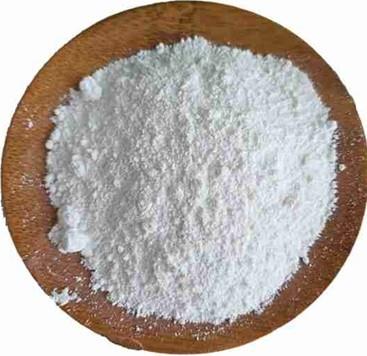
Lastest Price from 2-Bromochlorobenzene manufacturers
US $0.00/KG2026-01-31
- CAS:
- 694-80-4
- Min. Order:
- 1KG
- Purity:
- ≥99%
- Supply Ability:
- 20 Tons/Month

US $30.00/KG2025-04-21
- CAS:
- 694-80-4
- Min. Order:
- 1KG
- Purity:
- 98%
- Supply Ability:
- 300MT/year