3,5-Diaminobenzoic Acid: MOF Modification & Gold Ion Capture
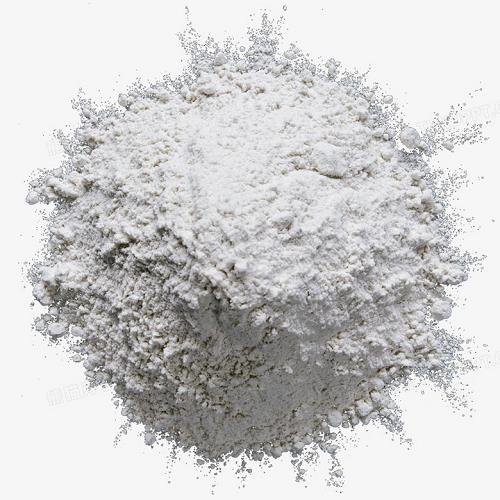
3,5-Diaminobenzoic acid is an important monomer of new material polyimide film, polyimide film is a new type of high temperature resistant polymer material with excellent comprehensive performance, which is widely used in high temperature resistant coatings, electromagnetic wires, semiconductor protective layers, flexible printed circuit boards, solar modules and other fields. It is an important monomer of new material polyimide film. Polyimide film is a new type of high temperature resistant polymer material with excellent comprehensive performance. 3,5-Diaminobenzoic acid is widely used in high temperature resistant coatings, electromagnetic wires, semiconductor protective layers, and flexible printing. Circuit boards, solar modules and other fields. It is an important chemical intermediate, which can be used to synthesize various medicines and yellow reactive dyes.
Tailoring 3,5-diaminobenzoic acid via functionalization with chemical groups
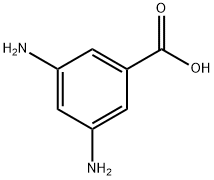
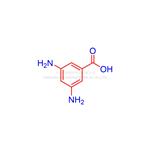
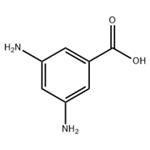
3,5-diaminobenzoic acid herein 3,5-DABA with the molecular formula C7H8N2O2 belongs to the family of the monocarboxylates. Researchers have reported the use of 3,5- DABA as organic linker in the synthesis of metal-organic frameworks ((MOFs). The modification of properties of MOFs can be achieved through many ways like grafting of active sites, addition of composite materials and linker modification. Tun-ability of MOFs with organic linkers is of particular importance due to unlimited possibility to design functional or multifunctional organic linkers as well as distinctive chemical properties of organic groups. Taddei et al. reported 3,5-diaminobenzoic acid and others for band gap modulation in Zirconium – based metal-organic frameworks by defect engineering, Du et al. reported the use of 3,5-diaminobenzoic as a fluorescent probe in fluorescence sensing of caffeine in Tea beverages. Gopal et al. reported fashionable co-operative sensing of bivalent Zn2+ and Cd2+ in attendance of OAC− by use of simple sensor. Azan et al. reported structural investigations and selective fluorescence sensing properties of dinuclear uranyl coordination compound . Mizukami et al. reported a fluorescent anion sensor that works in neutral aqueous solution for bio-analytical application. This paper presents functionalized 3,5-diaminobenzoic acid with controlled band gaps, enhanced reactivity and modified optical properties as potential materials for the modification of the structural, optical and fluorescent properties of MOFs.[1]
This research was carried out to tailor the band gap, optical and fluorescent properties of 3,5- DABA. The perturbation energies of 101.95 kcal/mol, 368.41 kcal/mol, 174.51 kcal/mol, 255.63 kcal/mol and 235.92 kcal/mol were observed for 3,5-DABA, CH3-3,5-DABA, OH-3,5-DABA, NH2-3,5-DABA and NO2-3,5-DABA respectively. This points to the fact that there was less intra and inter-molecular interactions in 3,5-DABA. We can affirm from our result that the energy gap of 3,5-diaminobenzoic acid (0.15636 eV) was narrowed down to 0.14613 eV, 0.13818 eV and 0.13811 eV in NO2-35DABA, OH-3,5DABA and NH2-35DABA respectively. This proofs that functionalizing 3,5-DABA with the chemical groups was efficient at tailoring the band gap. From our results also the absorption band of 3,5DABA (349 nm) was shifted to 386 nm, 393 nm and 404 nm in N02-35DABA OH-35DABA and NH2-35DABA respectively. The absorption wavelength of 3,5-DABA experienced a red shift which could be attributed to the decrease in the band-gap. This also proofs that functionalizing with the chemical groups is an efficient technique for tailoring its optoelectronic and fluorescent properties. From the results of our investigations in this work, the band gap, optical and fluorescent properties of 3,5-diaminobenzoic acid have been tailored via functionalization with the chemical groups.
Metal-organic framework for selective capture of gold ions
Gold (Au) as a noble metal is broadly applied in catalysis, electron devices, aerospace, and jewelry industries, due to its special physical and chemical properties. Continuous development of these industries inevitably produces a large number of Au-based electronic wastes, which show potential threats to environment and human health. Past decades have witnessed the appearance of various porous adsorbents. Some traditional materials such as carbons, silicon-based materials, resins, and biomasses show low costs, while the low adsorption capacity and poor selectivity restrict their extended use. To overcome these drawbacks, in this work, we anchored 3,5-diaminobenzoic acid (3,5-DABA) molecules in a zirconium (Zr)-based metal-organic framework (MOF-808) to form M − 3,5-DABA, via an exchange of acetic acid (AA) and 3,5-DABA molecules. 3,5-DABA shows much weaker acidity than other common organic acids such as AA, formic acid (FA), and trifluoroacetic acid (TFA), which were widely applied to regulate MOFs crystal growth. Besides, it is encouraged that this material shows a high density of free amino groups (3.2 mmol g−1) and large specific surface area. On this basis, the adsorption capacity of M − 3,5-Diaminobenzoic acid was increased to 1391.5 mg g−1 and the equilibrium adsorption time was 5 min, exceeding most of the previously reported adsorbents. Based on the experimental analyses and theoretical calculations, the detailed adsorption sites and adsorption modes were further investigated.[2]
One Zr–O cluster in the MOF-808 crystal includes six acid molecules, which can be substituted by other classes of carboxylic acids. In this work, the pKa value of 3,5-diaminobenzoic acid is 5.30, larger than that of AA (4.76). This indicates that the [3,5-DABA]- anion has a stronger coordination ability towards Zr4+ ions than the acetate ion. Furthermore, a DFT calculation was carried out to further understand the exchange process in thermodynamics. As presented, the energy of the exchange process was calculated to be −17.1 kcal mol−1. These results together verify that the substitution of AA by 3,5-DABA is feasible. We have successfully synthesized a new adsorbent for capturing gold ions from water. M − 3,5-diaminobenzoic acid shows positive charge properties, abundant amino groups, and high porosity, endowing it with a high potential for anionic Au(III) ion capture. At pH = 2.5, a high adsorption amount of 1391.5 mg g−1 was obtained and adsorption equilibrium happens at 5 min. Neutral pH benefits the adsorption and temperature has only a slight effect. Besides, the use of amino groups can avoid interference from common soft acid or borderline metal ions, superior to the classical sulfur-based groups. Further mechanism analysis indicates that oxidation-reduction reaction and adsorption both are applied to capturing Au(III) ions, where amino and μ-OH groups both play important roles. Therefore, our work proves that the use of amino groups in a positive-charge matrix is a feasible selection for constructing high-efficiency adsorbents.[3]
Spectral characteristics of 3,5-diaminobenzoic acid
The effect of solvents on the absorption and fluorescence (FL) spectra of 3,5-diaminobenzoic acid (DABA) was explored in pure solvents of diverse polarities and hydrogen bonding abilities. A bathochromic shift was observed in FL spectra while moving from non-polar to polar aprotic/protic solvents. The solvatochromic-based approaches showed that the dipole moment of DABA in the excited state (ES) is higher than its ground state (GS), which signifies that the ES is more polarized, corresponding to the GS. Moreover, the Catalan solvent polarity scale analysis suggested that the solvent acidity (SA) and dipolarity (SdP) influenced the absorption and FL spectra of DABA in solvents, signifying the presence of non-specific and specific interactions. The FL decay analysis in solvents was correlated with the observed steady-state results and suggested the presence of intramolecular charge transfer (ICT). The preferential solvation concept was utilized to understand the spectral variations of DABA in MeOH-water and DMSO-water mixtures. Further, the computational calculations utilizing the DFT (density functional theory) and TD-DFT (its time extension) for 3,5-diaminobenzoic acid were performed in the gas phase and solvents to estimate the electronic transitions and dipole moments.
References
[1]Anyama, Chinyere Ayi et al. “Tailoring the band-gap, optical and fluorescent properties of 3,5-diaminobenzoic acid via functionalization with chemical groups: A DFT study.” Talanta vol. 265 (2023): 124777. doi:10.1016/j.talanta.2023.124777
[2]Wu, Mengdi et al. “Diamino-functionalized metal-organic framework for selective capture of gold ions.” Chemosphere vol. 362 (2024): 142686. doi:10.1016/j.chemosphere.2024.142686
[3]Husain, S., Pandey, N., Fatma, N., Pant, S., & Mehta, M. S. (2022). Spectral characteristics of 3,5-diaminobenzoic acid in pure and mixed solvents: Experimental and theoretical study. Journal of Molecular Liquids, 368, 120783.
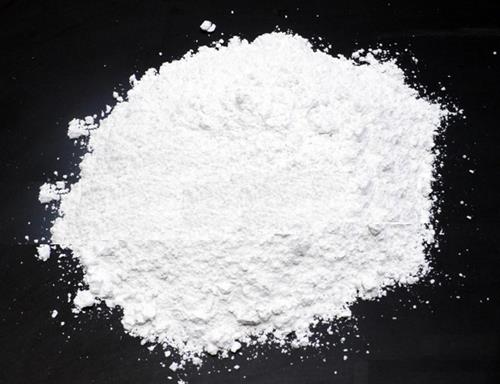
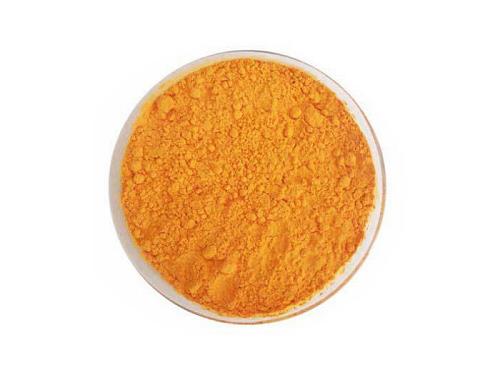
Lastest Price from 3,5-Diaminobenzoic acid manufacturers
US $0.00-0.00/kg2025-10-27
- CAS:
- 535-87-5
- Min. Order:
- 1kg
- Purity:
- ≥99%&99.5%
- Supply Ability:
- 1000
US $0.00/kg2025-08-21
- CAS:
- 535-87-5
- Min. Order:
- 1kg
- Purity:
- 99%min
- Supply Ability:
- 20tons