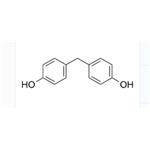
4,4'-Dihydroxydiphenylmethane: Metabolic Effects & Membrane Interactions
4,4'-Dihydroxydiphenylmethane, is also used as a bisphenol derivative with antioxidant activities. It is used in wastewater treatment and analytical methods such as liquid chromatography and gas chromatography. 4,4'-dihydroxydiphenylmethane is also used to measure intracellular Ca2+ levels in cells by polymerase chain reaction (PCR). This substance is also used in vitro assays to study bisphenol A toxicity on 3T3-L1 preadipocytes. In addition, 4,4'-dihydroxydiphenylmethane can be used to measure epoxy-mediated effects on energy metabolism in clinical pathology. It has been shown that this compound reduces colorectal adenocarcinoma growth in mice and human serum levels of cholesterol and triglycerides.
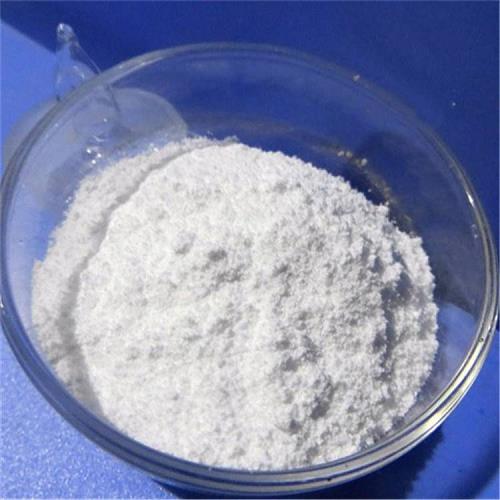
Metabolic outcomes of 4,4'-Dihydroxydiphenylmethane exposure
Endocrine-disrupting chemicals (EDCs) are natural or man-made compounds that mimic or interfere with normal hormonal function and may increase the risk of developing obesity and related cardiometabolic disorders. Interactions between an individual’s genetic factors (i.e., regulation of intricate endocrine and metabolic systems) and the environment (i.e., environmental chemicals) lay the foundation for the development of complex diseases, like obesity. This suggests that genetic variation may significantly influence EDC exposure outcomes. 4,4'-Dihydroxydiphenylmethane (BPF) is increasingly used as a structural analog of bisphenol A (BPA), an obesogen that is regulated in the European Union, Canada, and the United States. While BPA has an allowable daily intake (ADI) of 50 µg/kg body weight/day, BPF is not regulated in any country and does not have an ADI for human safety. Regrettably, data validating the safety of BPA-analogs as BPA substitutes are lacking. A small-scale human biomonitoring study reported increasing 4,4'-Dihydroxydiphenylmethane exposures of U.S. adults from 2000 to 2014. Analysis of BPF levels in publicly available NHANES 2013–2014 data found that it is present in 66.5% of urine samples from the general U.S. population. Multiple analyses of NHANES data determined that BPF is associated with a higher risk of obesity as well as with cardiovascular disease, asthma, sleep problems, and total testosterone levels.[1]
Incorporating genetic variation in toxicological and environmental health studies can provide the necessary innovation to identify precision environmental risks. We used six substrains similar to the HS rat founding strains to determine the endocrine and metabolic effect of 10 weeks post-wean 4,4'-Dihydroxydiphenylmethane exposure in young-adult rats of both sexes. Our data reveal that post-wean BPF exposure has numerous sex- and strain-specific effects on the endocrine system and energy balance. In male rats, BPF exposure disturbed functions in the thyroid in ACI males, of the HPG axis in BN males, and of the HPA axis in WKY males. We report that 4,4'-Dihydroxydiphenylmethane has the endocrine-disrupting potential to affect nearly all the major endocrine axes (adrenal, testes, thymus, thyroid) using a single exposure dose. The final exposure outcome was tied to the genetic make-up and sex of the exposed individual. Synthesizing the results reveals that all the major BPF exposure outcomes occurred in organs from strains with documented organ system dysfunctions, positing the working hypothesis that BPF exposure intensifies existing organ system dysfunction. Importantly, these results underscore our premise that common preclinical animal models can conceal or exaggerate the effects of 4,4'-Dihydroxydiphenylmethane. This work further supports BPF exposure as an endocrine and metabolic risk factor and indicates that the HS rat will be a useful model for dissecting gene EDC interactions on health.
4,4'-Dihydroxydiphenylmethane in a Complex Biomembrane
Bisphenols are a group of endocrine-disrupting chemicals used worldwide for the production of plastics and resins. Bisphenol A (BPA), the main bisphenol, exhibits many unwanted effects. BPA has, currently, been replaced with 4,4'-Dihydroxydiphenylmethane (BPF) and bisphenol S (BPS) in many applications in the hope that these molecules have a lesser effect on metabolism than BPA. Since bisphenols tend to partition into the lipid phase, their place of choice would be the cellular membrane. In this paper, I carried out molecular dynamics simulations to compare the localization and interactions of BPA, BPF, and BPS in a complex membrane. This study suggests that bisphenols tend to be placed at the membrane interface, they have no preferred orientation inside the membrane, they can be in the monomer or aggregated state, and they affect the biophysical properties of the membrane lipids. The properties of bisphenols can be attributed, at least in part, to their membranotropic effects and to the modulation of the biophysical membrane properties. The data support that both 4,4'-Dihydroxydiphenylmethane and BPS, behaving in the same way in the membrane as BPA and with the same capacity to accumulate in the biological membrane, are not safe alternatives to BPA.[2]
References
[1]Wagner VA, Holl KL, Clark KC, Reho JJ, Dwinell MR, Lehmler HJ, Raff H, Grobe JL, Kwitek AE. Genetic background in the rat affects endocrine and metabolic outcomes of bisphenol F exposure. Toxicol Sci. 2023 Jun 28;194(1):84-100. doi: 10.1093/toxsci/kfad046. PMID: 37191987; PMCID: PMC10306406.
[2]Villalaín J. Bisphenol F and Bisphenol S in a Complex Biomembrane: Comparison with Bisphenol A. J Xenobiot. 2024 Sep 4;14(3):1201-1220. doi: 10.3390/jox14030068. PMID: 39311147; PMCID: PMC11417855.
You may like
See also
Lastest Price from 4,4'-DIHYDROXYDIPHENYLMETHANE manufacturers
US $2.00-5.00/kg2025-07-11
- CAS:
- 620-92-8
- Min. Order:
- 1kg
- Purity:
- 99%
- Supply Ability:
- 100kg
US $0.00/G/KG2025-04-14
- CAS:
- 620-92-8
- Min. Order:
- 1G/KG
- Purity:
- 99%
- Supply Ability:
- 100MT