4-Methylimidazole: Carcinogenic Heterocyclic Compound
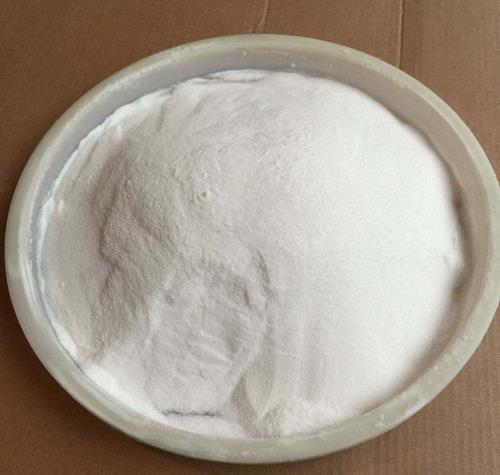
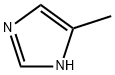
4-methylimidazole (4-MEI) is a heterocyclic nitrogen compound. This compound is light yellow and crystalline solid. Its solubility in water and alcohol is high. It is used in the manufacture of rubber, pigment and the agricultural and pharmaceutical industries. This chemical is used as a raw material for paper ink and paint. Furthermore, this compound is found in cigarette smoke
. It is a carcinogenic compound. This compound prevents the activity of metabolic enzymes. It leads to liver and lung cancer. According to the classification of the Agency for research on cancer, it is in category 2B, which means it is possibly carcinogenic to humans. In a study, rats were prescribed 170 mg of this compound per kg of their body weight per day. Neoplasia of the respiratory system was observed in both male and female mice 0.4-MEI is also neurotoxic and leads to tremors and seizures. It leads to hyperexcitation in animals. 4-methylimidazole has led to convulsions in some species, including mice, rabbits, cows, and chickens.
Toxicology and carcinogenesis studies of 4-methylimidazole
4-Methylimidazole is used in the manufacture of pharmaceuticals, photographic chemicals, dyes and pigments, cleaning and agricultural chemicals, and rubber. It has been identified as a by-product of fermentation in foods and has been detected in mainstream and sidestream tobacco smoke. 4-MEI was nominated by the National Cancer Institute for a long-term study because of the high potential for human exposure. Male and female F344/N rats and B6C3F1 mice were exposed to 4-methylimidazole (99.5% pure) in feed for 2 years. Fifteen-day and 14-week toxicity studies of 4-MEI in F344/N rats and B6C3F1 mice are reported in NTP Toxicity Report No. 67. Genetic toxicology studies were conducted in Salmonella typhimurium, rat and mouse bone marrow cells, and mouse peripheral blood.[1]
2-YEAR STUDY IN RATS: Groups of 50 male and 50 female rats were fed diets containing 0, 625, 1,250, or 2,500 ppm 4-MEI (males) or 0, 1,250, 2,500, or 5,000 ppm 4-MEI (females) (equivalent to average daily doses of approximately 30, 55, or 115 mg 4-methylimidazole/kg body weight to males and 60, 120, or 260 mg/kg to females) for 106 weeks. Survival of all exposed groups of male and female rats was similar to that of the control groups. Mean body weights of males in the 1,250 and 2,500 ppm groups and females in the 2,500 and 5,000 ppm groups were less than those of the control groups throughout the study; mean body weights of 1,250 ppm females were less after week 41. Feed consumption by 5,000 ppm females was less than that by the controls. Groups of 50 male and 50 female mice were fed diets containing 0, 312, 625, or 1,250 ppm 4-methylimidazole for 106 weeks. Survival of all exposed groups of male and female mice was similar to that of the control groups. Mean body weights of males and females in the 1,250 ppm groups were less than those of the control groups after weeks 17 and 12, respectively.
Acute Respiratory Epithelial Toxicity for 4-Methylimidazole and Naphthalene
4-Methylimidazole (4MEI) is a chemical byproduct of caramelization found in consumer products such as caramel-colored beverages, coffee, soy sauce, wine, vinegar, Worcestershire sauce, and ammoniated molasses. 4MEI concentrations range from <5 ng/mL up to 2,000 ng/mL in caramelized foods. Even though the major sources of dietary 4MEI exposure vary, 4MEI is consistently found in foods globally with mean intakes of 4-Methylimidazole measured for high exposure scenarios at 93 μg/kgbodyweight/day in America, 3.7 μg/kgbodyweight/day in Belgium, and 5.2 μg/kgbodyweight/day in China. The International Agency for Research on Cancer classified 4MEI as a Group 2B carcinogen–possibly carcinogenic to humans. The California Office of Environment Health Hazard Assessment (OEHHA) set a No Significant Risk Level (NSRL) at 29 μg/person/day for 4MEI. This study was designed to determine whether acute 4MEI toxicity targets specific sites or cellular targets in the mouse lung. To clarify the role of the metabolically active Club cells in 4MEI toxicity, mice were acutely exposed to high 4MEI doses and site-specific conducting airway epithelial toxicity was observed at high resolution using resin sections. Rather than conducting a feeding study, as in NTP exposures, the acute 4MEI exposure by oral gavage was completed to allow administration of a known bolus dose and detection of any potential acute respiratory toxicity. 4-Methylimidazole toxicity was also compared to the classic Club cell toxicant, naphthalene, given by the same route.[2]
Early features of cytotoxicity caused by metabolically activated toxicants, epithelial cell vacuolization and swelling, were not observed in the intrapulmonary airways of 4MEI exposed mice. The sparse cytotoxicity was slight in vehicle control and 4-Methylimidazole treated mice compared to the airway epithelial cytotoxicity caused by known Club cell toxicants: naphthalene (reported here) and styrene. Our data excludes 4MEI as a Club cell specific toxicant through stereological and immunohistochemical methods. The measurements of the cytotoxicity of Club cells and the distribution of ciliated cells, neuroendocrine cells, and inflammatory cells in this study did not identify a specific 4MEI cellular target. This study does not support Club cells as the target cell of 4-Methylimidazole toxicity acutely after administration of high bolus doses. Further studies will be required to clarify the mechanism of acute 4MEI toxicity and to further evaluate whether Club cell metabolism is involved in 4MEI toxicity, perhaps affecting an alternate cell type. No 4MEI toxicity was detected after acute exposure to 150 mg/kg or 300mg/kg oral gavage doses. As a positive control, naphthalene pulmonary epithelial toxicity at 150 mg/kg oral gavage was consistent with previous studies demonstrating significant Club cell specific cytotoxicity after naphthalene inhalation or injection. This study demonstrates a lack of acute 4-Methylimidazole airway epithelial toxicity at doses previously used to demonstrate 4MEI metabolism in rodents.
References
[1]National Toxicology Program. Toxicology and carcinogenesis studies of 4-methylimidazole (Cas No. 822-36-6) in F344/N rats and B6C3F1 mice (feed studies). Natl Toxicol Program Tech Rep Ser. 2007 Jan;(535):1-274. PMID: 17342198.
[2]Kelty JS, Keum C, Brown VJ, Edwards PC, Carratt SA, Van Winkle LS. Comparison of acute respiratory epithelial toxicity for 4-Methylimidazole and naphthalene administered by oral gavage in B6C3F1 mice. Regul Toxicol Pharmacol. 2020 Oct;116:104761. doi: 10.1016/j.yrtph.2020.104761. Epub 2020 Aug 5. PMID: 32768664; PMCID: PMC7983601.
You may like
See also
Lastest Price from 4-Methylimidazole manufacturers

US $0.00/KG2025-04-21
- CAS:
- 822-36-6
- Min. Order:
- 1KG
- Purity:
- 98.0%
- Supply Ability:
- 20tons/month
US $10.00/kg2025-04-21
- CAS:
- 822-36-6
- Min. Order:
- 1kg
- Purity:
- 99%
- Supply Ability:
- 100 mt