Application research of 1-Bromohexadecane
Introduction
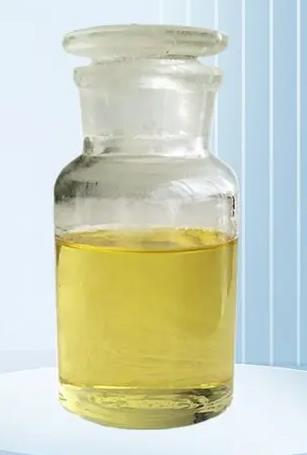
1-Bromohexadecane (Figure 1) is an important long-chain alkyl bromide, which is widely used in the surfactant industry and the field of organic synthesis, and serves as a key intermediate for the preparation of various hexadecyl functional compounds. This paper mainly introduces examples of its applications.
Synthesis of phosphatidylcholine analogs
The syntheses of 1,2-di-(O-hexadecyl)-rac-glycero-3-phosphocholines containing a methyl group at either C1 or C3 of the glycerol moiety are described. The methyl group was introduced at C1 in a synthetic scheme beginning with the hydroxylation of methyl vinyl ketone. The primary hydroxyl was protected by tritylation and the carbonyl group was reduced with sodium borohydride. Di-O-alkylation with 1-bromohexadecane was accomplished using finely powdered potassium hydroxide in refluxing toluene. Detritylation afforded two diastereomers of 2,3-di-(1-hexadecyloxy)butanol. Reaction with the simple phosphorylating agent, dimethylphosphoryl chloride (Bittman, R., A. F. Rosenthal, and L. A. Vargas. 1984. Chem. Phys. Lipids. 34: 201-205), followed by conversion to the phosphatidic acid and condensation with choline tosylate in the presence of trichloroacetonitrile afforded the diastereomers of 1-methyl-1,2-di-(O-hexadecyl)-rac-glycero-3-phosphocholine. The analog bearing a methyl group at C3 was prepared in a synthetic scheme beginning with the hydroxylation of acrolein dimethyl acetal. After di-O-alkylation with 1-bromohexadecane and sodium hydride in dimethyl sulfoxide/toluene, the acetal was converted to the aldehyde. Reaction with methylmagnesium bromide afforded the diastereomers of 1,2-di-(1-hexadecyloxy)-3-butanol, which were converted to the phosphocholine derivatives. These diether phosphatidylcholine analogs may be useful for investigating the effect of steric bulk at C1 and C3 of the glycerol moiety on the interactions with membrane components.[1]
Synthesis of 1-O-alkyl-2-O-alkyl'-sn-glycero-3-phospholipids
A convenient sequence for the synthesis of 1-O-alkyl-2-O-alkyl'-sn-glycero-3-phospholipids was demonstrated starting from 2,3-O-isopropylidene-sn-glycerol, which was first alkylated with 1-bromohexadecane, then converted to the corresponding benzylidene analog. Other less convenient methods to prepare 2,3-O-benzylidene-1-O-hexadecyl-sn-glycerol were also investigated. The key step in the synthesis was the reduction of 2,3-O-benzylidene-1-O-hexadecyl-sn-glycerol with lithium aluminum hydride-aluminum chloride to give 3-O-benzyl-1-O-hexadecyl-sn-glycerol as the major product in 79% yield. The syntheses of 1-O-hexadecyl-2-O-hexadecyl-(1',1'-d2,-sn-glycero-3-phosphoethanolamine and 1-O-hexadecyl-2-O-hexadecyl-(1'-13C)-sn-glycero-3-phosphoethanolamine as well as the correspondingly labeled sn-glycero-3-phosphocholine analogs were then performed. The optical purities of the synthetic intermediates and the ether lipids were established by a novel 1H-NMR method.[2]
Facile Synthesis of Dual-Functional Cross-Linked Membranes
Poly(2-hydroxyethylmethacrylate-co-2-(dimethylamino)ethyl methacrylate), P(HEMA-co-DMAEMAx), copolymers were quaternized through the reaction of a part of (dimethylamino)ethyl moieties of DMAEMA units with 1-bromohexadecane. Antimicrobial coatings were further prepared through the cross-linking reaction between the remaining DMAEMA units of these copolymers and the epoxide ring of poly(N,N-dimethylacrylamide-co-glycidyl methacrylate), P(DMAm-co-GMAx), copolymers. The combination of P(HEMA-co-DMAEMAx)/P(DMAm-co-GMAx) copolymers not only enabled control over quaternization and cross-linking for coating stabilization but also allowed the optimization of the processing routes towards a more facile cost-effective methodology and the use of environmentally friendly solvents like ethanol. Careful consideration was given to achieve the right content of quaternized units, qDMAEMA, to ensure antimicrobial efficacy through an appropriate amphiphilic balance and sufficient free DMAEMA groups to react with GMA for coating stabilization. Optimal synthesis conditions were achieved by membranes consisting of cross-linked P(HEMA78-co-DMAEMA9-co-qDMAEMA13)/P(DMAm-co-GMA42) membranes. The obtained membranes were multifunctional as they were self-standing and antimicrobial, while they demonstrated a distinct fast response to changes in humidity levels, widening the opportunities for the construction of "smart" antimicrobial actuators, such as non-contact antimicrobial switches.[3]
The influence of carbon chain length on the skin sensitization activity of 1-bromoalkanes
The murine local lymph node assay (LLNA) is an internationally accepted assay for identification of contact allergens. The LLNA has also been used in research studies to evaluate contact allergen potency, as well as chemical structural-allergenic activity relationships. The 1-bromoalkanes have been used in such a manner as they represent a chemical series with generally the same chemical reactivity but differing in alkane carbon chain length-dependent lipid solubilities. Previous reports noted a biphasic LLNA response with increasing carbon chain length that peaked at the 16-carbon chain (C16) of 1-bromohexadecane (delivered in an acetone-olive oil [AOO] vehicle; 4:1). In the present study, this biphasic LLNA response was confirmed, and 1-bromoalkane chemical-physical factors were explored using both modeling tools and further laboratory studies to help understand this finding. Volatility and effect of vehicle on 1-bromoalkanes' sensitizations were assessed. Selected 1-bromoalkanes were tested in the LLNA using the polar, protic vehicle, tetrahydrofuran-butanol (THF-BuOH; 1:1), to compare to the nonpolar (aprotic) vehicle AOO 1-bromoalkanes-LLNA responses. Enhanced 1-bromoalkane LLNA responses were observed using the THF-BuOH vehicle but with the greatest activity still observed for 1-bromohexadecane (C16). The shorter 1-bromoalkanes were subject to volatile losses upon application with approximately 75% volatile loss from a surface of 1-bromohexane (C6) within 5 min at room temperature. It is concluded that multiple factors, in addition to lipid solubility, including vehicle, solvation, and retention on the skin surface contribute to the apparent potency of 1-bromoalkanes in the LLNA.[4]
References
[1] Witzke NM, Bittman R. Synthesis of phosphatidylcholine analogs with an alkyl group at C1 or C3 of the glycerol moiety. J Lipid Res. 1985;26(5):623-628.
[2] Abdelmageed OH, Duclos RI Jr, Abushanab E, Makriyannis A. Chirospecific syntheses of 2H- and 13C-labeled 1-O-alkyl-2-O-alkyl'-sn-glycero-3-phosphoethanolamines and 1-O-alkyl-2-O-alkyl'-sn-glycero-3-phosphocholines. Chem Phys Lipids. 1990;54(1):49-59. doi:10.1016/0009-3084(90)90059-z
[3] Tzoumani I, Druvari D, Evangelidis M, Vlamis-Gardikas A, Bokias G, Kallitsis JK. Facile Synthesis of Dual-Functional Cross-Linked Membranes with Contact-Killing Antimicrobial Properties and Humidity-Response. Molecules. 2024;29(10):2372. Published 2024 May 17. doi:10.3390/molecules29102372
[4] Siegel PD, Fedorowicz A, Butterworth L, et al. Physical-chemical and solvent considerations in evaluating the influence of carbon chain length on the skin sensitization activity of 1-bromoalkanes. Toxicol Sci. 2009;107(1):78-84. doi:10.1093/toxsci/kfn212

You may like
Lastest Price from 1-Bromohexadecane manufacturers
US $0.00/KG2025-12-07
- CAS:
- 112-82-3
- Min. Order:
- 1KG
- Purity:
- ≥98%
- Supply Ability:
- 40 Tons/Month
US $0.00/KG2025-04-21
- CAS:
- 112-82-3
- Min. Order:
- 1KG
- Purity:
- 99%
- Supply Ability:
- 10 mt