Application research of Allyltributyltin
Introduction
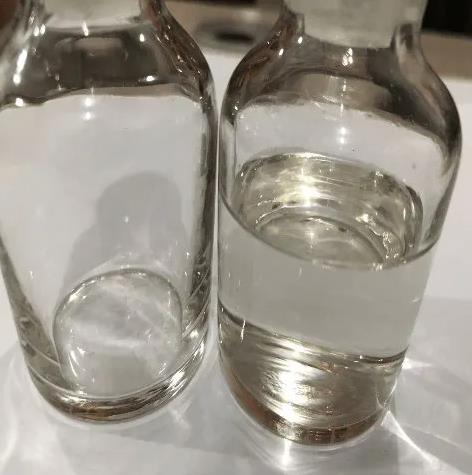
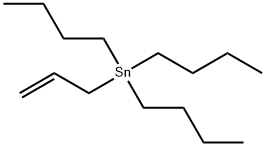
Allyltributyltin (allyltributylstannane;Figure 1) is a toxic organotin reagent for C-C bond formation in organic synthesis.Within the last decade, organotin chemistry has become a major source of new and highly selective reagents for effecting carbon–carbon bond formation. Transmetalation, nucleophilic substitution, stereoselective carbonyl addition, and transition-metal- or radical-mediated substitution reactions have all been accomplished using allyltributyltin. Because of the broad range of selective reactivities under which the synthetically versatile allyl group may be transferred to a highly functionalized substrate, allyltin compounds have secured a position on the modern chemist's list of indispensable reagents. Transmetalation of allyltributyltin with organolithium species3 has been used for the generation of allyllithium solutions free of the coupling by-products that often result from reduction of allylic halides with lithium metal. These solutions may then be used directly for the preparation of Gilman reagents and other reactive modifications of the parent allyllithium.
The use of allyltributyltin in combination with a Lewis acid has been used to effect both nucleophilic substitution4 and stereoselective carbonyl addition5 reactions. These reactions occur with a high degree of selectivity because of the reagent's nucleophilic, completely nonbasic character in the presence of a sufficiently reactive carbon electrophile. Allyltin reagents appear to be more useful than the corresponding allylsilanes for these purposes. By far the most generally useful synthetic application of allyltributyltin is in the complementary set of transition-metal- and radical-mediated substitution reactions. When the halide substrates are benzylic,allylic, aromatic, or acyl, transition-metal catalysis6 is usually the method of choice for allyl transfer from tin to carbon. When the halide (or halide equivalent) substrate is aliphatic or alicyclic, radical chain conditions7 are appropriate, as β-hydrogen elimination is generally not a problem in these cases.[1]
Iridium-Catalyzed Reductive Allylation of Esters
The catalytic reductive transformation of carboxylic esters into α-branched ethers is described. The procedure pivots on the chemoselective iridium-catalyzed hydrosilylation of ester and lactone functionality to afford a silyl acetal intermediate. Upon treatment with a Lewis acid, these hemilabile intermediates dissociate to form reactive oxocarbenium ions, which can be intercepted by allyltributyltin nucleophiles, resulting in the formation of valuable α-branched alkyl-alkyl ether derivatives. This reductive allylation procedure was found to be amenable to a range of carboxylic ester starting materials, and good chemoselectivity for ethyl over tert-butyl esters was demonstrated. Furthermore, downstream synthetic manipulation of α-amino acid-derived products led to the efficient formation of pyrrolidine, piperidine, and azepane frameworks.[2]
Catalyst synthesized for allylation of aldehydes with allyltributyltin
An air- and moisture-stable SeCSe-Pd(II) pincer complex was synthesized and found to catalyze the nucleophilic allylation of aldehydes with allyltributyltin. The allylation of a variety of aromatic and aliphatic aldehydes to give the corresponding homoallyl alcohols was performed at room temperature to 60 degrees C in yields ranging from 50% (for typical aliphatic aldehydes) to up to 97% (for aromatic aldehydes) using 5 x 10⁻³ to 1 mol % of the Pd catalyst. NMR spectroscopic study indicated that a sigma-allylpalladium intermediate was formed and possibly functions as the nucleophilic species that undergoes addition to the aldehydes.[3]
Cross-Coupling Reaction of Benzylic Halides with allyltributyltin Catalyzed by Cu(OTf)2
Cross-coupling reaction of benzylic halides with allyltributyltin was investigated. Desired cross-coupling products were obtained in satisfactory yields using Cu(OTf)2 as the catalyst. For example, cross-coupling product 1-(but-3-en-1-yl)-4-phenylnaphthalene(3b) was obtained in 93% yield when the reaction of 1-chloromethyl-4-phenylnaphthalene with allyltributyltin was carried out in thepresence of 10 mol% of Cu(OTf)2 in CH2Cl2 at room temperature for 1 h. The reaction of a substrate bearing an electron-donating group onthe aromatic ring was completed in a few minutes, whereas the reaction of a substrate having an electron-withdrawing group on the aromatic ring needed prolonged reaction time. 3b, 1-bromo-4-(but-3-en-1-yl)naphthalene (3c), and 1-(but-3-en-1-yl)-4-nitronaphthalene (3f) were unknown compounds and their structure was confirmed by 1H NMR, 13C NMR, IR, and HRMS.[4]
References
[1] Noreen G. Halligan, Larry C. Blaszczak. Allyltributyltin.Organic Syntheses, Coll. Vol. 8, 23 (1993); Vol. 68, p.104(1990)
[2] Xie LG, Rogers J, Anastasiou I, Leitch JA, Dixon DJ. Iridium-Catalyzed Reductive Allylation of Esters. Org Lett. 2019;21(17):6663-6667. doi:10.1021/acs.orglett.9b02119
[3] Yao Q, Sheets M. A SeCSe-Pd(II) pincer complex as a highly efficient catalyst for allylation of aldehydes with allyltributyltin. J Org Chem. 2006;71(14):5384-5387. doi:10.1021/jo060456k
[4] Yu Xq,et al.Cross-Coupling Reaction of Benzylic Halides with AllyltributylstannaneCatalyzed by Cu(OTf)2.[J]Chinese Journal of Catalysis,2011,32(03):472-476.
Lastest Price from Allyltributyltin manufacturers

US $230.00-200.00/kg2025-06-11
- CAS:
- 24850-33-7
- Min. Order:
- 1kg
- Purity:
- 98%
- Supply Ability:
- 5mt

US $0.00/kg2025-03-03
- CAS:
- 24850-33-7
- Min. Order:
- 1kg
- Purity:
- 99%
- Supply Ability:
- 10000KGS