Application Research of Guanidine sulfamate
Introduction
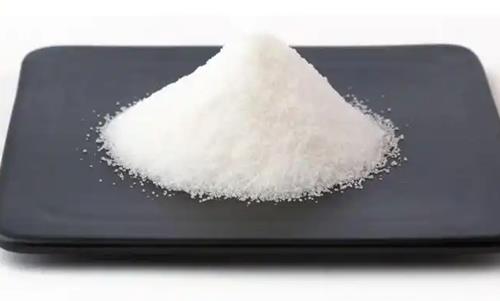
Guanidine sulfamate (GAS; Figure 1), a nitrogen-based flame retardant, features low smoke, low toxicity and high efficiency, and has been well applied in the flame retardancy of paper, wood, plastics and other materials. This paper mainly presents the relevant research on it.
Additive Engineering by Bifunctional Guanidine Sulfamate
High efficiency and good stability are the challenges for perovskite solar cells (PSCs) toward commercialization. However, the intrinsic high defect density and internal nonradiative recombination of perovskite (PVK) limit its development. In this work, a facile additive strategy is devised by introducing bifunctional guanidine sulfamate (GuaSM; CH6N3+ , Gua+ ; H2 N-SO3- , SM- ) into PVK. The size of Gua+ ion is suitable with Pb(BrI)2 cavity relatively, so it can participate in the formation of low-dimensional PVK when mixed with Pb(BrI)2 . The O and N atoms of SM- can coordinate with Pb2+ . The synergistic effect of the anions and cations effectively reduces the trap density and the recombination in PVK, so that it can improve the efficiency and stability of PSCs. At an optimal concentration of guanidine sulfamate (2 mol%), the PSC presents a champion power conversion efficiency of 21.66% and a remarkably improved stability and hysteresis. The results provide a novel strategy for highly efficient and stable PSCs by bifunctional additive.[1]
Application of reactive deep eutectic solvents
Nanocellulose-based film, as a novel new type of film mainly made of nanosized cellulose, has demonstrated an ideal combination of renew ability and enhanced or novel properties. Considerable efforts have been made to enhance its intrinsic properties or create new functions to expand its applications, such as in food packaging, water treatment or flexible electronics. In this paper, two different types of deep eutectic solvents (guanidine sulfamate-glycerol and guanidine sulfamate-choline chloride) were formulated and applied to prepare cellulose nanocrystals with dialdehyde cellulose (DAC). The effects of reaction conditions including time, temperature and cellulose-DES ratio on the grafting degree and yield were studied. After ultrasonication, two types of CNCs, with an average diameter of 3-5 nm and an average length of 140.7-204.2 nm, were obtained. The synthesized CNCs displayed an enhanced thermal stability compared to pristine cellulose. Moreover, highly transparent (light transmittance higher than 90 %) and water stable nanocellulose based films (a wet tensile strength of higher than 30 MPa after immersing in water for 24 h) were fabricated. Besides, the obtained films exhibited low oxygen transmission rate, showing a good potential application in food packaging.[2]
Preparation of flame-retardant nitrile rubber with halloysite nanotubes loaded guanidine sulfamate
Low-smoke and halogen-free flame retardant nitrile rubber (NBR) was prepared through filling functional fillers natural halloysite nanotubes (HNTs) -guanidine sulfamate (GAS) , which were prepared by loading the flame retardant guanidine sulfamate into the HNTs. The results of thermogravimetric analysis showed that the optimal loading rate of mass fraction 6% could be achieved when the mass ratio of HNTs to guanidine sulfamate was 1/3. The limiting oxygen index of flameretardant NBR composites with 122.3 phr HNTs -GAS and 5.7 phr guanidine sulfamate was 28.3%, the vertical com-bustion reached V -1 level, and the smoke density was 105, which showed good flame retardancy. The addition of HNTs-GAS could effectively improve themechanical properties of NBR composites. Compared with NBR with the same amount of HNTs and guanidine sulfamate,the tensile strength, tear strength and elongation at break of the NBR composites with HNTs-GAS in-creased by 47.5%, 36.8% and 67.1% respectively.[3]
Halloysite-loaded flame retardant prepared
In this experiment, HNTs was loaded with guanidine sulfamate (GAS) to prepare an halloysite-loaded flame retardant. And then, a series of polypropylene composites was prepared by melting blending. The PP composites were tested for their flame retardancy, thermal stability properties. The results showed that the addition of guanidine sulfamate could further improve the flame retardant properties of polypropylene/halloysite nanotubes (PP/HNTs). When the ratio of HNTs∶GAS was 1:3 and HNTs-GAS content was 30 wt%, the limiting oxygen index of PP/HNTs-GAS could reach to 26 %, which was 4.6 % higher than that of PP/HNTs. The peak heat release rate of PP was 845 kW/m2 , and when 30 % HNTs-GAS was added, the peak heat release rate of the composite was 460 kW/m2 ,which was higher then PP/HNTs.[4]
References
[1] Liu X, Wu J, Yang Y, et al. Additive Engineering by Bifunctional Guanidine Sulfamate for Highly Efficient and Stable Perovskites Solar Cells. Small. 2020;16(47):e2004877. doi:10.1002/smll.202004877
[2] Zhang Y, Liu Y, Dong C, et al. Transparent, thermal stable, water resistant and high gas barrier films from cellulose nanocrystals prepared by reactive deep eutectic solvents. Int J Biol Macromol. 2024;276(Pt 2):134107. doi:10.1016/j.ijbiomac.2024.134107
[3] Hao MZ,et al. Preparation of flame-retardant nitrile rubber with halloysite nanotubesloaded guanidine sulfamate[J].China Synthetic Rubber Industry,2021,44(01):47-50.DOI:10.19908/j.cnki.ISSN1000-1255.2021.01.0047.
[4] Hao MZ, et al. Study on Flame Retardancy of Polypropylene with Halloysite Nanotubes Loading Guanidine Aminosulfonate[J].Guangdong Chemical Industry,2020,47(16):287-288+291.

See also
Lastest Price from Guanidine sulfamate manufacturers
US $0.00/Kg/Drum2025-04-21
- CAS:
- 51528-20-2
- Min. Order:
- 1KG
- Purity:
- 90%min
- Supply Ability:
- 1000kgs
US $10.00/KG2025-04-21
- CAS:
- 51528-20-2
- Min. Order:
- 1KG
- Purity:
- 99%
- Supply Ability:
- 10 mt