Application research of Pigment Red 53:1
Introduction
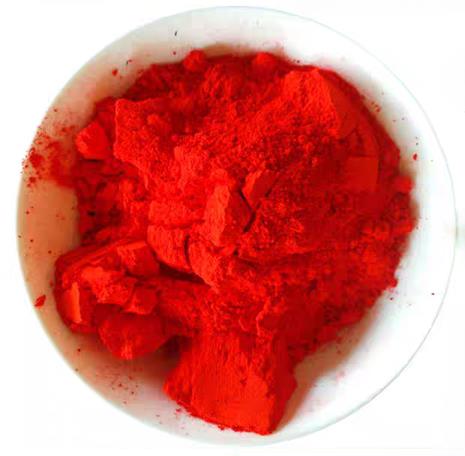
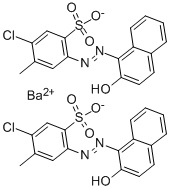
The monoazo dye, Pigment Red 53:1 (Figure 1;5-chloro-2-[(2-hydroxy-1-naphthalenyl)azo] -4-methyl-benzene sulfonic acid, barium salt), commonly known as D&C Red No. 9, has been used for many years in printing inks, polystyrene, rubber and enamels. This azo dye was evaluated for carcinogenicity by the U.S. National Cancer Institute's National Toxicology Program(NTP) in 2 year studies using B6C3F1 mice and F344 rats. The compound was noncarcinogenic to mice of either sex. In the male rat, however a dose-related increase in neoplastic nodules of the liver was seen (control 0%, low dose 12%, high dose 14%) and the high dose was found to induce an increased incidence of sarcomas of the spleen (54%, control 0%). In 1988, a special, certified grade of Pigment Red 53:1 was provisionally listed by the US Food and Drug Administration (FDA) for use in externally and internally applied drugs and cosmetics. Acceptable uses included addition to lipsticks, dentifrices and mouthwashes, as well as in drugs intended for ingestion. However, the food and drug listings for all of these have since been terminated due to a reappraisal of the available toxicology. Pigment Red 53:1 was negative in most Salmonella mutagenicity assays, with the exception of a weakly positive response at precipitation dose levels. Pigment Red 53:1 was non-genotoxic in mammalian cells in vitro, when tested for mutation induction at the tk locus in mouse lymphoma L5178Y cells, SCE and chromosomal aberrations in CHO cells, and UDS in rat hepatocytes. The dye was inactive in two UDS assays in the liver, and in micronucleus assays in bone marrow of rats after oral administration. In view of the predominantly negative responses reported in genetic toxicity tests, it was suggested that Pigment Red 53:1 behaves as a non-genotoxic carcinogen.[1]
Activation by caecal reduction of the Pigment Red 53:1 to a bacterial mutagen
In an NTP carcinogenicity study in rats and mice it induced splenic sarcomas and liver nodules in male rats; no chemical-related tumours were induced in mice. On the basis of its contradictory responses in a range of in vitro tests and its inactivity in several in vivo genotoxicity assays, it has been suggested that the dye may act as a non-genotoxic carcinogen. Dillon etal. tested the dye in the Salmonella mutagenicity assay using several different protocols. The dye was not mutagenic when tested using the standard (aerobic) preincubation protocol. Variable responses were seen when the flavin mononucleotide (FMN) reduction protocol was used. A third protocol was provided by incubating the test compound overnight with a rat caecal preparation under anoxic conditions to reduce the azo bond. Ethyl acetate extracts of this incubation mixture, when tested in the standard preincubation protocol using induced rat liver S9, yielded dose-related mutagenic responses in TA100, and a weak response in TA98. The presuemed major reduction product, 1-amino-2-naphthol (1-A-2-N) was mutagenic to TA100, but not TA98, in standard protocols with S9. The results show that it is necessary to use a protocol in which Pigment Red 53:1 is reduced in order to demonstrate the mutagenicity of this dye. The non-genotoxicity previously reported for Pigment Red 53:1, may have been due to insufficient reductive cleavage. The carcinogenicity of this compound may, therefore, be a consequence of its genotoxicity,rather than a result of some non-genotoxic process.[1]
Non-genotoxic carcinogen of Pigment Red 53:1
The azo-compound, Pigment Red 53:1 was assayed for genotoxicity in vivo using the rat micronucleus test and the rat ex vivo liver UDS assay. Uniformly negative results were obtained in both assays, even though large oral doses were used (2g/kg). These results suggest that the tumorigenic effects of this compound in rats are mediated through non-genotoxic rather than a genotoxic mechanism. Further experiments using additional end-points such as 32P-post-labelling would further substantiate this conclusion.[2]
Chemical analysis and risk assessment of prohibited colouring agents in face paint with special regard to Pigment Red 53:1
Face painting in the colours of the national flags has become a mass phenomenon during international mega sporting events. Face paints, belonging to the group of lipophilic decorative cosmetics, pose an analytical challenge, especially in the sample preparation steps to obtain sample extracts of the colouring agents of low solubility. In the context of official cosmetics control, a sample of German flag-coloured face paints (n=42) offered during the soccer world cup 2014 was analysed. Sample-clean-up of hydroalcoholic and dichloromethane sample extracts was conducted using preparative thin-layer chromatography (TLC). For identification, analytical TLC, spectrophotometry considering bathochromic effects, and high-performance liquid chromatography (LC) with diode array detector were applied. Nuclear magnetic resonance (NMR) spectroscopy and LC-tandem mass spectrometry (LC-MS/MS) were used in positive cases for confirmatory analysis. NMR spectroscopy was also applied to determine the identity and purity of reference substances. Risk assessment was provided using the margin of exposure (MOE) methodology.
The prohibited red colouring agent CI 15585 (D&C Red No. 9, Pigment Red 53:1), which is carcinogenic in animals, was positively identified in 40% of the analysed samples. Per face painting event, about 0.04 mg/kg bw (adult) or 0.11 mg/kg bw (child) of Pigment Red 53:1 is systemically absorbed. Assuming an annual use of five times (adult) or 20 times (child), the exposure would be 5.8E-04 mg/kg bw per day (adult) or 5.8E-03 mg/kg bw per day (child). The MOE in these worst-case scenarios would be 6871 (adult) and 695 (child). Because the mechanism of Pigment Red 53:1 is non-genotoxic and the MOE is higher than a safety factor of 100, Pigment Red 53:1 does not pose a serious health risk to the consumer, but should be avoided for reasons of precautionary public health protection. An analytical strategy to determine colouring agents in face paints was developed and non-compliance with the European Union (EU) cosmetic products regulation in a considerable number of products was detected. An increased control frequency especially at the points of entry into the EU is recommended.[3]
References
[1] Dillon D, Combes R, Zeiger E. Activation by caecal reduction of the azo dye D & C red no. 9 to a bacterial mutagen. Mutagenesis. 1994;9(4):295-299. doi:10.1093/mutage/9.4.295
[2] Westmoreland C, Gatehouse D. D and C Red No. 9: genotoxic or non-genotoxic carcinogen?. Mutat Res. 1992;281(3):163-167. doi:10.1016/0165-7992(92)90003-z
[3] Keck-Wilhelm A, Kratz E, Mildau G, Ilse M, Schlee C, Lachenmeier DW. Chemical analysis and risk assessment of prohibited colouring agents in face paint with special regard to CI 15585 (D&C Red No. 9, Pigment Red 53:1). Int J Cosmet Sci. 2015;37(2):187-195. doi:10.1111/ics.12181
You may like
See also
Lastest Price from Pigment Red 53:1 manufacturers
US $0.00/kg2022-12-09
- CAS:
- 5160-02-1
- Min. Order:
- 25kg
- Purity:
- 100%
- Supply Ability:
- 100mt
US $15.00-10.00/KG2021-08-12
- CAS:
- 5160-02-1
- Min. Order:
- 1KG
- Purity:
- 99%+ HPLC
- Supply Ability:
- Monthly supply of 1 ton