Application research of Terpene resin
Introduction
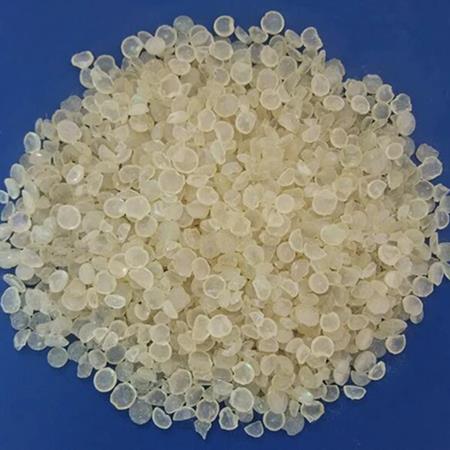
Terpene widely exists in natural sources of hydrocarbons from many plants exudates and marine organisms. Terpene resins (TR;Figure 1) are prepared by polymerization of terpene monomers, and it has non-toxic, low cost, high adhesive property, good thermal stability, and good compatibility with other polymers. Aqueous terpene resin emulsion (ATRE) was obtained by direct emulsification of terpene resins.[1]
Terpene Resin/ Carboxymethyl Cellulose as Novel Water Soluble Binder for Graphite Anode in Lithium Ion Battery
Aquous terpene resin emulsion (ATRE) was prepared by the emulsification of natural terpene resins (TR) from many plants exudates and marine organisms. Adhesion strength of terpene resins/Cu current collector was measured by peel test and compared with commercial SBR/Cu. Terpene resins binder shows higher adhesion strength (0.17 N/cm)than SBR (0.15 N/cm). The higher adhesion strength of terpene resins is closely related to its unique structure. Cyclic voltammetry (CV) from open circuit voltage (~ 3 V) to 0V (vs. Li/Li+ ) was performed on terpene resins coated Cu foils. An electrochemical cell consisting of Cu foil (working electrode) and lithium metal (counter electrode) was used to determine the electrochemical stability of terpene resins. Terpene resins showed an electrochemically inactive between 0 and 3 V, indicated by the very weak oxidation-reduction current. Similar CV curves were observed in SBR coated Cu foils. Therefore, Terpene resins can be used as the binder for graphite electrode from 0 to 3 V. ATRE/carboxymethyl cellulose (CMC) were completely miscible by differential scanning calorimetry. ATRE/CMC composite was used as a binder for graphite electrode in Li-ion batteries in this paper. Optimized ratios of terpene resins/CMC (3:2, by weight), the graphite electrode exhibits the higher specific capacity and better rate capability than that of the commercial styrene-butadiene rubber (SBR)/CMC binder. This strategy paves an avenue to develop the water-soluble bio-derivative terpene resins/CMC binder systems for graphite anodes.[1]
The Effect of Terpene Resin on the Properties of Vehicle Engine Surface Protective Wax
During the use of some automotive engine surface protective waxes, defects such as poor adhesion,high temperature cracking & stickiness and insufficient rust resistance are prone to occur, and it is difficult to have along- term protective effect on the automotive engine surface. Adding appropriate type and proportion of tackifying resin to engine surface protection wax can effectively optimize the comprehensive performance of surface protection wax. This study, therefore, discusses the effect of different mass fractions of terpene resin on the performance of vehicle engine surface protective wax, using terpene resin as tackifying resin, and environmentally friendly solvent oil and other raw materials to prepare vehicle engine surface protective wax.[2]
Improvement of Polymerization Process of Turpentine and Preparation of High-quality Terpene Resin
To reduce the contents of catalysts remaining in terpene resin produced by the traditional method,a primary improvement for its preparation process was put forward,i.e.,SbCl3,a kind of Lewis acids with high toxicity as the co-catalyst in the reaction,was replaced by TMCS. The new process has been proved that it had a remarkable effect on decreasing the residual quantity of catalysts.The obtained products usually have excellent quality and the contents of chlorine and aluminum in it are lower than100mg/kg and 5mg/kg respectively.There is no antimony existing in them.It is considered that terpene resins from new process could serve as food additives according to FDA standard.[3]
Determination of Organic Solvents Remained in Terpene Resin with Gas Chromatography and Its Application
The determination technique and method of organic solvents remained in terpene resin was studied by gas chromatography. According to drawing standard curve,testing the precision and repeatability,calculating the lowest detection limit and determining recovery ratio,its feasibility was confirmed. Its practical application effect was further investigated. The results indicated that,the lowest detection limits determined by capillary gas chromatography for toluene,1,2-dichlorethane and benzene were 0.2 mg/L,1.7 mg/L,and 0.3 mg/L,respectively. For toluene determination,the standard deviation of determining precision is 0.04; recovery ratio and its standard deviation are 104.1% and 1.99,respectively. While applying the method to determine samples of terpene resin prepared in laboratory,it showed that there was only toluene as organic solvent in the resins and its residual contents was less than 25 mg/kg.No benzene and 1,2-dichloroethane were indicated in the resins.[4]
References
[1] Zhong Hx,et al. Terpene Resin/ Carboxymethyl Cellulose as Novel Water Soluble Binder for Graphite Anode in Lithium Ion Battery[J].Advances in new and renewable energy,2017,5(04):243-248.
[2] Fan L,et al.The Effect of Terpene Resin on the Properties of Vehicle EngineSurface Protective Wax[J].Automobile Technology & Material,2022,(06):47-50.DOI:10.19710/J.cnki.1003-8817.20210420.
[3] Wang J,et al.Improvement of Polymerization Process of Turpentine and Preparation of High-quality Terpene Resin[J].Biomass Chemical Engineering,2012,46(06):7-11.
[4] Wang J,et al.Determination of Organic Solvents Remained in Terpene Resin with Gas Chromatography and Its Application[J].Biomass Chemical Engineering,2012,46(05):7-11.

You may like
Lastest Price from Terpene resin manufacturers
US $50.00/kg2025-04-21
- CAS:
- 9003-74-1
- Min. Order:
- 1kg
- Purity:
- 99
- Supply Ability:
- 5000

US $1.00/KG2025-04-10
- CAS:
- 9003-74-1
- Min. Order:
- 1KG
- Purity:
- 99%
- Supply Ability:
- 20T