Closantel Sodium: Anthelmintic Efficacy and Biomedical Potential
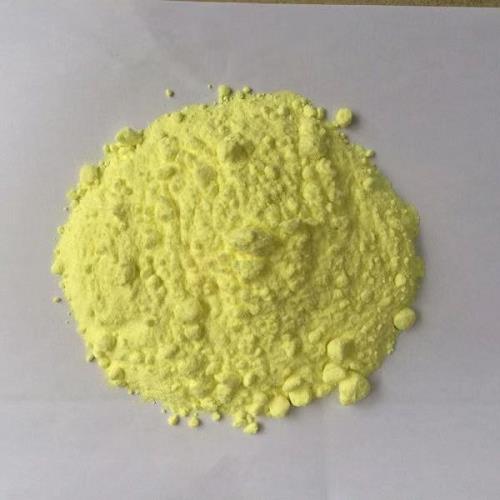
Closantel Sodium is a veterinary anthelmintic (anti-parasitic) medication used primarily for the treatment of gastrointestinal parasites in livestock, including cattle and sheep. It belongs to the salicylanilide class of compounds and works by disrupting the energy metabolism of parasites, thereby eliminating them from the host animal.
Side effects of closantel sodium
Closantel sodium is an antiparasitic agent routinely used in veterinary practice against some parasites of livestock. It is not used against agricultural and household pests. Recently, it has been discovered that closantel also acts against Onchocerca volvulus, a filarial nematode causing river blindness in humans. Closantel belongs to the chemical class of the salicylanilides, which acts as an uncoupler of oxidative phosphorylation in the cell mitochondria and disturbs ATP production. This impairs the parasite's motility and probably other processes as well. Closantel sodium also disturbs the liquid and ion transport mechanisms in the parasite's membranes. Closantel is a narrow-spectrum anti-helminthic effective against a few roundworms (mainly blood-sucking species), against flukes (e.g., Fasciola hepatica) and also against certain myiasis. It is ineffective against tapeworms or most external parasites. It is not used in swine, poultry, horses, or pets. It is used moderately in ruminants both as an injectable or a drench, often mixed with other anti-helminthics. After oral administration, Closantel sodium is readily absorbed into the bloodstream. Four days after treatment up to 60% of the injected and 30% of the drenched closantel is absorbed to blood. In the blood, >99% of the unchanged closantel binds strongly to plasma albumins. Peak plasma levels are reached between 10 and 48 h after administration, both after oral or intramuscular administration.[1]
The most frequent symptoms following closantel intoxication include loss of appetite, ataxia or uncoordinated movements, weakness, visual disturbances, and blindness. Other symptoms reported in sheep include depression, prostration, colic, reduced skin sensitivity, opisthotonos, nystagmus, mydriasis, loss of pupillary reflex, and blindness. Mortalities can also happen. The use of closantel sodium in humans and milk-producing animals is strongly avoided. However, accidental ingestion of closantel leading to overdose and adverse effects in humans has been reported in literature. In humans, ocular symptoms following closantel overdosage range from sudden onset blurring of vision to total blindness. The onset of symptoms has been reported to occur from as early as 3 days to 22 years following closantel sodium intake. Depending upon the severity of damage, ocular features show optic nerve involvement ranging from blurring of disc margins and disc edema in acute stage to optic atrophy in the late stages. There is outer retinal layer thinning with spicule like hyper-pigmentation owing to the involvement of photoreceptor and retinal pigment epithelium layer. Destruction in outer retinal layers and visual pathway leads to changes in electroretinography and visual evoked potential (VEP) test. On electro-retinography, there is a reduction in both a- and b-wave amplitudes, whereas VEP shows a reduction in amplitude and delay in latency. The effects of closantel sodium intoxication are often permanent and irreversible.
Electrochemical determination of closantel sodium in the commercial formulation
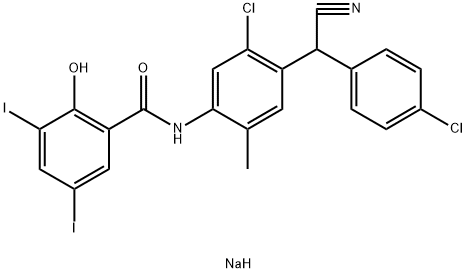
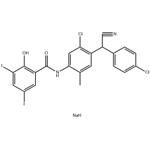
In the last few years, drug prescription has increased several folds, and consequently, an intensification of drug taking by humans and animals has also been observed. It is obvious that medicines play a significant role in the treatment and prevention of diseases in both humans and animals; nevertheless, pharmaceuticals can also cause harmful effects on health and environment. Thus, it has been suggested that the drugs (antibiotics, antiparasitics, antifungals, and anticancer medicines) might prove to be one of the most important environmental pollutions, because these are designed to kill organisms or cells. closantel sodium (CLS, N-[5-chloro-4-[(4-chlorophenyl)cyanomethyl]-2-methylphenyl]-2-hydroxy-3,5-diiodobenzamide) is a halogenated salicylanilide derivative. CLS is classified as a broad-spectrum synthetic antiparasitic drug, which is active against several adult and developmental stages of trematodes, nematodes and arthropods. CLS is mainly used in the prevention and treatment of liver fluke disease in cattle and sheep. CLS decouples the mitochondrial oxidative phosphorylation, which leads to the inhibition of ATP synthesis. That causes a significant change in the energy metabolism, and, as a consequence, the death of the parasite. Although closantel sodium is used as anthelmintic for ruminants, it is contraindicated for humans. It was found that CLS is toxic for humans causing blindness, hematologic and hepatic disorders. Public awareness should be raised about the risks of use of drugs unapproved for human use.[2]
This paper presents a novel and alternative electroanalytical method for the determination of closantel sodium at Hg(Ag)FE. The electrochemical behavior of CLS was established and studied for the first time. The proposed electroanalytical method, performed under optimized conditions, exhibits the limit of detection in the 10−8 mol dm−3 concentration range in 0.02 mol dm−3 Britton–Robinson buffer, pH 7.0. The obtained results showed that Hg(Ag)FE can be a useful tool for the determination of CLS in the commercial formulation without any sample preparation, except dilution. Moreover, the SWAdSV method elaborated offers the sensitive determination of CLS, providing an adequate repeatability and recovery. Thus, the Hg(Ag)FE can be directly applied for a field analysis due to its mechanical stability and easy regeneration of film in contrast to the classical hanging mercury drop electrode. Moreover, the proposed method can serve as a good alternative to HPLC, GC, LC–MS, and other analytical techniques used for pesticide analysis. In the present work, considerable attention was given to the explanation of the electrode mechanism of CLS at Hg(Ag)FE by cyclic voltammetry, and the obtained results showed that the electrode mechanism of CLS is a quasi-reversible process controlled by the adsorption of closantel sodium. To provide information on the electrochemical processes occurring on the electrode surface, a detailed adsorption study using electrochemical impedance spectroscopy (EIS) technique has been performed, and the results showed that a strong adsorption of CLS molecules occurs on the mercury surface.
Closantel is an allosteric inhibitor of human Taspase1
Closantel sodium inhibited cleavage of the CS2 substrate protein with an IC50 between 1.6 and 3.9 μM, depending on which Taspase1 preparation we were using in our assay (cfs- or E. coli-produced). Based on the combined data presented in this manuscript, Closantel sodium does not covalently bind to either Taspase1 or CS2-substrate protein. Future work is necessary to explore this project further. We are currently trying to solve a high-resolution structure of Taspase1 in complex with Closantel sodium. This may unravel the mechanism of action and provide entrance points for rational drug design of more potent inhibitors.[3]
Dimerization of Taspase1 activates an intrinsic serine protease function that leads to the catalytic Thr234 residue, which allows to catalyze the consensus sequence Q−3X−2D−1⋅G1X2D3D4, present in Trithorax family members and TFIIA. Noteworthy, Taspase1 performs only a single hydrolytic step on substrate proteins, which makes it impossible to screen for inhibitors in a classical screening approach. Here, we report the development of an HTRF reporter assay that allowed the identification of an inhibitor, Closantel sodium, that inhibits Taspase1 in a noncovalent fashion (IC50 = 1.6 μM). The novel inhibitor interferes with the dimerization step and/or the intrinsic serine protease function of the proenzyme. Of interest, Taspase1 is required to activate the oncogenic functions of the leukemogenic AF4-MLL fusion protein and was shown in several studies to be overexpressed in many solid tumors. Therefore, the inhibitor may be useful for further validation of Taspase1 as a target for cancer therapy.
References
[1]Venkatesh R, Pereira A, Aseem A, Yadav NK. Commentary: Closantel - A lesser-known evil. Indian J Ophthalmol. 2019 Oct;67(10):1771-1772. doi: 10.4103/ijo.IJO_1150_19. PMID: 31546561; PMCID: PMC6786195.
[2]Brycht M, Nosal-Wiercińska A, Sipa K, Rudnicki K, Skrzypek S. Electrochemical determination of closantel in the commercial formulation by square-wave adsorptive stripping voltammetry. Monatsh Chem. 2017;148(3):463-472. doi: 10.1007/s00706-016-1862-z. Epub 2016 Oct 28. PMID: 28344363; PMCID: PMC5346127.
[3]Luciano V, Proschak E, Langer JD, Knapp S, Heering J, Marschalek R. Closantel is an allosteric inhibitor of human Taspase1. iScience. 2021 Nov 27;24(12):103524. doi: 10.1016/j.isci.2021.103524. PMID: 34934933; PMCID: PMC8661544.
You may like
Lastest Price from Closantel sodium manufacturers
US $0.00/kg2025-11-27
- CAS:
- 61438-64-0
- Min. Order:
- 1kg
- Purity:
- 98%
- Supply Ability:
- Customise

US $5.00-0.50/KG2025-06-13
- CAS:
- 61438-64-0
- Min. Order:
- 0.10000000149011612KG
- Purity:
- 99% hplc
- Supply Ability:
- 5000kg