Copolymerization Reaction of 10-Undecen-1-ol
10-Undecen-1-ol possesses a fresh floral, aldehyde, and rose-like scent, imparting richness and a natural fresh feeling to floral formulations such as rose, jasmine, and lilac. It is often used in combination with the corresponding aldehydes to enhance its effect. In the field of chemical synthesis, 10-Undecen-1-ol can be used as an organic synthesis intermediate, and it has been reported in the literature for its application in the synthesis of insect sex pheromones. Furthermore, in the field of fine chemical production, 10-Undecen-1-ol is primarily used as a raw material in the synthesis of flavors and fragrances, and it finds good application in the production of daily chemical products such as perfumes, shampoos, and body washes.
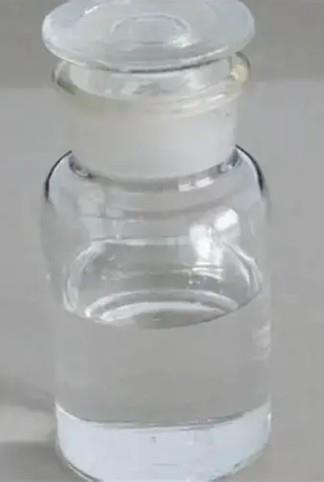
Figure1: Picture of 10-Undecen-1-ol
Synthesis
10-Undecen-1-ol can be derived from ricinoleic acid: This is one of the more common preparation methods currently available. Through a series of chemical reactions on ricinoleic acid, such as reduction and hydrogenation, 10-Undecen-1-ol can be obtained.
Copolymerization Reaction
Ethylene was copolymerized with 10-Undecen-1-ol in the presence of four different metallocene catalyst systems. As a polar comonomer, 10-Undecen-1-ol was incorporated into the polyethylene chain to investigate its effect on polymer properties. The resulting copolymers were characterized by differential scanning calorimetry (DSC) and dynamic mechanical analysis (DMA). It was demonstrated that the properties of the catalysts used affected the crystallization behavior of the copolymers, as the catalysts exhibited differences in the conversion rates of 10-Undecen-1-ol. The step crystallization technique using DSC provided useful information about the differences in comonomer incorporation, revealing that the distribution of 10-Undecen-1-ol along the chain varied with catalyst structure. The formation of multiple melting peaks, based on differences in ethylene sequence length, was much weaker for copolymers produced with a non-bridged metallocene than for those produced with bridged catalysts. A study of the crystallization rates in nonisothermal experiments exhibited a small decrease in crystallization temperatures with increasing branching from 10-Undecen-1-ol incorporation. The Hoffman-Weeks extrapolation of melting point versus crystallization temperature gave reasonable results for silylene-bridged copolymers. In DMA, the storage modulus was studied as an indicator of stiffness, and the loss tangent was examined as a measure of the effect of branching on the β-relaxations. The DMA measurements indicated a slight increase in the flexural modulus of the copolymers relative to the corresponding homopolymers, likely due to the influence of 10-Undecen-1-ol. The damping curves did not show any peaks in the β-relaxation range, which indicates that the amount of short branching in the copolymers—beyond that introduced by 10-Undecen-1-ol is negligible. [1]
Synthesis of branched polyketoesters
A strategy to synthesize branched polyketoesters via the carbonylative polymerization of bifunctional α,ω-alkenols is presented, with 10-Undecen-1-ol serving as a key exemplary monomer. This approach relies on the competitive interplay between two related catalytic pathways—alternating alkene/CO copolymerization and alkene hydroesterification—both of which share a common metal-acyl intermediate. In this context, 10-Undecen-1-ol functions not only as a comonomer but also as an in-chain source of ester linkages, enabling microstructure diversification. Small-molecule model studies of cationic Pd-catalyzed alkene carbonylation in the presence of alcohols demonstrate that the relative rates of ketone formation can be tuned across a wide range through judicious bis(phosphine) ligand design. Specifically, carbonylative polymerization of 10-Undecen-1-ol using a (dppp(3,5-CF₃)₄)Pd(OTs)₂ catalyst led to the formation of high molecular weight polyketoesters with intermediate dispersity (Mn > 20,000 g/mol, Đ = 2.6) and a ketone/ester microstructure ratio of approximately 1:2. Notably, when 10-Undecen-1-ol was polymerized under these conditions, the use of electron-deficient bis(phosphines) proved essential for suppressing deleterious alkene isomerization, thereby enabling access to high molecular weight polymers. Furthermore, terpolymerization reactions involving 1-hexene/10-Undecen-1-ol/CO and 1-fluoro-10-undecene/10-Undecen-1-ol/CO were also successfully achieved using the same (dppp(3,5-CF₃)₄)Pd(OTs)₂ catalyst. This proof-of-concept polymerization thus unlocks access to tunable polymer microstructures without the need for extensive post-polymerization treatment. [2]
Reference
[1] Starck P, L?fgren B. Studies on metallocene catalyzed copolymers of ethylene with 10-undecen-1-ol[J]. Journal of materials science, 2000, 35: 4439-4447.
[2] Lo S Y, Folster C P, Harkins R P, et al. Carbonylative co-and terpolymerizations of 10-undecen-1-ol: a route to polyketoesters with tunable compositions[J]. ACS Catalysis, 2022, 12(23): 14629-14636.

You may like


Lastest Price from 10-UNDECEN-1-OL manufacturers

US $0.00-0.00/kg2025-09-05
- CAS:
- 112-43-6
- Min. Order:
- 1kg
- Purity:
- 98%
- Supply Ability:
- 1

US $6.00/kg2025-04-21
- CAS:
- 112-43-6
- Min. Order:
- 1kg
- Purity:
- 99%
- Supply Ability:
- 2000KG/Month