Dodecyltrimethylammonium Bromide: Properties and Interactions
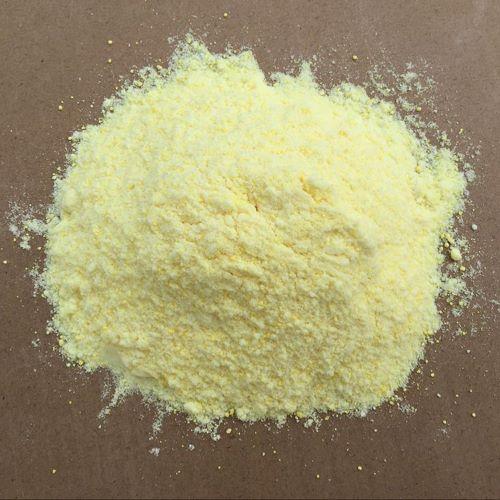
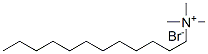
Dodecyltrimethylammonium Bromide is a typical cationic surfactant. It is commonly employed as a biocide, preservative, emulsifier, softener, and antistatic agent, finding extensive application in the fields of daily chemicals, textiles, water treatment, coatings, and laboratories. In analytical and research contexts, it frequently serves as an ion-pair reagent for chromatographic analysis, and is also utilised in micelle catalysis, nanomaterial preparation, and protein denaturation and extraction. Dodecyltrimethylammonium Bromide is highly irritating and should be avoided from contact with skin and mucous membranes. Store in a sealed container in a dry, dark place.
Volumetric and viscometric studies on dodecyltrimethylammonium bromide
Volumetric, viscometric, and other thermodynamic data provide valuable information regarding solute–solvent, solute–solute, and solvent–solvent interactions. Although volumetric, viscometric, and related thermodynamic parameter values in binary systems are abundantly available, data on ternary systems are limited. Physicochemical studies on aqueous ternary systems are gaining importance, because sometimes it is difficult to arrive at a definite conclusion regarding structure and properties of solutions from studies on binary systems alone. Dodecyltrimethylammonium bromide–water and amino acid–water mixtures are of great importance in protein stability and denaturation phenomena. The effect of DTAB and amino acids on protein structure is now recognized to be more complex than simply disruption of hydrogen bonds and, in particular, causes the breaking of hydrophobic bonds. The effects of added DTAB and amino acids upon the properties of water are continuously investigated in order to understand the mechanism of protein stability and denaturation by Dodecyltrimethylammonium bromide and amino acids. These effects are reported to be intimately connected with the local liquid structure.[1]
The densities and viscosities of dodecyltrimethylammonium bromide (DTAB), glycine, and rac-alanine in water and DTAB in glycine/alanine aqueous solutions have been determined at 288.15, 296.15, 304.15, 312.15, and 320.15 K. The apparent molar volumes were obtained from these density data. The limiting apparent molar volumes and experimental slopes (S v) were derived from the Masson equation and interpreted in terms of solute–solute and solute–solvent interactions. The studies on the solution properties of dodecyltrimethylammonium bromide, glycine, and rac-alanine in aqueous solution and DTAB in amino acid solutions (glycine/alanine) reveal the following: DTAB + water: the behavior of DTAB in aqueous solution is temperature dependent. In premicellar region it appears to be a structure breaker for the water solvent system. Glycine/rac-alanine + water: glycine and rac-alanine in aqueous solutions exhibit similar behavior. Both of the solutes act as structure breakers at all studied temperatures (15–47 °C). DTAB + 0.25 m glycine/rac-alanine: Dodecyltrimethylammonium bromide in aqueous glycine solution acts as a structure maker in premicellar region at all temperatures studied.
Dodecyltrimethylammonium bromide surfactant effects on DNA
In the present work we report a study on the DNA interaction with the surfactant dodecyltrimethylammonium bromide (DTAB), performed at the single-molecule level. We were able to identify and characterize in detail the two different components of the binding mechanism: electrostatic attraction between the cationic head of DTAB and the negative phosphate backbone of the DNA double helix, followed by a strong hydrophobic interaction between the tails of the bound Dodecyltrimethylammonium bromide molecules, resulting in a DNA compaction induced by the surfactant. Although there is a previous study in the literature which uses optical tweezers to perform force spectroscopy with DNA-DTAB complexes, such a study was performed in the high-force enthalpic regime, in which the complexes are stretched with forces on the order of tens of piconewtons. On the contrary, our study uses very low forces to stretch the complexes, i.e., we work in the entropic regime, where the forces are small enough to only change the biopolymer conformation in solution, not affecting its structure. Such regimes give completely different insights on different aspects of the interaction; while the former is useful to understand the changes on the DNA secondary structure and helix stability on surfactant binding, the latter gives insights on the mechanical properties of the complexes formed and on the physical chemistry of the interaction. Finally, note that the approach presented here can contribute to improving the fundamental knowledge about DNA-surfactant systems and possibly to the development of novel applications for these complexes.[2]
Nevertheless, the Hill exponent obtained from the fittings suggest a completely different interpretation about the cooperativity of the two binding mechanisms. For the first one (individual binding) we obtained 𝑛1∼ 1, confirming Dodecyltrimethylammonium bromide molecules bind individually at this concentration range, i.e., independent on the previous bound surfactant molecules, and therefore the mechanism is noncooperative. We have investigated the DNA interaction with the surfactant DTAB using three different experimental techniques: optical and magnetic tweezers and gel electrophoresis. From our optical tweezers assays, we were able to report how Dodecyltrimethylammonium bromide changes the mechanical properties of DNA on binding and the specific binding parameters of the interaction. Our results show that DTAB interacts with DNA in the concentration range of fractions of millimolar, presenting two distinct binding mechanisms: individual DTAB binding at low concentrations, followed by a strong hydrophobic interaction between the tails of the bound Dodecyltrimethylammonium bromide molecules, resulting in a DNA compaction induced by the surfactant for sufficient high concentrations. The transition between the two binding regimes is mediated by cooperativity, which increases abruptly at the transition concentration, with the Hill exponent increasing from ∼1 to ∼3.4. Finally, magnetic tweezers and gel electrophoresis were used to confirm DNA compaction under our experimental conditions. These findings, along with the methodology presented here, give new insights for future studies involving surfactants and the DNA molecule.
References
[1]Hossain MF, Biswas TK, Islam MN, Huque ME. Volumetric and viscometric studies on dodecyltrimethylammonium bromide in aqueous and in aqueous amino acid solutions in premicellar region. Monatsh Chem. 2010;141(12):1297-1308. doi: 10.1007/s00706-010-0402-5. Epub 2010 Oct 14. PMID: 26166851; PMCID: PMC4494842.
[2]Silva, E F et al. “Dodecyltrimethylammonium bromide surfactant effects on DNA: Unraveling the competition between electrostatic and hydrophobic interactions.” Physical review. E vol. 102,3-1 (2020): 032401. doi:10.1103/PhysRevE.102.032401
You may like
See also
Lastest Price from Dodecyltrimethylammonium Bromide manufacturers

US $0.00/KG2025-04-21
- CAS:
- 1119-94-4
- Min. Order:
- 1KG
- Purity:
- 98%min
- Supply Ability:
- 30tons/month
US $10.00/KG2025-04-21
- CAS:
- 1119-94-4
- Min. Order:
- 1KG
- Purity:
- 99%
- Supply Ability:
- 10 mt