Galden (TM) HT70: Applications & Material Modifications
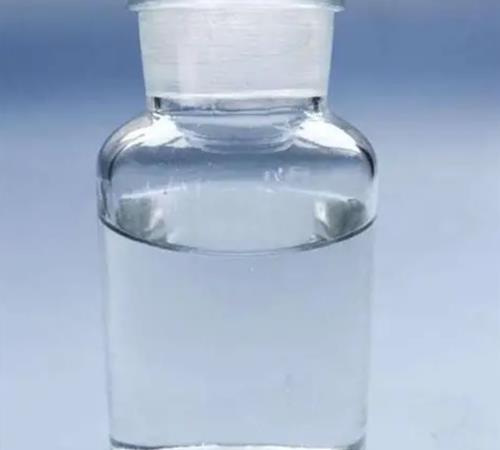
Galden (TM) HT70 Oil is mainly used in the areas with heat, chemicals, solvents, corrosion, toxicity, flammability, etc. It can be used in original form or to be formulated into greases for the specific applications in the industry.
Towards a Long-Chain Perfluoroalkyl Replacement
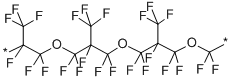
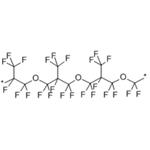
This work focuses on attaining water and oil repellency of engineering thermoplastics, such as polyethylene terephthalate (PET), with the addition of GALDEN (TM) HT70 (PFPEs)-based oligomeric polyurethanes. Repellency has been one of the critical targets in designing practical polymer-based materials contacting with aqueous and/or oily liquid media. To this end, a number of engineering thermoplastics have low wettability by water and demonstrate significant water repellency. In contrast to hydrophobic polymers, only fluorinated polymers demonstrate some level of oil repellency. However, with a few exceptions (e.g., polytetrafluoroethylene and polyvinylidenefluoride), the higher cost of these polymers and/or their mechanical properties generally prevents their widespread applications as engineering materials. GALDEN (TM) HT70 are macromolecules possessing –CF2–, –CF2–CF2–, and –CF(CF3) –CF2– molecular fragments in their backbone that are separated by oxygen atoms. Currently, PFPEs are considered as potentially safer replacements for LCPFAs.[1]
GALDEN (TM) HT70 have numerous advantages, such as high chemical inertness and radiation resistance, low surface tension (20–22 mN/m), nonflammability, low toxicity, optical transparency, and low volatility.However, as pure materials, they cannot serve as effective water/oil repellent additives for engineering thermoplastics because of their immiscibility and incompatibility with polymer matrices. Original GALDEN (TM) HT70-based oligomeric polyurethanes (FOPUs) with different macromolecular architecture were synthesized (in one step) as low-surface-energy materials. It is demonstrated that the oligomers, especially the ones terminated with CF3 moieties, can be employed as safer replacements to long-chain perfluoroalkyl substances/additives. The FOPU macromolecules, when added to an engineering thermoplastic (polyethylene terephthalate, PET) film, readily migrate to the film surface and bring significant water and oil repellency to the thermoplastic boundary. The best performing FOPU/PET films have reached the level of oil wettability and surface energy significantly lower than that of polytetrafluoroethylene, a fully perfluorinated polymer.
NIR-labeled Galden (TM) HT70 nanoemulsions
Many anticancer agents, from hormonal modulators to anti-proliferative agents, suffer from low selectivity, high toxicity and low water solubility. Numerous nanoparticles, liposomes, micro-emulsions, and nanoemulsions have been formulated to increase drug solubility, improve drug accumulation at the site of action, and avoid the side effects of systemic exposure. The Galden (TM) HT70 nanoemulsion reported here incorporates dual imaging modalities, designed to allow specific and selective biodistribution assessment in vitro and in vivo. PFPEs are long PFC chains of (CF2CF2O) monomers, which have exceptionally low water solubility, likely contributing to the exceptionally high stability of PFPE nanoemulsions without increasing droplet size and polydispersity. Galden (TM) HT70 nanoemulsions provide sustained droplet size over times which is critical for future clinical applications as drug delivery vehicles. In the present study, nanoemulsions containing Galden (TM) HT70-tyramide, nonionic surfactants, and a hydrocarbon oil were prepared and characterized. Microfluidization techniques yielded a stable formulation for a nanoemulsion with NIR dye and celecoxib. The formulation was evaluated in vitro in a model immune cell line, fetal skin dendritic cells (FSDCs), for cellular uptake and toxicity. Cellular loading of the drug carrying nanoemulsion was evaluated by NIR microscopy, NIR spectroscopy and quantified by 19F NMR.[2]
The high hydrophobicity and substantial lipophobicity of the Galden (TM) HT70 polymer in PFPE-tyramide conjugate prevents incorporation of lipophilic and water-insoluble drugs. Therefore, several types of natural and synthetic hydrocarbon oils were introduced into the formulation to facilitate incorporation of a lipophilic model drug celecoxib. Our preliminary studies with Galden (TM) HT70-tyramide nanoemulsions incorporated olive oil (Super Refined, Croda) and Capmul (PG-8, Abitec). Olive oil appeared unable to dissolve a sufficient amount of celecoxib (more than 2 mg per 1 g of oil, data not shown) while PFPE-tyramide nanoemulsions with Capmul were unstable (data not shown). Theranostic nanoparticle development recently took center stage in the field of drug delivery nanoreagent design. Theranostic nanoparticles combine therapeutic delivery systems (liposomes, micelles, nanoemulsions, etc.) with imaging reagents (MRI, optical, PET, CT). This combination allows for non-invasive in vivo monitoring of therapeutic nanoparticles in diseased organs and tissues. Here, we report a novel Galden (TM) HT70 nanoemulsion with a water-insoluble lipophilic drug. The formulation enables non-invasive monitoring of nanoemulsion biodistribution using two imaging modalities, 19F MRI and near-infrared (NIR) optical imaging. The nanoemulsion is composed of PFPE-tyramide as a 19F MRI tracer, hydrocarbon oil, surfactants, and a NIR dye.
Galden (TM) HT70 Intermediate Molds
Galden (TM) HT70-based elastomers are a unique class of fluorinated polymers whose structure is formed by linear chains based on multiple strong carbon fluorine bonds, which entail high stiffness and temperature resistance. Prior curing fluoropolymers are viscous liquids at room temperature and are characterized by a very low surface energy. This facilitates the filling of nanoscale cavities and guarantees an anti-adhesive behavior. Galden (TM) HT70 are inert and exhibit high durability and toughness, high gas permeability, and low toxicity, with additional features of chemical and thermal stability. These characteristics minimize degradation under use and provide good lubricity, which reduces the contact surface wear. PFPE-based elastomers are, therefore, promising for NIL but only very rarely used to this end.[3]
In Reference, Galden (TM) HT70 was successfully tested against silicon and PDMS as mold for thermal nanoimprinting of polycarbonate (PC) sheets. In conclusion, we have introduced and characterized an innovative two-step thermal NIL process based on the use of intermediate molds made of PFPE to replicate sub-100 nm features from a silicon mold to a final thermoplastic material (COC). Galden (TM) HT70 elastomeric molds were compared with molds made of the more standard PDMS, which demonstrated better resolution and fidelity of the replica process. More specifically, we showed that, in case of 600-nm-period nanogratings, PDMS could not successfully reproduce the topography likely because of its rather low Young’s modulus. On the contrary, the more rigid Galden (TM) HT70 allowed the nanograting to be successfully copied.
References
[1]Wei L, Caliskan TD, Brown PJ, Luzinov I. Towards a Long-Chain Perfluoroalkyl Replacement: Water and Oil Repellent Perfluoropolyether-Based Polyurethane Oligomers. Polymers (Basel). 2021 Apr 2;13(7):1128. doi: 10.3390/polym13071128. PMID: 33918135; PMCID: PMC8036271.
[2]O'Hanlon CE, Amede KG, O'Hear MR, Janjic JM. NIR-labeled perfluoropolyether nanoemulsions for drug delivery and imaging. J Fluor Chem. 2012 May;137:27-33. doi: 10.1016/j.jfluchem.2012.02.004. Epub 2012 Feb 14. PMID: 22675234; PMCID: PMC3366195.
[3]Masciullo C, Sonato A, Romanato F, Cecchini M. Perfluoropolyether (PFPE) Intermediate Molds for High-Resolution Thermal Nanoimprint Lithography. Nanomaterials (Basel). 2018 Aug 10;8(8):609. doi: 10.3390/nano8080609. PMID: 30103377; PMCID: PMC6116295.
You may like
Lastest Price from GALDEN (TM) HT70 manufacturers
US $450.00-400.00/kg2025-07-18
- CAS:
- 69991-67-9
- Min. Order:
- 5kg
- Purity:
- ≥99.5%
- Supply Ability:
- 500 kg
US $6.00/kg2025-04-21
- CAS:
- 69991-67-9
- Min. Order:
- 1kg
- Purity:
- 99%
- Supply Ability:
- 2000KG/Month