Honokiol: Antitumor & Neuroregulatory Effects
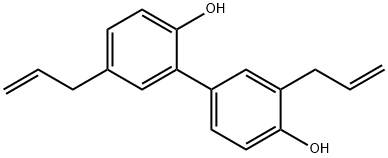
Honokiol is one of the chemicals found in Magnolia bark that is believed to be up to 1000 times more potent than vitamin E with regard to its antioxidant properties. Since 100 A.D., Magnolia bark is used by ancient Chinese in the treatment of a plethora of medical conditions including gastrointestinal disorders, respiratory infections, and body pains. Recent research found that it is mainly responsible for the diverse health benefits of Magnolia bark. Honokiol exerts its antioxidant properties by blocking reactive oxygen species (ROS), which are unstable molecules that can cause cellular damage and cell death. This effect can help protect against various types of diseases related to free radicals. There have been some side effects associated with its use wherein the patient had one of the issues listed below at some point while being on honokiol. However, these side effects weren’t confirmed to be associated with the treatment and could have been a coincidence.
Honokiol, a Multifunctional Antiangiogenic and Antitumor Agent
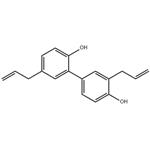
Honokiol was found to inhibit thrombosis by inhibiting thromboxane formation and intracellular calcium mobilization in platelets. In the 1990s, it was found to have activity as a scavenger for hydroxyl radicals, lipid peroxidation, and of acetyl-CoA:1-alkyl-sn-glycero-3-phosphocholine acetyltransferase activity, a major intermediate in the production of platelet-activating factor (PAF). Honokiol was found to potentiate the differentiation of HL60 promyelocytic leukemia cells and cause apoptosis of lung and colon cancer cells in vitro. Magnolol and a methanolic extract of Magnolia were shown to exert a chemopreventive effect in a murine model of skin carcinogenesis. Honokiol also was found to be a potent scavenger of hydroxyl radicals, which is likely due to the allyl groups. The ortho allyl group could potentially form a six-member ring after absorption of the hydroxyl group. This may account for the superior antioxidant activity to magnolol, which has two para-allyl groups to the hydroxyls, and thus cannot form the six-member ring. Tumor cells rely on several stimuli for optimal tumor growth, including activation of focal adhesion kinases, downstream of integrins. Retrovirus-based knockdown of shb, an adaptor for integrin-mediated signaling, was accomplished by cre-mediated recombination. Loss of shb causes decreased activation of focal adhesion kinase, but did not affect in vivo or in vitro growth of SVR angiosarcoma cells.[1]
Honokiol has been used to treat such periodontopathic microorganisms, Porphyromonas gingivalis, Prevotella gingivalis, Actinobacillus actinomycetemcomitans, Capnocytophaga gingivalis, and Veillonella disper, and no cytotoxicity against human gingival fibroblasts and epithelial cells; along with other gram-positive bacteria and fungi. We demonstrate that it has two distinct mechanisms of action. The first one is through inhibition of ras signaling, and appears to be most active in tumors with defective p53 function. The second one is through induction of cyclophilin D and activation of the mitochondrial transition pore. Honokiol appears to have distinct activities against tumors with mutant p53, through inhibition of ras-phospholipase D activation, and tumors with wild-type p53, through induction of cyclophilin D and potentiation of the mitochondrial transition pore. It also exhibits antiviral activity against HIV, perhaps through inhibition of NF-κB signaling. Thus, it may be useful in the setting of immunocompromise. Future clinical trials should be carried out combining honokiol with conventional chemotherapy, and increased efficacy might be observed through alleviation of chemotherapy-induced NF-κB activation. This knowledge is required for the development of future analogues, which may target either of these pathways, and for the development of clinical trials using honokiol and its analogues, in which p53 status may play a key role in efficacy.
Neuro-Modulating Effects of Honokiol
Honokiol is a naturally occurring, pleiotropic lignan that can be extracted from Magnolia grandiflora, a species of magnolia common to Japan, and is used in traditional medicines throughout much of Asia. This compound has also been found in several other Magnolia species, including Magnolia dealbata, an endangered endemic species found in Mexico. Like the flavorful tannins present in wine, and its structural analog, magnolol, are poly-phenolic compounds; both with a fragrant and spicy odor. Although aromaticity is not uncommon among anesthetics (lidocaine, propofol, etomidate, etc.) only propofol has a phenol ring like honokiol and magnolol. The structural homology likely explains some of the similar pharmacologic action. Due to its gaining popularity in western medical research, it has been modified and synthesized for delivery through various modalities, including oral, intravenous, liposomal, and transdermal preparations. Honokiol may have some benefits in the peri-operative period, not only for its anxiolytic, analgesic, and antimicrobial effects, but also specifically for its potential role in neurologic and oncologic procedures. This review focuses primarily on honokiol’s effects in the central and peripheral nervous systems and its role in neuroprotection as related to its anxiolytic, analgesic, and anti-inflammatory actions.[2]
Honokiol is not entirely without risks, although its limited empirical application to humans at therapeutic doses has limited the evaluation of its side effect profile thus far. There are potential risks that can be expected, including increased bleeding and potential neurotoxicity at high doses. And, while it has been found to have neuroprotective effects at low doses, it has also been found to increase neuronal death in vitro at higher doses (100 μM applied directly to fetal cortical neurons). This suggests a need to further study its pharmacokinetic and pharmacodynamic parameters in humans before unintentionally administering a potentially toxic dose of this compound. Although the pharmacodynamics and pharmacokinetics of honokiol have now been well-studied in rats, further studies need to be performed in humans before it can be widely administered. With modifications of its structure and methods of delivery helping to improve its functionality at multiple targets, including the GABA receptor and its subunits, serotonergic receptors, and members of the inflammatory cascade, honokiol stands as a promising new therapeutic agent for a variety of conditions.
Honokiol in cancer
Therapeutic resistance is a significant barrier to achieving durable responses in cancer treatment. Immunosuppressive agents, such as cyclosporin A and rapamycin, commonly used to prevent graft rejection, can paradoxically promote tumorigenesis by suppressing immune surveillance and activating oncogenic pathways. Mechanistically, honokiol modulates several key oncogenic and survival pathways, including phosphoinositide 3-kinase (PI3K)/protein kinase B (AKT), mitogen-activated protein kinase (MAPK)/extracellular signal-regulated kinase, signal transducer and activator of transcription 3 (STAT3), and nuclear factor kappa B (NF-κB), and can reverse epithelial-mesenchymal transition, inhibit angiogenesis, and restore immune surveillance. Honokiol, when combined with these immunosuppressants, has demonstrated efficacy in mitigating cancer-promoting signals while maintaining graft viability in pre-clinical models. This review aims to summarize the present pre-clinical evidence on honokiol, focusing on its role in combination therapies for cancer treatment, where its dual anti-inflammatory and anti-tumor effects may offer significant benefits.[3]
drug repurposing has gained traction as a viable strategy to reduce drug development costs and accelerate the translation of therapies into clinical practice. Natural compounds, including plant-derived bioactive molecules, have been extensively studied for their anticancer potential. Honokiol, in particular, has demonstrated potent anticancer activity across various malignancies, with additional preventive benefits. Notably, it has shown the ability to sensitize therapy-resistant cancer cells when used in combination with other conventional and targeted treatments. Pre-clinical studies from our laboratory have further confirmed the therapeutic efficacy of honokiol in both cancer and post-transplantation settings. However, to fully elucidate its clinical potential, more in-depth investigations are warranted, including comprehensive pre-clinical studies to fully evaluate the potential of honokiol as a treatment option.
References
[1]Fried LE, Arbiser JL. Honokiol, a multifunctional antiangiogenic and antitumor agent. Antioxid Redox Signal. 2009 May;11(5):1139-48. doi: 10.1089/ars.2009.2440. PMID: 19203212; PMCID: PMC2842137.
[2]Woodbury A, Yu SP, Wei L, García P. Neuro-modulating effects of honokiol: a review. Front Neurol. 2013 Sep 11;4:130. doi: 10.3389/fneur.2013.00130. PMID: 24062717; PMCID: PMC3769637.
[3]Rawat L, Solanki R, Kumar R, Pal S, Sabarwal A. Honokiol in cancer: Roles in enhancing combination therapy efficacy and preventing post-transplant malignancies. Tumor Discov. 2025;4(2):42-54. doi: 10.36922/td.8152. Epub 2025 May 5. PMID: 41019287; PMCID: PMC12463189.
You may like
Related articles And Qustion
See also
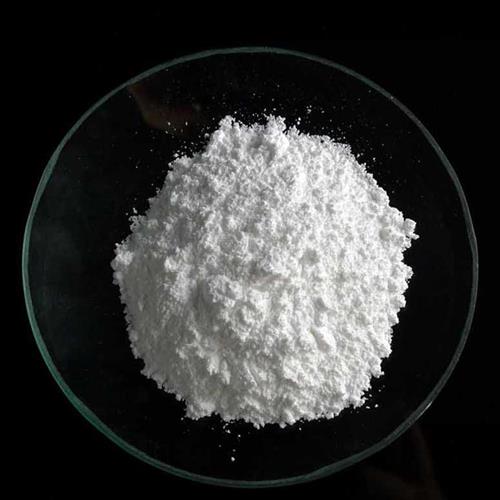
Lastest Price from Honokiol manufacturers
US $0.00-0.00/kg2025-08-21
- CAS:
- 35354-74-6
- Min. Order:
- 1kg
- Purity:
- 99%
- Supply Ability:
- 1

US $0.00/kg2025-04-28
- CAS:
- 35354-74-6
- Min. Order:
- 1kg
- Purity:
- 0.99
- Supply Ability:
- 1000kg