Magnesium Phosphate: Biomedicine & High-Temperature Transition
Magnesium phosphate is a form of magnesium supplement that has been called the “homeopathic aspirin” due to its capacity to heal acute pains, including – headaches, earache, and toothache. It is used as an emulsifier and prevents clumping in powders. In addition, it is used as a magnesium salt in food supplements and functional foods. Furthermore, Magnesium phosphate has been used as an active ingredient in numerous pharmaceutical products, like – antacids, laxatives, and magnesium supplements. It is used in the prevention of magnesium deficiency, which is possibly one of the most common nutritional deficiencies (after iron anemia), which unknowingly causes suffering.
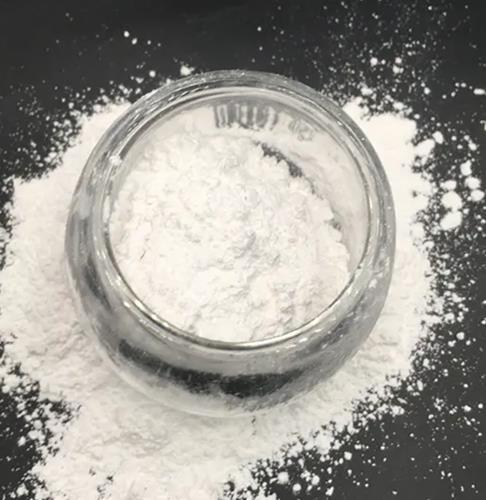
Biodegradable magnesium phosphates in biomedical applications
Magnesium (Mg) is the twelfth element in the periodic table and the eighth most abundant element by mass on earth. Mg is an active metal element that can produce hydrogen gas with acids and burn in air. Among the plentiful Mg-based materials, magnesium phosphates (MgPs) have attracted increasing interest in biomedical fields in recent years. MgPs have excellent biocompatibility because both Mg and phosphorus are common elements in the human body, and the MgP biominerals including struvite (MgNH4PO4·6H2O), newberyite and cattiite occur naturally in physiological and pathological mineralized tissues. Qi et al. tested the cytotoxicity of nanostructured MgPs by MTT assay using MC-3T3 osteoblasts, and the results show that the cell viabilities were above 98% when the cells were cocultured with Magnesium phosphate for 24 h at concentrations in the range of 0–100 μg mL−1. For the biodegradability of MgPs, Qi et al. demonstrated that nanostructured MgPs exhibit obvious pH-dependent dissolution performance, and can be designed as an ideal nanocarrier for pH-responsive drug delivery. Thanks to their good biocompatibility and biodegradability, Magnesium phosphate can be used as an alternative to CaPs, and they have great potential in the development of new biomaterials for biomedical applications.[1]
Although the biomedical applications of MgPs are fewer than those of CaPs, the development of MgP-based biomaterials has attracted more and more attention in recent years due to their good biocompatibility and biodegradability. MgP-based biomaterials have high biosafety. However, it should be noted that Magnesium phosphate also have some disadvantages in practical applications. Firstly, MgPs can easily form micron-sized particles through rapid nucleation and growth in aqueous solution, so the application of MgPs in nanomedicine requires the development of new strategies for controllable synthesis of nanostructured Magnesium phosphate. Secondly, the rapid degradation of MgPs may bring adverse effects to practical applications. For example, MgP-based drug delivery systems may release drugs quickly before reaching the disease site, and the rapid degradation of MgP-based implants is detrimental to the damaged tissue repair. The application of Magnesium phosphate in tissue engineering mainly takes the form of cements, ceramics, scaffolds and coatings. MgP-based biomaterials have good biodegradability, which are beneficial for tissue engineering applications. Moreover, the released Mg2+ ions from MgP-based implants promote damaged tissue repair and regeneration. However, different mechanical properties and degradation rates are required for different tissue repairs.
Magnesium phosphates experienced high-temperature transition
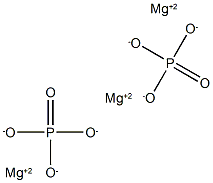
Magnesium phosphate grains, minor accessory minerals found on the primitive meteorite Yamato 980115 (Y 980115), were investigated by Raman microspectroscopy. All magnesium phosphate grains found in the present study can be assigned to farringtonite, dehydrated magnesium phosphate Mg3(PO4)2-I. Since the Mg3(PO4)2-I is generally formed via the irreversible thermal transition from the polymorphs of Mg3(PO4)2–II and –III at above 750–800 degree Celsius, we can infer that the parent body of the Y 980115 meteorites experienced thermal alteration with such a high temperature. This result is in good accordance with the previous studies and the proposals on the alteration history of Y 980115 by the electron-beam microscope and X-ray diffraction analyses. Furthermore, the hydrated form of the magnesium phosphates of Mg3(PO4)2·4H2O, Mg3(PO4)2·8H2O, and Mg3(PO4)2·22H2O was not found in the present research, also suggesting that the extensive vaporization of the hydrated water molecules with magnesium phosphate occurred by such high-temperature thermal alteration. Since Y 980115 has been historically categorized to heavily aqueously altered CI (Ivuna-type) carbonaceous chondrites but has distinct characteristic to CI meteorites, the present result would provide further evidence to the complexed alteration history of the parent body of Y 980115 meteorite.[2]
References
[1]Gu X, Li Y, Qi C, Cai K. Biodegradable magnesium phosphates in biomedical applications. J Mater Chem B. 2022 Mar 30;10(13):2097-2112. doi: 10.1039/d1tb02836g. PMID: 35234245.
[2]Yui H, Tsychiya H, Kashima A, Urashima SH, Oguchi K, Imae N, Yamaguchi A. Magnesium phosphates experienced high-temperature transition found on the CI-like carbonaceous chondrite Yamato 980115 by Raman microspectroscopy. Anal Sci. 2025 Apr;41(4):323-328. doi: 10.1007/s44211-025-00720-0. Epub 2025 Jan 31. PMID: 39888588; PMCID: PMC11937176.
You may like
See also
Lastest Price from MAGNESIUM PHOSPHATE manufacturers
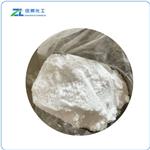
US $79.00-38.00/kg2025-04-21
- CAS:
- 7757-87-1
- Min. Order:
- 1kg
- Purity:
- 99%
- Supply Ability:
- 20ton
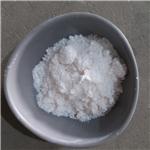
US $0.00-0.00/KG2025-04-15
- CAS:
- 7757-87-1
- Min. Order:
- 1KG
- Purity:
- 99%
- Supply Ability:
- 500000kg