N,N-Diethyl-p-phenylenediamine sulfate as a color film developer
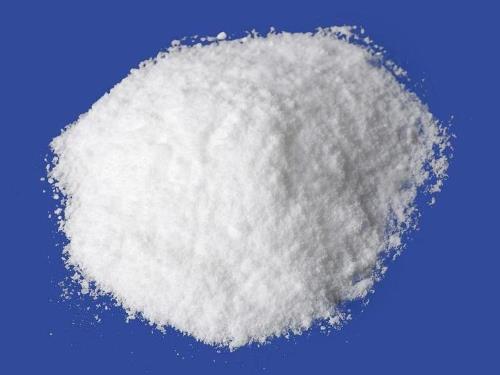
N,N-Diethyl-p-phenylenediamine sulfate (CD-1) is the first in the series of color developing agents used in developing color films. It is the organic compound N,N-diethyl-1,4-benzenediamine (DPD), which is usually in the form of the monohydrochloride salt. In color development, after reducing a silver atom in a silver halide crystal, the oxidised developing agent combines with a color coupler to form a color dye molecule N,N-Diethyl-p-phenylenediamine sulfate was first used in the production of Afgacolor in 1936 by ORWO a subsidiary of Filmfabrik Wolfen under the umbrella of I.G. Farben. Using similar technology Kodak introduced a family of incorporated color film and paper products using similar chemistry. Colour developers CD-1(TSS) is pale yellow to pale roseate crystalline powder or granules. Colour developers CD-2, CD-3, CD-4 are white or grey-white crystalline powder or granules. They are easy soluble in water. The new-made colourless or light-red aqueous solution will slowly become red when exposed in air.
N,N‑Diethyl‑p‑phenylenediamine Sulfate‑Based Assay for PAA
N,N-Diethyl-p-phenylenediamine sulfate (DPD) reaction is preferred and accepted by the US Environmental Protection Agency for the determination of PAA concentrations. The main oxidation product of the DPD-PAA reaction at near-neutral pH is a semiquinone-type cationic compound known as Würster dye, which exhibits a pink-magenta color. Additionally, the reaction proceeds rapidly and exhibits selectivity for PAA, even in the presence of other oxidants, making it highly suitable for practical applications. By integrating image processing technology with smartphone-based colorimetric detection, this reaction enables the development of a portable and user-friendly assay for point-of-use scenarios, particularly in medical and pharmaceutical disinfectant preparation. The aim of this work was to develop a simple, rapid, and green alternative method for PAA determination with the colorimetric N,N-Diethyl-p-phenylenediamine sulfate reaction. A portable analytical system that integrates a multi-well plate platform with a smartphone detector and a custom mobile application was developed to enable convenient on-site analyses. The determination of PAA in pharmaceutical disinfectants was demonstrated as an initial model for real-world application, promoting sustainable pharmaceutical analyses, especially for IPC. Furthermore, this approach can be extended to the food and beverage industries, as well as cattle farming, to support sustainable practices in both agroindustry and livestock.[1]
The effect of N,N-Diethyl-p-phenylenediamine sulfate concentration (0.4 to 8.7 mM) on the Δ green intensity of the product using PAA concentrations of 0.33 to 3.0 µg/mL was investigated. These experiments were conducted under the conditions of 26.1 mM KI and 4.3 mM AcOH. The results indicate that, at a DPD concentration below 1.1 mM, the Δ green intensity was lower than that at higher DPD concentrations. This could be explained by the fact that, under conditions with elevated oxidant-to-DPD ratios, N,N-Diethyl-p-phenylenediamine sulfate undergoes oxidation and forms both DPD•+, the Würster dye (pink-magenta), and imine (colorless) products. The period of DPD oxidation by PAA was investigated by monitoring the formation of the pink-magenta product under fixed concentrations of I− (26.1 mM), AcOH (4.3 mM), and DPD (1.1 mM) across a range of PAA concentrations from 0.33 to 2.65 µg/mL. The incubation time varied from 0.5 to 5 min, following the addition of DPD. The sensitivity and linearity of the obtained calibration graph at each incubation time were examined. A simple, rapid, and green alternative approach for PAA determination, based on a colorimetric reaction involving N,N-Diethyl-p-phenylenediamine sulfate oxidation by PAA via an intermediate reaction with KI, was successfully developed. The effectiveness of this approach was demonstrated by determining the PAA concentration in pharmaceutical disinfectant samples at ready-to-use concentrations without any influence of other factors that may be present in the samples.
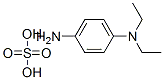
N,N-Diethyl-p-phenylenediamine sulfate for determination of drugs
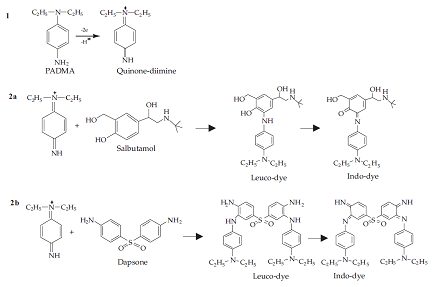
Phenylenediamine and its derivatives have been widely used in the estimation of enzymes and drugs. This paper, for the first time, describes a simple and sensitive method using N,N-Diethyl-p-phenylenediamine sulfate (PADMA) and KIO4,toassay these drugs in bulk samples and in a wide variety of pharmaceutical preparations. The analytical procedure involves oxidation of PADMA by KIO4 followed by coupling with drugs containing phenolic and aromatic amino groups to produce green and red colored products having maximum absorbance at 670 nm and 550 nm, respectively. Spectrophotometric methods are proposed for the determination of drugs containing a phenol group [salbutamol sulphate (SLB), ritodrine hydrochloride (RTD), isoxsuprine hydrochloride (IXP)] and drugs containing an aromatic amine group [dapsone hydrochloride (DAP), sulfamethoxazole (SFM), and sulfadiazine (SFD)] in pharmaceutical dosage forms. The methods are based on coupling of N,N-Diethyl-p-phenylenediamine sulfate with the drugs in the presence of KIO4 to give a green colored product (λmax at 670 nm) and a red colored product (λmax at 550 nm), respectively. The proposed methods offer simple and accurate procedures, based on coupling of oxidized PADMA, for the determination of drugs containing phenolic and aromatic amine groups.[2]
References
[1]Katib S, Apichai S, Jiaranaikulwanitch J, Sirithunyalug B, Ogata F, Kawasaki N, Grudpan K, Saenjum C. Portable and Rapid Smartphone-Based Colorimetric Assay of Peracetic Acid for Point-of-Use Medical/Pharmaceutical Disinfectant Preparation. Molecules. 2025 Jun 28;30(13):2798. doi: 10.3390/molecules30132798. PMID: 40649312; PMCID: PMC12250838.
[2]Nagaraja, Padmarajaiah et al. “Use of N, N-diethyl-p-phenylenediamine sulphate for the spectrophotometric determination of some phenolic and amine drugs.” Acta pharmaceutica (Zagreb, Croatia) vol. 60,2 (2010): 217-27. doi:10.2478/v10007-010-0015-x
You may like
Related articles And Qustion
See also
Lastest Price from N,N-Diethyl-p-phenylenediamine sulfate manufacturers

US $1.00/KG2025-04-21
- CAS:
- 6283-63-2
- Min. Order:
- 1KG
- Purity:
- 99%
- Supply Ability:
- 10 mt

US $0.00-0.00/kg2025-04-21
- CAS:
- 6283-63-2
- Min. Order:
- 25kg
- Purity:
- 99.9%
- Supply Ability:
- 10ton