Oxaceprol: Application in Osteoarthritis
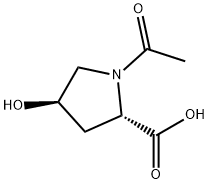
Oxaceprol is a non-steroidal anti-inflammatory drug (NSAID) commonly used to treat osteoarthritis and other musculoskeletal conditions. This class of medication effectively alleviates joint pain, inflammation, and stiffness, thereby improving patients' mobility and quality of life. Its notable advantage lies in controlling symptoms while minimising the risk of severe side effects typically associated with traditional NSAIDs, making it an effective treatment option for many patients. Oxaceprol may be employed for the long-term management of osteoarthritis and other inflammatory conditions, though regular monitoring by healthcare professionals is essential to ensure therapeutic efficacy and prevent potential adverse effects.
Oxaceprol versus tramadol for knee osteoarthritis
Osteoarthritis is a degenerative disease of synovial joints that affects cartilage and bone of both large and small joints and progressively interferes with the ability to work and depending on the joints involved, the activities of daily living. There are as yet no clinically proven therapies to halt osteoarthritis onset or progression. There are as yet no clinically proven therapies to halt osteoarthritis onset or progression. The traditional pharmacological approach is mostly limited to symptomatic management of pain using analgesics, starting with paracetamol and then moving on to nonsteroidal anti-inflammatory drugs (NSAIDs), less potent opioids like tramadol and finally to potent opioids such as oxycodone or hydromorphone. Topical application of diclofenac or capsaicin and intra-articular injections of corticosteroids and sodium hyaluronate are other options though the efficacy of some of them (like injection of hyaluronic acid into the symptomatic knee joint) is controversial. If the impact of osteoarthritis symptoms on quality of life is significant and conservative management is ineffective, surgical approaches such as osteotomy, resurfacing, or joint replacement can be considered, depending on the joints affected, and the patient's lifestyle.Oxaceprol has been recently introduced into India. We, therefore, thought it worthwhile to compare the efficacy and tolerability of oxaceprol, in comparison to the relatively weak opioid tramadol, in the treatment of symptomatic knee osteoarthritis.[1]
Osteoarthritis, the most common cause of arthralgia in adults, is predominantly associated with loss of joint cartilage. NSAIDs can provide effective pain relief, but their extended use carries the risk of serious ADRs. Oxaceprol was introduced about 30 years ago and is used widely in France and Germany for the management of osteoarthritis. Bauer et al. compared oxaceprol (200 mg thrice daily) with diclofenac (25 mg thrice daily) over 3 weeks in a multicenter, randomized, double-blind, study in Germany. Joint function, evaluated by Lequesne's indices, improved clinically in both treatment arms. In both groups VAS score for pain was reduced nearly 50%, joint mobility improved nearly 60% and pain-free walking period more than doubled. Differences between groups were not significant. Despite the limitations, we can conclude that the efficacy and tolerability of oxaceprol were comparable to that of tramadol and the drug can be considered as an alternative to low-potency opioids in the management of knee osteoarthritis. Further studies are required to explore clinical utility in osteoarthritis at other locations and potential chondroprotective action.
A systematic review and meta-analysis of oxaceprol
Oxaceprol, a derivative of l-proline, is an established drug for managing osteoarthritis (OA) with better safety profile than non-steroidal anti-inflammatory drugs (NSAIDs). This systematic review and meta-analysis, following Preferred Reporting Items for Systematic reviews and Meta-Analyses (PRISMA) guidelines, evaluated the efficacy, safety and tolerability of oxaceprol in OA. Electronic databases for published and grey (unpublished) literature were searched to identify parallel-group randomized controlled trials (RCTs) evaluating the impact of oxaceprol in patients with OA. Risk of bias was assessed using the Cochrane collaboration's tool. A total of seven parallel-group RCTs involving 1087 participants were included in the systematic review.[2]
Meta-analysis, in Review Manager, demonstrated numerically greater/significant improvements compared to active control [diclofenac/ibuprofen]/placebo in pain and function of joint; similar improvement vs. active control in global treatment efficacy; no difference/significant difference vs. active control/placebo in NSAIDs as rescue medication. Treatment with oxaceprol showed numerically less adverse events (AEs) than active control (diclofenac: risk ratio [RR], 0.71; 95% confidence interval [CI], 0.45 to 1.11; p=0.14: ibuprofen: RR, 0.73; 95% CI, 0.30 to 1.78; p=0.49) and significantly fewer AEs compared to placebo (RR, 0.76; 95% CI, 0.63 to 0.92; p=0.004). Given the nature of small-to-moderate sample size and short duration of eligible studies, the available clinical evidence of oxaceprol in the management of OA is modest - though looks promising. New and better RCTs with larger sample size and longer follow-up are warranted to strengthen the use of oxaceprol in clinical setting for managing OA.
![Article illustration]() References
References
[1]Mukhopadhyay K, Ghosh P, Ghorai P, Hazra A, Das AK. Oxaceprol versus tramadol for knee osteoarthritis: A randomized controlled trial. Indian J Pharmacol. 2018 Sep-Oct;50(5):266-272. doi: 10.4103/ijp.IJP_633_16. PMID: 30636830; PMCID: PMC6302694.
[2]Durg, Sharanbasappa et al. “A systematic review and meta-analysis of oxaceprol in the management of osteoarthritis: An evidence from randomized parallel-group controlled trials.” Pharmacological reports : PR vol. 71,2 (2019): 374-383. doi:10.1016/j.pharep.2018.12.010
You may like
See also
Lastest Price from Oxaceprol manufacturers
US $0.00/Kg/Drum2025-04-21
- CAS:
- 33996-33-7
- Min. Order:
- 1KG
- Purity:
- 98%min
- Supply Ability:
- 500kgs
US $10.00/KG2025-04-21
- CAS:
- 33996-33-7
- Min. Order:
- 1KG
- Purity:
- 99%
- Supply Ability:
- 10 mt