Properties and Chemical Applications of Scandium oxide
Scandium oxide generally exists as a white solid with a cubic structure characteristic of rare‑earth sesquioxides. It is insoluble in water but dissolves in hot acids. Scandium oxide can be produced through thermal decomposition of scandium salts. This compound is used as an evaporation material for semiconductor coatings, commonly employed in the fabrication of tunable‑wavelength solid‑state lasers, high‑definition television electron guns, metal‑halide lamps, etc. and finds favorable applications in fields such as alloys, electric light sources, catalysts, activators, and ceramics.
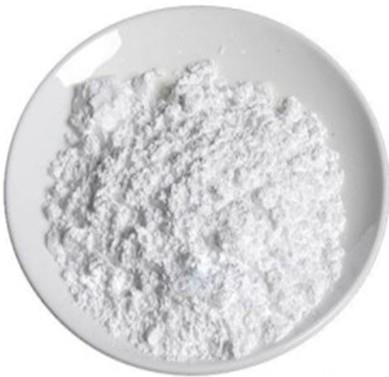
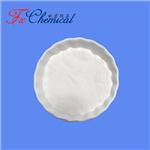
Figure1: Picture of Scandium oxide
Basic Introduction
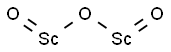
Scandium oxide (Sc₂O₃) is one of the most important scandium products. Its physical and chemical properties are similar to those of rare‑earth oxides (such as La₂O₃, Y₂O₃, and Lu₂O₃), and thus the production methods employed are highly analogous. Scandium oxide can be used to generate metallic scandium (Sc), various scandium salts (e.g., ScCl₃, ScF₃, ScI₃, Sc₂(C₂O₄)₃), and a range of scandium alloys (such as Al‑Sc and Al‑Zr‑Sc series). These scandium‑based products possess practical technical value and favorable economic benefits. Due to its unique characteristics, scandium oxide has found successful applications in fields like aluminum alloys, electric light sources, lasers, catalysts, activators, ceramics, and aerospace, indicating broad prospects for future development.
Properties
Scandium oxide reacts with acids upon heating to form corresponding products. For example, when heated in anhydrous HCl, it yields ScCl₃·nH₂O. Scandium oxide also exhibits a certain degree of chemical and thermal stability, which enables it to perform well under high‑temperature conditions.
Preparation Methods
Scandium oxide can be prepared by direct combustion of scandium metal. Additionally, the oxidative calcination of scandium compounds containing volatile groups can also produce scandium oxide. In industrial production, there are various technical processes for extracting scandium oxide from scandium‑bearing raw materials, such as liquid membrane extraction. The liquid membrane extraction method uses titanium white waste liquid as the starting material and involves a series of steps including extraction, acid washing, back‑extraction, precipitation, and calcination, ultimately yielding a pure scandium oxide product.
Chemical Applications
Alloy field
Scandium oxide can be used to produce metallic scandium and various scandium alloys. In particular, aluminum‑scandium alloys (Al‑Sc) offer advantages such as low density, high strength, great hardness, good plasticity, corrosion resistance, and excellent thermal stability. Therefore, Al‑Sc alloys are well‑suited for structural components in missiles, aerospace, aviation, automotive, and shipbuilding industries, and are gradually extending to civilian applications such as sports equipment and housings for computers and mobile phones.Electric light‑source field: Scandium oxide also contributes to the development of electric light‑source materials.
Catalyst and activator field
Scandium oxide can serve as a catalyst and activator. Ceramic field: Scandium oxide finds certain applications in the ceramic industry.
Solid electrolyte field
Scandium oxide‑stabilized zirconia (ScSZ) is an oxygen‑ion conductor, primarily used as a solid electrolyte material in solid oxide fuel cells (SOFCs) and solid oxide electrolysis cells (SOECs). Compared with yttria‑stabilized zirconia (YSZ), scandium oxide‑stabilized zirconia exhibits higher oxygen‑ion conductivity, allowing for further size reduction at the same output power while maintaining excellent high‑temperature chemical stability.
high-index material
Scandium oxide is a damage resistant, high-index material for HR and AR coatings for ultraviolet appli cations. Damage thresholds of HR coatings did not depend strongly on the number of layers, substrate temperatures, or materials tested. However, HR coatings deposited on fused silica substrates exhibited crazing due to stress generated by differences in thermal expansion coefficients. Thresholds of the AR coatings with the two different low-index materials, magnesium fluoride and fused silica, were approximately equal. MgF2 overcoats provided a large increase in threshold values of ultraviolet HR coatings, and SiO2 undercoats were effective in raising the damage threshold of ul traviolet AR coatings. [1]
Market Overview
In the 1970s, China began developing scandium oxide (Sc₂O₃) products, with kilogram‑scale batches entering the market. During the 1980s, domestic production of scandium oxide surged, reaching an output level of over one hundred kilograms, primarily exported to Japan and the United States. Since the 1990s, however, Russia started mass‑producing scandium oxide and flooded the international market with low‑priced products, severely impacting China's scandium oxide production. This led to a downturn in the industry, with many production lines being shut down, causing both capacity and output to shrink. In recent years, driven by the development of scandium‑aluminum alloys and electric‑light‑source materials in China, the industrial production of scandium oxide has regained momentum. China is rich in scandium resources. According to reports, the global industrial reserves of scandium are approximately 2 million tons, of which China holds about 600,000–650,000 tons, accounting for roughly 30% of the world's total.[2]
Reference
[1] Rainer F, Lowdermilk W H, Milam D, et al. Scandium oxide coatings for high-power UV laser applications[J]. Applied optics, 1982, 21: 3685-3688.
[2] Lin Hecheng. Production, Application and Market of Scandium Oxide in China[J]. Chinese Rare Earths, 2009, 30(1): 96-101.
You may like
Lastest Price from Scandium oxide manufacturers
US $0.00/KG2025-04-21
- CAS:
- 12060-08-1
- Min. Order:
- 1KG
- Purity:
- 98%min
- Supply Ability:
- 30tons/month

US $0.00-0.00/KG2025-04-15
- CAS:
- 12060-08-1
- Min. Order:
- 1KG
- Purity:
- 99%
- Supply Ability:
- 500000kg