Quinhydrone: Applications & Electrochemical Properties
Quinhydrone/methanol treatment for the measurement of carrier lifetime in crystalline silicon substrates has been reported. Surface passivation of silicon substrates by quinhydrone/ethanol treatment has been investigated. It is a general reagent used in potentiometric titrations. It can also be used as a π-acceptor in the formation of charge-transfer complex of analytes for spectrophotometric analysis.
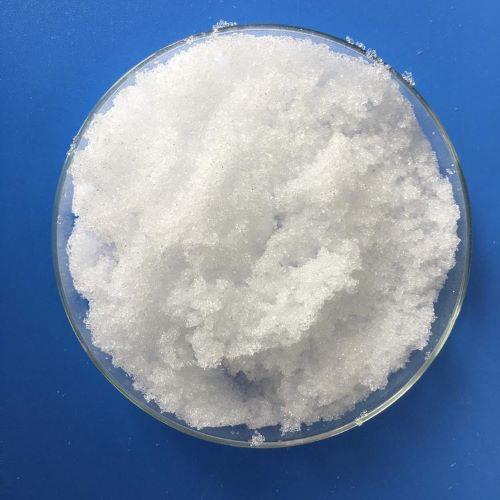
Use of quinhydrone as a promising cathode material
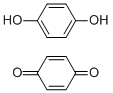
Organic electroactive compounds have been recognized as promising alternates to conventional inorganic-based cathode materials owing to their environmental friendliness, low cost, structural diversity and sustainable nature. Nevertheless, the presence of hydrogen bonding in quinone molecules may inhibit their solubility in battery solvents leading to a stable structure. In the present studies, quinhydrone (QH) which is a molecular charge transfer complex composed of two small quinone molecules (benzoquinone and hydroquinone) held together by hydrogen bonding is introduced as a promising cathode material for aqueous zinc ion battery. Recently, quinhydrone is used as a co-catalyst along with ZnTe nanorods to enhance electron transfer mechanism and catalytic activity of ethanol electrooxidation and has been shown to serve as an electron mediator to boost the biocatalytic activity of glucose oxidase toward glucose. In the present study, quinhydrone tethered multiwalled carbon nanotube designated as QH (super P- MWCNT) is introduced as a cathode for aqueous Zn ion battery. The electrode shows a stable and reversible specific capacity of 232 mAh g−1 at a current density of 50 mA g−1. The electrode shows stability even at rates of up to 2000 mAg−1. The inherent strong hydrogen bonding properties of QH and their π-π stacking interactions with MWCNT paves a way to design insoluble and stable QH cathode for aqueous metal ion batteries. The physicochemical characterization along with DFT calculations reveal the mechanism of charge storage.[1]
Quinhydrone is a charge transfer complex of hydroquinone and benzoquinone and crystallizes in two polymorphs, triclinic and monoclinic. In both structures, the HQ and BQ molecules are connected through hydrogen bonding. In order to understand the structure of quinhydrone, DFT calculations have been performed. Fig. S3 displays two different optimized structures of QH. Fig. S3a shows that BQ and HQ are parallel to each other (represented as parallel-QH), where the hydroxyl groups of HQ and the carbonyl groups of BQ are connected through hydrogen bonds within one QH molecule and there is no continuous chain type structure. The pH electrode component, quinhydrone, has been shown to be a promising cathode material for aqueous zinc battery. It displays a high specific capacity of 232 mAh g−1 with a low charge/discharge potential gap of 80 mV at a discharge current of 50 mA g−1. The rational immobilization of QH on conductive carbonaceous supports such as effectively creates a dissolution-free quinone resulting in improved electrochemical performance of energy storage devices. The FTIR, Raman spectra and NMR confirm that both carbonyl and hydroxyl groups are active centers for Zn storage. The intermolecular hydrogen bonding and charge transfer interactions effectively suppress the QH dissolution into the solvent and enhance the electrical conductivity, leading to a stable cycling performance. It is likely that QH may be a potential cathode for other divalent and monovalent ion battery chemistry as well.
Sublimation aides and abets co-milling and discoloration involving quinhydrone
Quinhydrone - the binary cocrystal (BZQ)·(HQ) (where: BZQ = p-benzoquinone and HQ = hydroquinone) - is regarded as the first known cocrystal. The solid was originally reported by Wӧhler in 1844. (BZQ)·(HQ) is deep green in color and forms upon co-grinding of pale-yellow BZQ and colorless HQ. An X-ray determination of quinhydrone demonstrated the components to assemble by a combination of intermolecular hydrogen bonding and π-π stacking. Effects of charge transfer have been used to account for the deep green color. Herein, we report application of co-milling to (BZQ)·(HQ). We show co-milling of (BZQ)·(HQ) using either 4,4′-BPE or 4-MA to result in dismantling of Quinhydrone through cocrystal exchange reactions that generate known (HQ)·(4,4′-BPE) or (HQ)·2(4-MA) . The exchange reactions are accompanied by discolorations wherein the deep green color of each solid sample changes to light beige or dark brown. Importantly, we show the process of sublimation of BZQ, which involves physical removal of BZQ from the solid sample, to help promote formation and isolation of the targeted co-crystalline solids. We are unaware of a case wherein sublimation is employed to promote formation and isolation of a cocrystal in a co-milling experiment.[2]
Dark green Quinhydrone is stabilized by a combination of O-H···O hydrogen bonds and charge-transfer between the electron donor (HQ) and electron acceptor (BZQ). At the molecular level, applications of (BZQ)·(HQ) to measure hydrogen ion concentration and in potentiometric titrations have been reported while the cocrystal is a promising cathode material for batteries. BZQ itself is used in applications of redox processes (e.g., electron carriers, organic synthesis) (Dandawate et al., 2010). Owing to weak intermolecular interactions in the solid state, BZQ readily sublimes as a pure form (Emel et al., 2017). HQ experiences applications in pharmaceutical and photographic systems, and the molecule readily oxidizes to form BZQ. In our report, we demonstrated sublimation to support co-millings involving Quinhydrone, with the co-millings resulting in discolorations of the solid samples. We are currently expanding applications of co-milling to Quinhydrone, as well as identifying additional components that sublime and can serve as candidates in co-crystal generation. Understanding mechanisms responsible for dismantling cocrystals with the use of sublimation can be expected to influence conformer selections in the design and manufacturing of multicomponent crystals.
References
[1]Barathi, P., Vinothbabu, P., & Sampath, S. (2023). Use of quinhydrone as a promising cathode material for aqueous zinc-ion battery. Journal of Energy Storage, 74(Part B), 109154.
[2]Ezekiel CI, MacGillivray LR. Sublimation aides and abets co-milling and discoloration involving quinhydrone. Front Chem. 2026 Feb 9;14:1741180. doi: 10.3389/fchem.2026.1741180. PMID: 41732171; PMCID: PMC12925636.
You may like
See also
Lastest Price from Quinhydrone manufacturers
US $25.00/ASSAYS2025-04-21
- CAS:
- 106-34-3
- Min. Order:
- 100ASSAYS
- Purity:
- 99.5%
- Supply Ability:
- 100 mt
US $80.00-50.00/KG2020-09-03
- CAS:
- 106-34-3
- Min. Order:
- 1KG
- Purity:
- 99.9%
- Supply Ability:
- 20tons