Rhodium (III) chloride: its structure and preparation
Introduction
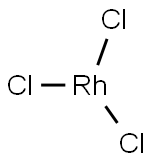
Rhodium (III) chloride (Fgiure 1) is a metallic compound characterized by its shiny and silvery-white appearance. It possesses high reflectivity and exhibits excellent resistance to corrosion. This makes it a popular choice for applications such as plating materials in jewelry and other decorative items, imparting a lustrous and reflective surface to the coated objects. Topological indices are numerical parameters employed to characterize the topology of a molecular structure. These indices are derived from the connectivity of atoms within the molecule and serve as predictors for various molecular properties, including reactivity, stability, and solubility. On the other hand, the Shannon entropy of a graph finds extensive applications in network science. It is utilized in the analysis of diverse networks, such as social networks, biological networks, and transportation networks. The Shannon entropy allows for the characterization of a network's topology and structure, aiding in the identification of crucial nodes or structures that play significant roles in network functionality and stability.[1]
Rhodium (III) chloride structure
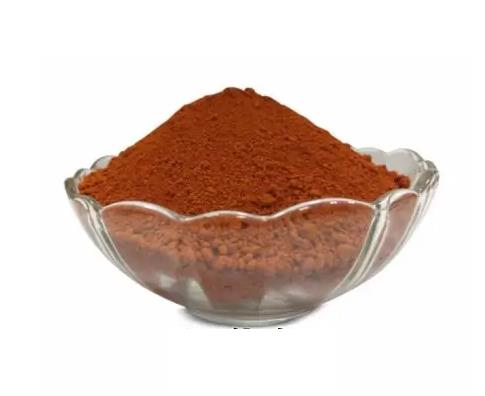
Due to the distinctive feature of a variable oxidation state, transition metal forms a variety of salt with other periodic table elements, such as halogens. Rhodium chloride is one of them, where transition metal rhodium (Rh) forms a salt with chlorine from the halogen group. In this inorganic salt oxidation state of rhodium is (III). This inorganic salt is diamagnetic, and it has octahedral geometry with three chloride ions bonded with Rh (III) metal centers. It is present in both hydrated and anhydrous forms, and its color depends upon the number of water molecules present with it. In its an hydrate form, it’s in brown solid and octahedral molecular geometry.Rhodium chloride with three molecules of water is soluble in commonly used solvents, and it’s widely used in the laboratory for preparative purposes. Anhydrous Rhodium chloride is not soluble, so it is not used in laboratories. The sodium salt of rhodium chloride is used to synthesize rhodium chloride through ion exchange chromatography. The trisodium salt of rhodium is obtained from common ores of platinum and iridium group metals. Hydrated rhodium is collected after crystallization of product [8]. To prepare anhydrous rhodium chloride, both are reacted in metallic form at the higher temperature of 200-300°. Rhodium chloride trihydrate has been used to synthesize various complexes, despite its complexity in the formation of its solutions. It reacts with various chemical species to produce a variety of complexes such as ammonia, pyridine, phosphines, thioethers, arsines, acetylacetone,1, 5-cyclooctadiene, and alkenes. Being a transition metal salt and having a variable oxidation state leads to the application of rhodium chloride in various catalytic applications such as asymmetric ring opening reactions, activation of C-H bond in organic compounds, decomposition of nitrous oxides, conversion of chlorobenzene. The considered structure to be the subgraph of the structure.[1]
By employing a line fit technique, researchers were able to explore the relationship between entropy formation and various indices,thereby enabling the investigation of connections among multiple types of variables. This analysis involved utilizing the line fit method to estimate the correlation between entropy and the K-Banhatti index while manipulating several underlying parameters. Emphasis was primarily placed on the significance indicated by the R2 value. According to the results of the investigation into these structures; in this regard, the First Revan K-Banhatti index consistently delivers the most optimal and progressively enhancing outcomes. All the obtained results were presented both in numerical form and through graphical representations.[1]
Rhodium (III) chloride preparation
Report 1: Rhodium (III) chloride is an important precursor compound for the preparation of rhodium catalysts.To address the challenge of dissolving rhodium powder, an alternating current electrochemical dissolution process was proposed. The effects of factors such as current density, hydrochloric acid concentration, electrolysis time, and electrolysis temperature on the dissolution of rhodium powder were analyzed. This method not only enables rapid dissolution of rhodium powder but also features simple operation. Research indicates that as the current density increases, the dissolution rate of rhodium powder continuously rises, and when the current density exceeds 3A/cm2, the dissolution rate exhibits a steep upward trend. Over time, the dissolution rate of rhodium powder initially increases and then decreases. As the hydrochloric acid concentration rises, the dissolution rate accelerates, reaching its peak when the concentration reaches 8 mol/L. Further increasing the hydrochloric acid concentration leads to a decline in the dissolution rate. With the rise in electrolysis temperature, the dissolution rate of rhodium powder gradually increases, peaking at 60°C . Beyond this temperature, the dissolution rate begins to decline.[2]
Report 2: Rhodium resources are scarce and the price of rhodium is expensive. Rhodium (III) chloride is the raw material of rhodium catalyst and other rhodium compounds.The content of rhodium in waste rhodium solution of carbonyl synthesis isusually several hundred to several thousand milligrams per kilogram,the recovery of rhodium to prepare Rhodium (III) chloride of great significance. At present,the recovery of rhodium from waste rhodium liquid mainly adopts the incineration method,which has large rhodium loss and rhodium over firing,subsequent processing difficulties and other problems.In order to solve these problems,a two stage roasting process for recovery of rhodium from carbonyl synthesis by adding charcoal powder from aerobic roasting to oxygen-free roasting was explored.The process was simple and had a high recovery rate.The main process could be summarized as follows: the waste rhodium solution was distilled to obtain concentrated rhodium slag, and the rhodium slag was added with 0.6 times of charcoal powder,and roasted from room temperature to 600℃ under aerobic conditions.After being roasted at 600℃ for 3 h, the roasting temperature was rosed to 1100℃ under the condition of nooxygen and remained at 1100 ℃ for 1 h, the active rhodium ash was obtained when the temperature was lowered to room temperature.Then the active rhodium ash was dissolved in the acid. Finally, rhodium (III) chloride was obtained by purification and concentration, yield was higher than 99.0%.[3]
References
[1] Hussain M, Siddiqui MK, Hanif MF, Mahmood H, Saddique Z, Asefa Fufa S. On K-Banhatti indices and entropy measure for rhodium (III) chloride via linear regression models. Heliyon. 2023;9(10):e20935. Published 2023 Oct 16. doi:10.1016/j.heliyon.2023.e20935
[2] XIe X,et al.,Research on the Efficient Dissolution of Rhodium Powder for the Preparation of Trichlororhodium[J].China Resources Comprehensive Utilization,2025,43(10):16-18.
[3] WANG Bl, et al.Study on preparation process of rhodium trichloride by roasting recovery technologyfrom waste rhodium solution of carbonyl synthesis[J].Inorganic Chemicals Industry,2023,55(06):104-108.
You may like
See also
Lastest Price from Rhodium(III) Chloride manufacturers
US $0.00/KG2025-04-15
- CAS:
- 10049-07-7
- Min. Order:
- 1KG
- Purity:
- 99%
- Supply Ability:
- 500000kg
US $0.00/g2024-11-07
- CAS:
- 10049-07-7
- Min. Order:
- 1g
- Purity:
- 99%
- Supply Ability:
- 1000000