Rosin: Natural Polyme & Cannabis Extraction Trends
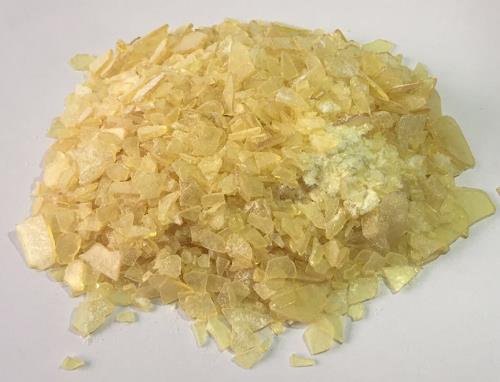
Rosin is an amber-colored, transparent, glass-shaped natural biodegradable polymer that is extremely abundant in nature. It is the remaining solid resin after removing volatile components from the oleoresin exuded by various pine species. Approximately 20 pine species are used commercially to produce it in many developing countries. The major sources of this substance are P. massoniana Lamb., P. tabuliformis Carrière, P. palustris Mill., P. pinaster Aiton, P. sylvestris L., P. roxburghui Sarg., P. toeda L., and so on. Rosin offers abundant raw materials, low cost, and versatile industrial applications. It is widely used in soap, paper, printing ink, paint, rubber, plastic, medicine, pesticide, and dyeing industry. The most important uses are in paper-making chemicals, paints, and adhesives. Furthermore, it has a variety of biological activities such as anti-inflammatory, ulcer treatment and drug additives. Therefore, rosin holds significant economic value and promising prospects for further research and development.
Advances in Rosin-Based Chemicals
The natural origin, low price, abundance and chemical modification potential of rosin make it a valuable raw material in numerous applications. Besides the mentioned advantages, it is also safe for living organisms. Its derivatives are claimed as non-toxic as well, despite their allergenicity. This unique set of beneficial properties of this material determines it as an attractive subject of innovative research characterized by a considerably growing interest in recent decades. The current article is a direct answer to the aforementioned issues. Its aims are: (I) to provide a precise review of the scientific literature from 2008 to 2018, (II) select promising studies with clear practical application and (III) an overall assessment of the reviewed achievements in order to identify the most perspective development directions of rosin-based chemicals. The review is presented in a modern, pleasant-to-browse form, illustrated with patiently completed reaction schemes. The article provides concise, but exhaustive information on the achievements in preparation of rosin-derived chemicals in the last decade. Its main idea is to inspire and encourage the world of science to actively take interest in it and the possibilities of its modification. In view of these facts, publication of a wide, comprehensive and critical review of achievements since 2008 is an important solution to solve the problem of a severe lack of current review literature in this field. The growing number of publications is not the only obstacle in creating a literature review on rosin. No less important challenge is to collect information from existing literature. Quite often articles do not contain full information about a particular reaction, but refer to earlier articles, which, in turn, may refer to even earlier articles, which may not be available online, or may not be in English.[1]
Rosin is a highly modifiable raw material for both low molecular weight products and polymers. Its natural origin is accompanied with low price and a diterpene chemical nature, which is ready to introduce useful reactive chemical groups, and it exhibits a stiff constitution improving many thermal, physical, mechanical and functional properties of the final materials. In recent years rosin-based chemicals have attracted growing interest. They offer great opportunities to produce useful products: resins, curing agents, surfactants, medicines, biocides, materials for biomedical application, elastomers, coatings, adhesives, sorbents and catalysts. Taking into consideration the declared properties of the prepared chemicals they seem to be competitive alternatives to existing products on the market. This review presents well over 100 reproducible recipes. Sadly, some of the publications do not contain complete data, which makes it difficult to repeat the syntheses. According to our subjective opinion, the following information should be provided (or obvious) for a recipe to be considered as complete: product name, product morphology, substrate(s) names, reaction scheme, catalyst, media, temperature, pressure, time, yield and separation techniques. The summary shows that resins, monomers, hardeners and biologically active compounds are the most completely described rosin-based chemicals in the recent decade, which makes them the most promising subjects for scaling-up and commercialization.
Emerging trends in Rosin Tech marijuana concentrates
Recent years have seen rapid changes in the U.S. legislation regarding cannabis use, with 24 states now allowing medical and/or recreational marijuana use. These changes have been associated with the emergence of new forms of products (e.g., e-cannabis syrup, marijuana/THC concentrates). Marijuana concentrates, also known as “concentrates,” “shatter,” and “wax,” are usually vaporized and inhaled via a bong, oil pipe, vaporizer or electronic cigarette and less frequently consumed within a marijuana joint or a marijuana blunt, or via a “gravity bong,” nectar collector, or hookah. “Rosin tech” is an emerging method to produce THC concentrates. Initially used to extract terpene and essential oil from plants, this “solventless” technique of extraction consists of applying constant pressure at a moderate temperature to flower cannabis with something as inexpensive and widely available as a hair straightener. Industrial, more expensive, and sophisticated, “rosin presses” are widely available on Amazon. Media reports suggest that this extraction method has gained in popularity in the U.S. over the last two years. A simple Google Trends query using the expression “rosin press” shows a large increase in searches for those terms over the past two years with an initial increase in late fall 2015. Despite the growing popularity of this extraction technique, epidemiological data on rosin concentrates are lacking.[2]
The content analysis of rosin concentrate-related tweets suggests that this emerging form of cannabis concentrates has benefited from several factors favoring its popularity in the Twittosphere. First, the rosin technique is advertised by retail stores and media as a safer, more natural alternative to the solvent-based “generation” of marijuana concentrates, as this extraction method does not require chemical solvents, which eliminates the risks of explosion and reduces the risk of health-related harms through contamination due to solvent chemicals. In conclusion, the relative ease of THC concentrate production through the rosin technique could influence experimentation and use of marijuana concentrates. Although only four collected personal communications were negative, the present findings call for more studies on this new form of marijuana concentrate as its prevalence and potential side-effects remain unknown and understudied. The study also illustrates how social media content analysis can provide timely information regarding new and understudied trends of drug use.
References
[1]Kugler S, Ossowicz P, Malarczyk-Matusiak K, Wierzbicka E. Advances in Rosin-Based Chemicals: The Latest Recipes, Applications and Future Trends. Molecules. 2019 Apr 26;24(9):1651. doi: 10.3390/molecules24091651. PMID: 31035500; PMCID: PMC6539233.
[2]Lamy FR, Daniulaityte R, Zatreh M, Nahhas RW, Sheth A, Martins SS, Boyer EW, Carlson RG. "You got to love rosin: Solventless dabs, pure, clean, natural medicine." Exploring Twitter data on emerging trends in Rosin Tech marijuana concentrates. Drug Alcohol Depend. 2018 Feb 1;183:248-252. doi: 10.1016/j.drugalcdep.2017.10.039. Epub 2017 Dec 27. PMID: 29306816; PMCID: PMC5803369.
You may like
Lastest Price from Rosin manufacturers
US $0.00/mg2023-02-24
- CAS:
- 85026-55-7
- Min. Order:
- 5mg
- Purity:
- ≥98%(HPLC)
- Supply Ability:
- 10 g
US $1.00/KG2022-08-24
- CAS:
- 85026-55-7
- Min. Order:
- 1KG
- Purity:
- 99%
- Supply Ability:
- 20T