Synthesis and Chemical application of 2,4-Dichloropyrimidine
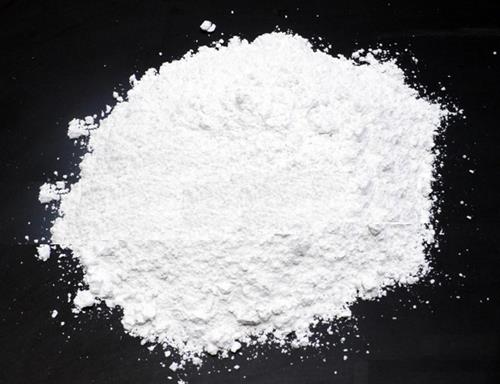
2,4-Dichloropyrimidine is a halogenated pyrimidine compound that appears as a white to yellow solid powder under ambient conditions, exhibiting weak basicity and favorable chemical stability. Primarily used as an intermediate in pharmaceutical chemistry, 2,4-dichloropyrimidine has been reported in studies to be applicable in the synthesis of drug molecules such as Osimertinib mesylate.
Synthesis
Method 1
Researchers have publicly reported a production method for 2,4-dichloropyrimidine, which pertains to the technical field of its synthesis. The production method described in this invention involves reacting phosphorus oxychloride with 2,4-dihydroxypyrimidine, distilling the reaction mixture to remove excess phosphorus oxychloride, cooling, and then performing multi-stage extraction. Finally, the extract is subjected to decolorization and impurity removal, filtration, and recrystallization from ethanol to obtain high-purity 2,4-dichloropyrimidine. The 2,4-dichloropyrimidine produced by this invention exhibits high purity, and the process is characterized by simplicity, low cost, and suitability for large-scale production. [1]
Method 2
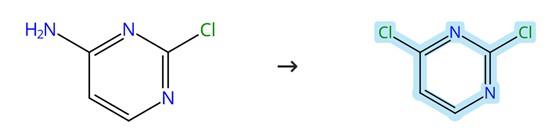
Figure1: Synthesis of 2,4-Dichloropyrimidine
Dissolve the heteroaromatic amine (0.1 mmol) in concentrated HCl (37%, 0.5 mL) at 0°C, then add a 0.11 M NaNO₂ solution (1 mL, 0.11 mmol) dropwise. Stir the mixture at 0°C for 15 minutes, followed by the addition of CuCl (0.13 mmol) and stirring at 25°C for 3 hours. Heat the mixture to 60°C, then quench with saturated NaHCO₃ solution and extract with CH₂Cl₂ (3 × 5 mL). Dry the combined organic layers over Na₂SO₄ and concentrate to dryness. Finally, subject the resulting residue to purification by silica gel column chromatography to obtain the target molecule, 2,4-dichloropyrimidine. [2]
Chemical application
Synthesis of Osimertinib mesylate
Based on existing patents and literature, researchers have summarized and improved the synthesis process of Osimertinib mesylate. Method: Starting from indole and 2,4-dichloropyrimidine, the process involves methylation, nucleophilic substitution, coupling with 4‑fluoro‑2‑methoxy‑5‑nitroaniline, reduction, and finally acylation with acryloyl chloride followed by salt formation to yield Osimertinib mesylate. This route is operationally simple with straightforward work‑up, achieving an overall yield of 30.1%. The structure of the final product, Osimertinib mesylate, was confirmed by ¹H‑NMR. Conclusion: The optimized synthesis route offers higher yield, ease of operation, energy efficiency, environmental friendliness, and simplified production steps.[3]
Synthesis of antitumor drug
Starting from 2-ethylaniline, the synthesis involves sequential steps including nitration, cyclization, methylation, nitro reduction, substitution with 2,4-dichloropyrimidine, and methylation with iodomethane to obtain 2,3-dimethyl-N-(2-chloropyrimidin-4-yl)-N-methyl-2H-indazol-6-amine. This intermediate is then condensed with 2-methyl-5-aminobenzenesulfonamide, followed by salt formation to yield the antitumor drug pazopanib hydrochloride. The overall yield is approximately 34.56%, and the structure of the product is confirmed by ¹H NMR and MS analysis. [4]
Synthesis of 4-Aryl-5-pyrimidinylimidazoles
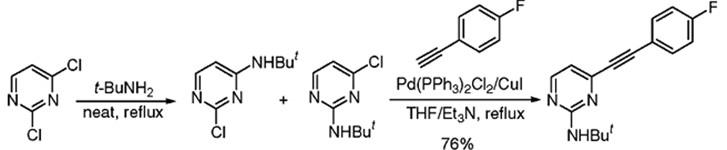
Starting from 2,4-dichloropyrimidine, a concise synthetic route to medicinally important 4-aryl-5-pyrimidinylimidazoles is described. Sequential substitution of the 4- and 2-chloro groups using a regioselective Sonogashira coupling, followed by nucleophilic substitution, led to pyrimidinylalkyne derivatives, which were then oxidized to their corresponding 1,2-diketones. These 1,2-diketones, on cyclocondensation with ammonium acetate and an aldehyde, furnished the desired pyrimidinyl imidazoles in good overall yields. Experimental Procedure:To the solution of Pd(PPh3)2Cl2 (0.9 g, 0.005 equiv) and PPh3 (0.7 g, 0.01 equiv) in a mixed solvent of THF (200 mL) and Et3N (300 mL), 2,4-dichloropyrimidine (40 g, 0.27 mol, 1 equiv) were added under N2. After bubbling N2 into the solution for 15 min, CuI (0.5 g, 0.01 equiv) and trimethylsilylacetylene (29 g, 0.29 mol, 1.1 equiv) were added sequentially. The reaction mixture was heated at reflux temperature for 4.5 h and cooled to rt. The white precipitate (Et3N.HCl) was filtered off and washed with EtoAc. The filtrate solution was concentrated and the residue was diluted with hexanes and loaded directly onto a short pad of silica gel. The product was eluted with 10% EtOAc/hexanes to provide a light orange solid (49.3 g, 0.23 mol, 87%). [5]
Reference
[1] Zou, B.; Feng, Q.; Zhang, J. G., et al. A Production Method for 2,4?Dichloropyrimidine: CN202210938256.1[P].
[2] Ghiazza, C.; et al. Deaminative Chlorination of Aminoheterocycles. Nat. Chem.2022,14, 78?84.
[3] Zou, B.; Feng, Q.; Zhang, J. G., et al. A Production Method for 2,4?Dichloropyrimidine: CN202210938256.1[P].
[4] Wang, Y. Z.; Zhao, Y. J.; Li, S. X. Improvement on the Synthesis Process of Pazopanib Hydrochloride[J]. Fine Chemical Intermediates, 2013, 43: 3.
[5] Deng X, Mani N S. An efficient route to 4-aryl-5-pyrimidinylimidazoles via sequential functionalization of 2, 4-dichloropyrimidine[J]. Organic Letters, 2006, 8: 269-272.
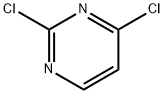
You may like
Related articles And Qustion

Lastest Price from 2,4-Dichloropyrimidine manufacturers

US $0.00-0.00/kg2025-07-21
- CAS:
- 3934-20-1
- Min. Order:
- 10kg
- Purity:
- Purity: 99%
- Supply Ability:
- 500tons
US $0.00/kg2025-04-21
- CAS:
- 3934-20-1
- Min. Order:
- 1kg
- Purity:
- 99%min
- Supply Ability:
- 1000kg