Synthesis and Thermal Stability of 2-Butynoic acid
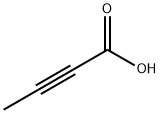
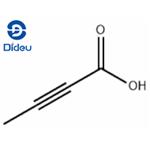
2-Butynoic acid is an unsaturated carboxylic acid compound that exists as a white to yellow solid under ambient conditions. This compound exhibits pronounced acidity and possesses the dual characteristics of an alkyne and a carboxylic acid, enabling it to undergo a variety of reactions including reduction, addition, oxidation, esterification, cyclization, as well as the formation of salts and acid chlorides. As a versatile building block, 2-butynoic acid serves as an important synthetic intermediate and a foundational chemical material for pharmaceutical molecules. It has been reported in the literature that 2-butynoic acid can be utilized in the preparation of enantiomerically pure 1,2,3,4‑tetrahydroisoquinoline analogues with anticancer activity.
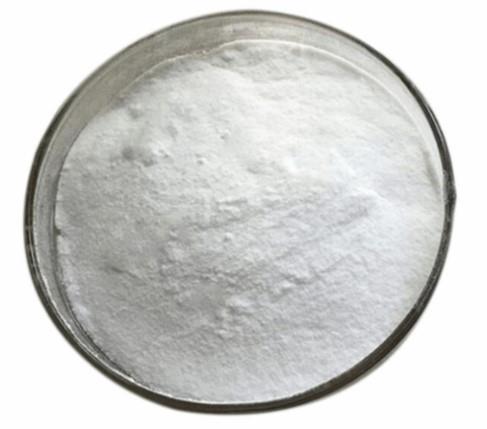
Figure1: Picture of 2-butynoic acid
Overview
2-Butynoic acid was first reported by Geuther in 1871 during his studies on ethylacetoacetate derivatives, existing as a highly crystalline solid with a melting point of approximately 78–80 °C. Several laboratory‑scale synthetic routes to this compound have been documented, the most common of which employs a base to deprotonate propyne, followed by reaction with carbon dioxide and subsequent quenching into aqueous acid to afford the product in high yield in a single step. Small‑scale purification by distillation has also been described. More recently, the use of 2-Butynoic acid as a key precursor in the synthesis of acalabrutinib—a BTK inhibitor approved for the treatment of mantle‑cell lymphoma—has created a need for scalable production and purification methods. This study therefore aimed to evaluate the suitability of existing laboratory procedures, particularly distillation‑based purification, for large‑scale application, given concerns over potential thermal‑runaway hazards associated with this technique.
Synthesis
A synthetic method for preparing 2-butynoic acid has been reported in the literature, comprising the following specific steps: (1) 2‑Butyn‑1‑ol is mixed with a catalyst, a hypochlorite salt, a base, and water to carry out an oxidation reaction, after which an acid is added to adjust the pH to 13. The mass ratio of the catalyst to 2‑butyn‑1‑ol is (5–20):100; the mass ratio of water to 2‑butyn‑1‑ol is (6–15):1; the equivalent molar ratio of the hypochlorite salt to 2‑butyn‑1‑ol is (2.2–4):1; and the molar ratio of the base to 2‑butyn‑1‑ol is (1–2):1. (2) An organic solvent is used to extract the product mixture obtained in step (1). After removal of the organic solvent, toluene is added and the mixture is refluxed. Following toluene removal, a crude 2‑butynoic acid product is obtained. (3) The crude 2‑butynoic acid is purified by sublimation under reduced pressure, yielding 2‑butynoic acid with high purity. This synthetic route, which does not require a phase‑transfer catalyst, ensures that 2-Butynoic acid is obtained with both high yield and excellent purity. [1]
Thermal Stability
The 2-butynoic acid is seen to melt at approximately 78−80 °C, and using high vacuum, the melt can be distilled at temperatures of approximately 120−130 °C. However, subsequent, more thorough investigation into the thermal properties of 2 butynoic acid revealed the potential for thermal runaway, ruling out this method of purification for future manufactures. It is not surprising that the heat of decomposition of 2-butynoic acid is significant given that the alkyne functionality is considered a highly energetic functional group (HEFG) and also has potential to confer explosive properties in a molecule. This energy output was clearly evident in the initial thermal stability screening of the material. An alternative to distillation (as a means of purification) was sought, and it was demonstrated that recrystallization of the crude material (by dissolution in methyl tert-butyl ether and swapping into heptane to crystallize) efficiently removed the amount of impurity 2 to trace levels, producing suitable-quality material without the requirement to distill. Additionally, it was observed that the 2-butynoic acid sublimes when drying in the vacuum oven at temperatures above ambient. Production on a pilot scale was performed using a flow of nitrogen (or by tray drying under vacuum) at ambient temperature to dry the product from the crystallization solvent, heptane. The 2-butynoic acid was then stored as a crystalline solid in sealed bags at 2−8 °C to prevent any losses upon storage.[2]
Rotational spectrum
The rotational spectrum of 2-Butynoic acid was recorded using pulsed‑supersonic‑jet Fourier‑transform microwave spectroscopy over the frequency range of 6–18 GHz. For this molecule, rotational lines corresponding to the m = 0 and m = 1 torsional states were measured and analyzed by means of the rho‑axis method. The spectral features of 2‑butynoic acid reflect a nearly free internal rotation of the terminal methyl group, characterized by a very low barrier of V₃ = 1.0090(4) cm⁻¹. These experimental findings are compared with supporting ab initio calculations performed for the same molecule. [3]
References
[1] Yan, G. A Method for Preparing 2-Butynoic Acid: CN202210453949.1 [P].
[2] Ashton, H.; Bethel, P. A.; Cantlie, S. K.; et al. Thermal Stability of 2-Butynoic Acid (Tetrolic Acid). Org. Process Res. Dev. 2019, 23, 1101–1104.
[3] Ilyushin, V.; Rizzato, R.; Evangelisti, L.; et al. Almost Free Methyl Top Internal Rotation: Rotational Spectrum of 2-Butynoic Acid. J. Mol. Spectrosc. 2011, 267, 186–190.
You may like
Lastest Price from 2-Butynoic acid manufacturers
US $0.00/kg2025-05-21
- CAS:
- 590-93-2
- Min. Order:
- 1kg
- Purity:
- 99%
- Supply Ability:
- 10000KGS
US $1.00/kg2025-04-21
- CAS:
- 590-93-2
- Min. Order:
- 1kg
- Purity:
- 99%
- Supply Ability:
- 10 mt