Synthetic and Analytical Methods of 2-Allyloxyethanol
2-Allyloxyethanol is an allyl ether compound that exists as a clear, colorless liquid under standard temperature and pressure. It exhibits high polarity and significant chemical reactivity. This compound is water-soluble and miscible with most organic solvents. 2-Allyloxyethanol is primarily used as an organic synthesis intermediate and a fine chemical raw material. Research reports have indicated its application in the synthesis of industrial products such as fluorocarbon resins, unsaturated polyester resins, superabsorbent polymers, and ultraviolet (UV)-curable coatings.
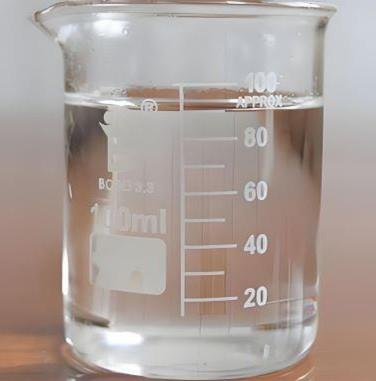
Figure1 : Picture of 2-Allyloxyethanol
Synthetic Methods
Method 1
Using allyl alcohol and ethylene oxide as raw materials, with zinc methanesulfonate as the catalyst, 2-Allyloxyethanol crude product is synthesized through a polymerization reaction. The effects of catalyst dosage, reaction temperature, and the molar ratio of allyl alcohol to ethylene oxide on the product composition were investigated. The optimized reaction conditions are as follows: catalyst dosage of 3‰ of the total mass of allyl alcohol and ethylene oxide, reaction temperature of 110 °C, and n(allyl alcohol):n(ethylene oxide) = 1:0.8. Under these conditions, the content of 2-Allyloxyethanol in the crude product reaches 85.8%, with an effective conversion rate of 98.5%.[1]
Method 2
A literature-reported preparation method for 2-Allyloxyethanol employs allyl alcohol and ethylene oxide as main raw materials. In the presence of a catalyst, a polymerization reaction is first carried out in a reactor to obtain a crude product. The crude product is then neutralized, distilled, and further purified by vacuum distillation. The fraction collected yields 2-Allyloxyethanol with a purity of ≥99%. This method is simple, cost‑effective, generates few by‑products, produces no wastewater, allows excess allyl alcohol to be recycled, and is suitable for large‑scale industrial production of ethylene glycol monoallyl ether.[2]
Analytical Methods
Through literature review and experimental exploration, researchers conducted extensive trials using an SE‑54 cross‑linked elastic quartz capillary column (1% vinyl, 5% phenyl, 94% methyl siloxane). The influence of column temperature and carrier‑gas flow rate on the separation factor (R) was examined by a single‑factor approach, leading to the identification of optimal chromatographic conditions. Component identification in the sample was achieved via peak‑height enhancement and comparison with retention values of pure standards. By evaluating recovery rates and performing sample analysis, the precision and accuracy of the method were verified, yielding highly satisfactory results. The gas chromatography method described in the reported synthesis is suitable for the quantitative analysis of industrial‑grade 2-Allyloxyethanol and for detecting trace impurities within it. This approach provides a reliable basis for quality control of 2-Allyloxyethanol products. [3]
Chemical Applications
Synthesis of Fixing Agents
2-Allyloxyethanol is primarily employed as an organic synthesis intermediate and a fine‑chemical raw material. Studies have reported its use in the synthesis of industrial products such as fluorocarbon resins, unsaturated polyester resins, super‑absorbent polymers, and ultraviolet (UV)‑curable coatings. Using dimethyldiallylammonium chloride, acrylamide, diallylamine, and 2-Allyloxyethanol as raw materials, with ammonium persulfate as the initiator, the effects of raw‑material ratios, initiator dosage, reaction temperature, and reaction time on product performance were investigated. The optimized synthesis conditions are as follows: mass ratio of monomers—m(dimethyldiallylammonium chloride):m(acrylamide):m(diallylamine):m(2‑allyloxyethanol) = 100:3:6:5; initiator dosage 1.2% (relative to total monomer mass) added by continuous dropwise addition; reaction temperature 80 °C maintained for 7 h. The resulting fixing agent is suitable for the fixation treatment of reactive‑dyed fabrics, improving color fastness by 0.5–1.5 grades after treatment. [4]
Preparation of Cleaning Agents
Research has reported that 2-Allyloxyethanol can be used to prepare cleaning agents for moisturizing‑spray bottles. The cleaning agent is formulated from the following raw materials: water, 10‑undecylenic acid, 2‑(hydroxymethyl)‑2‑methyl‑1,3‑propanediol, triethylene glycol dimethacrylate, pentaerythritol tetraacetate, 2-Allyloxyethanol, 1,4‑butanediol dimethacrylate, ethyl malonate, D‑cyclohexylalaninol, etc. This moisturizing‑spray‑bottle cleaning agent exhibits strong cleaning efficacy coupled with excellent wetting properties, enabling thorough infiltration and extension over the bottle nozzle to achieve rapid and comprehensive cleaning. Moreover, the material itself is safe and non‑irritating; it not only effectively removes skin‑harmful impurities from the moisturizing‑spray bottle but also causes no irritation to the skin, thereby fully preserving the effectiveness of the moisturizing solution. [5]
References
[1] Ma, D.; Jin, Y.; Su, Y.; et al. Synthesis Study of Ethylene Glycol Monoallyl Ether. Fine Spec. Chem. 2022, 9, 30.
[2] Fang, L.; Dong, X.; Ding, Z. A Preparation Method of Ethylene Glycol Monoallyl Ether. CN 201310372714.0.
[3] Huang, L.; Li, B.; Huang, H.; et al. Analysis of Ethylene Glycol Monoallyl Ether by Capillary Gas Chromatography. Sichuan Chem. Ind. 2007, 10, 38–41.
[4] Liu, Y. Cleaning Agent for Moisturizing Spray Bottle. CN 201410464572.5.
[5] Zhang, C.; et al. Synthesis and Application of Multivariate Copolymer Formaldehyde-Free Fixing Agent. Chem. Eng. Equip. 2013, 12, 3.

You may like
Lastest Price from 2-Allyloxyethanol manufacturers

US $1.00/PCS2025-04-21
- CAS:
- 111-45-5
- Min. Order:
- 1PCS
- Purity:
- 99%
- Supply Ability:
- 10 mt

US $200.00-95.00/kg2025-04-15
- CAS:
- 111-45-5
- Min. Order:
- 1kg
- Purity:
- 99%
- Supply Ability:
- 20ton