Synthetic Methods of Tetrapropylammonium hydroxide
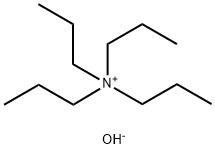
Tetrapropylammonium hydroxide is an organic strong base. It appears as a colorless to almost colorless transparent liquid, readily absorbs carbon dioxide, and exhibits strong alkalinity and corrosivity. The primary applications of tetrapropylammonium hydroxide include its use as a molecular sieve template (e.g., in TS-1 zeolite for green catalytic oxidation processes in the production of caprolactam and propylene oxide), a polymerization catalyst for silicone products, a cleaning agent in the electronics industry, a phase transfer catalyst, and a polarographic reagent in analytical chemistry. Aqueous solutions of tetrapropylammonium hydroxide (at concentrations of 25% or 40%) are widely used as biochemical reagents in life science research.
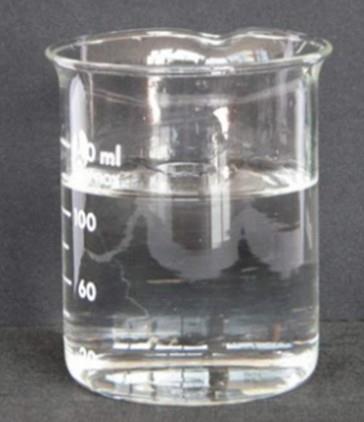
Figure1: Picture of tetrapropylammonium hydroxide
Basic Introduction
Tetrapropylammonium hydroxide (40% w/w in water) is a compound belonging to the class of quaternary ammonium compounds and is a strong base with cationic properties. Tetrapropylammonium hydroxide (40% w/w in aqueous solution) is widely used as a phase transfer catalyst to facilitate the transfer of reactants between immiscible phases in various organic synthesis reactions. It is also utilized in the production of semiconductors, particularly in the fabrication of thin-film transistors and other electronic devices. As a strong quaternary ammonium alkali compound, tetrapropyl ammonium hydroxide (TPAOH) is widely utilized as a template agent for the synthesis of molecular sieves. The purity of tetrapropyl ammonium hydroxide is critical, as it directly enhances its catalytic performance. However, TPAOH is not readily obtainable in its pure form. Various approaches have been explored to synthesize pure tetrapropyl ammonium hydroxide, including the reaction of tetrapropylammonium halide with silver oxide, ion-exchange methods, electro-electrodialysis, electrochemical membrane reactors, and bipolar membrane electrodialysis.
Synthetic Methods
Conventional approaches for producing Tetrapropylammonium hydroxide—including electrolysis, the reaction of tetrapropylammonium halide with silver oxide, and ion exchange—are hindered by high production costs, inferior product quality, and significant environmental pollution. In this study, continuous bipolar membrane electrodialysis (BMED) is introduced as a sustainable alternative for synthesizing Tetrapropylammonium hydroxide from its corresponding halide. Novel ion-exchange membranes were developed and evaluated in both laboratory and pilot-scale experiments, demonstrating acceptable current efficiency and energy consumption. Optimal performance was achieved using a four-compartment cell configuration with a salt concentration of 0.3 mol·L⁻¹ and a current density of 200 A·m⁻². Under these conditions, the electrodialysis process attained a maximum conversion rate of 91.6%, yielding Tetrapropylammonium hydroxide at a concentration of 25% with high purity—characterized by trace levels of alkali metal ions and a low bromide content of 176 ppm. The energy consumption was measured at 1.897 kWh·kg⁻¹. Continuous pilot-scale trials further validated the industrial feasibility of producing tetrapropyl ammonium hydroxide via direct halide splitting. [1]
Synthesis of Titanium silicalite-1
Titanium silicalite-1 (TS-1) was synthesized via a hydrothermal method, where Tetrapropylammonium hydroxide (TPAOH) served as the template at varying concentrations. The resulting TS-1 materials were characterized using scanning electron microscopy, X-ray powder diffraction, Fourier-transform infrared spectroscopy, ultraviolet-visible diffuse reflectance spectroscopy, and nitrogen physisorption measurements. Their catalytic performance was evaluated in the epoxidation of propylene with hydrogen peroxide in a fixed-bed reactor. The findings revealed that Tetrapropylammonium hydroxide significantly influenced the crystal morphology, framework titanium content, and average particle size of TS-1. As the TPAOH content increased during synthesis (with the TPAOH/SiO₂ molar ratio rising from 0.25 to 0.45), the particle morphology progressively shifted from ellipsoidal to cubic. Concurrently, the TS-1 particle size decreased slightly, the framework titanium content increased notably, and the catalyst stability in propylene epoxidation improved substantially. All catalysts maintained consistent selectivity toward propylene oxide. However, when the TPAOH/SiO₂ molar ratio was further elevated to 0.55, the particles transformed into large, irregular hexagonal structures with a broad size distribution. Despite a further increase in framework titanium, the catalytic stability deteriorated sharply, attributed to prolonged reactant diffusion pathways within the zeolite framework. [2]
Reference
[1] Shen J, Yu J, Huang J, et al. Preparation of highly pure tetrapropyl ammonium hydroxide using continuous bipolar membrane electrodialysis[J]. Chemical Engineering Journal, 2013, 220: 311-319.
[2] Wang Y, Liu W, Lin Y, et al. Effects of the amount of tetrapropyl ammonium hydroxide in synthesis on TS-1 properties and catalytic performance in epoxidation of propylene[J]. Transactions of Tianjin University, 2016, 22: 458-465.
You may like
Lastest Price from Tetrapropylammonium hydroxide manufacturers

US $0.00/KG2025-04-21
- CAS:
- 4499-86-9
- Min. Order:
- 1KG
- Purity:
- 98%min
- Supply Ability:
- 30tons/month

US $9.90/KG2025-04-21
- CAS:
- 4499-86-9
- Min. Order:
- 1KG
- Purity:
- 99%
- Supply Ability:
- 10 mt