Tris(1-Chloro-2-Propyl) Phosphate: Flame Retardant & Toxicity
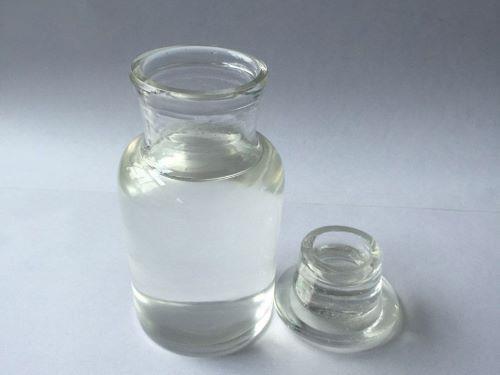
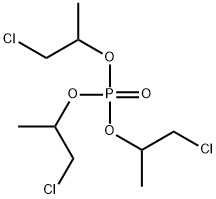
Tris(1-Chloro-2-Propyl) Phosphate is a phosphorus and chlorine-containing organophosphorus flame retardant that has been in use for many years. It is used in rigid polyurethane foam and furniture foam, textiles, leather, electronics and building construction laminates as an additive flame retardant. TCPP has been found in furniture and baby products such as nursing pillows, portable mattresses, car seats, seat positioners and changing table pads.1,2 A mixture of TCPP isomers makes up commercial TCPP. Tris(1-Chloro-2-Propyl) Phosphate is characterized by the U.S. Environmental Protection Agency (EPA) as a high hazard for developmental and reproductive toxicity based on a study of pregnant rats fed TCCP. Pregnant rats fed TCPP had reduced uterine weights, prolonged estrous cycles, and a greater number of runts in litters.
Plasma concentrations of tris(1-chloro-2-propyl) phosphate in Sprague-Dawley rats
Tris(chloropropyl) phosphate (TCPP) is an organophosphorus flame retardant (OFR) utilized in numerous consumer products (i.e., mattresses, car seats, and upholstered furniture) and construction materials. Commercial TCPP is a mixture of four isomers identified in this document as: tris(1-chloro-2-propyl) phosphate (TCIPP); bis(2-chloro-1-methylethyl) 2-chloropropyl phosphate; bis(2-chloropropyl) 2-chloroisopropyl) phosphate; and tris(2-chloropropyl) phosphate. Of these, TCIPP is the most abundant isomer, representing 50–85% of the mixture. To learn more, the Division of the National Toxicology Program (DNTP) is currently investigating the toxicity of TCPP in rodent models to provide data for this chemical. Following perinatal TCPP exposure in HSD:Sprague Dawley®SD® (HSD) rats and adult B6C3F1/N mice, systemic exposure was assessed at multiple time points during a 2-year study using a validated analytical method to quantify TCPP in plasma from rats and mice using tris(1-chloro-2-propyl) phosphate as a marker for TCPP concentration. During the development and validation of the analytical method used here, low levels of tris(1-chloro-2-propyl) phosphate were detected in control rat and mouse samples at some time points, which may reflect ubiquitous background levels of TCPP. Because BCPCP arises from oxidation via Phase 1 metabolism, we explored the presence of BCPCP in the plasma of study animals to determine if it could potentially serve as a marker for in-life TCPP exposure. To that end, we qualified a liquid chromatography tandem mass spectrometry (LC-MS/MS) method to quantify the three isomers of BCPCP in HSD female rat plasma and used it to analyze selected study samples.[1]
To evaluate the chronic toxicity of TCPP more comprehensively in preclinical rodent models, the DNTP incorporated determination of tris(1-chloro-2-propyl) phosphate in plasma to assess systemic exposure to TCPP in the study design. As such, two cohorts of animals (see methods for study design) were evaluated in parallel. Data collected from the primary cohort of rats and mice, used to evaluate the carcinogenic potential of TCPP. TCIPP, the primary isomer of TCPP, was quantified in rats and mice exposed to TCPP for 2 years through feed. In rats and mice of both sexes, TCIPP concentrations were less than proportional to the exposure concentration within a time point, possibly indicating changes in ADME processes with increasing exposure concentration. Tris(1-chloro-2-propyl) phosphate concentrations in mice were slightly higher than those in rats at all time points suggesting a potential species difference. There were no sex differences in rats. In mice, a small difference in TCIPP concentrations between males and females was noted, with male mice having consistently higher plasma concentrations than females. TCIPP concentrations did not appear to increase over the course of the study suggesting that no bioaccumulation was occurring. Interestingly, low concentrations of TCIPP were seen in 57% of rat and 67% of mouse controls.
Immunotoxicity study of Tris(1-Chloro-2-Propyl) Phosphate in Hsd
Tris(1-Chloro-2-Propyl) Phosphate (TCPP) is a member of organophosphate flame retardants used commonly as a replacement for polybrominated diphenyl ethers in consumer and commercial products. Flame retardants have been shown to modulate immune function in vivo and in vitro and there is evidence that at least some related compounds such as organophosphate pesticides can cause developmental immunotoxicity. Developmental immunotoxicology studies were conducted by administering 0, 2500, 5000, or 10,000 ppm tris(1-chloro-2-propyl) phosphate in feed to pregnant Hsd:Sprague Dawley SD rats from gestation day 6 through weaning on postnatal day 28. Feed exposure to TCPP was continued in the F1 offspring until terminal euthanasia at ∼16 to 21 weeks of age when assessments for developmental immunotoxicity were conducted.[2]
Innate, humoral, and cell-mediated immune function were assessed in the F1 adults. The antibody-forming cells (AFCs) response to sheep red blood cells was reduced in male and female F1 rats in the 10,000 ppm treatment group but coincided with reduced bodyweights. The AFC response was also significantly reduced in male rats exposed to 5000 ppm where only moderate effects on bodyweights occurred. Tris(1-chloro-2-propyl) phosphate exposure affected baseline T-cell proliferation without stimulation; however, the relevance of this change for immunotoxicity risk is unknown. TCPP exposure did not affect cytotoxic T-lymphocyte activity. Only minor and inconsistent treatment-related effects on hematology, innate NK cell function, and immune cell population distributions in the spleen were observed. Taken together, these data indicate that Tris(1-chloro-2-propyl) phosphate has the potential to impact humoral immune responses following developmental exposure.
Bioactivity Screening of Tris(1-Chloro-2-Propyl) Phosphate
The National Toxicology Program (NTP) has integrated diverse data sources derived from experimental systems with varying biological complexity to understand the mechanisms of toxicity and carcinogenicity induced by the isomeric mixture of Tris(1-Chloro-2-Propyl) Phosphate (TCPP). These diverse data sources include quantitative high-throughput in vitro screening (qHTS) data, short-term toxicogenomic data, and next-generation sequencing (NGS) data of the mouse liver tumors. This appendix summarizes the activity of Tris(1-Chloro-2-Propyl) Phosphate using a qHTS approach.[3]
Countless chemical substances exist in the world, but only a small fraction of these have been adequately assessed for their potential toxicity to humans. The Toxicology in the 21st Century program, or Tox21, is a unique collaboration among several federal agencies established to develop new methods to rapidly test the potential for thousands of substances to adversely affect human health. One method to rapidly generate compound-induced, human-relevant toxicity data is to use the qHTS approach on a large number of substances employing in vitro, human cell-based assays. In Tox21 qHTS, to achieve better confidence in the compound potency data, each substance is tested using 15 concentrations (generally from 5 nM to 92 µM) in three different batches; viability is run in a single batch. Since 2011, approximately 10,000 substances have been screened in more than 70 assays covering mostly human stress response and nuclear receptor pathways. The data provide rich resources from which to query activities of compounds of interest, such as Tris(1-Chloro-2-Propyl) Phosphate.
References
[1]Collins B, Slade D, Aillon K, Stout M, Betz L, Waidyanatha S, Ryan K. Plasma concentrations of tris(1-chloro-2-propyl) phosphate and a metabolite bis(2-chloroisopropyl) 1-carboxyethyl phosphate in Sprague-Dawley rats and B6C3F1/N mice from a chronic study of tris(chloropropyl) phosphate via feed. Toxicol Rep. 2022 Mar 29;9:690-698. doi: 10.1016/j.toxrep.2022.03.025. PMID: 35433273; PMCID: PMC9010517.
[2]Johnson VJ, Ryan K, Luster MI, Pandiri A, Hobbie K, Cora M, Shockley KR, Burleson GR, Xie G, Germolec DR. Developmental immunotoxicity study of tris(chloropropyl) phosphate in Hsd:Sprague Dawley SD rats exposed through dosed feed. Toxicol Sci. 2025 May 1;205(1):166-179. doi: 10.1093/toxsci/kfaf006. PMID: 39908456; PMCID: PMC12038234.
[3]National Toxicology Program. NTP Technical Report on the Toxicology and Carcinogenesis Studies of an Isomeric Mixture of Tris(chloropropyl) Phosphate Administered in Feed to Sprague Dawley (Hsd:Sprague Dawley® SD®) Rats and B6C3F1/N Mice: Technical Report 602 [Internet]. Research Triangle Park (NC): National Toxicology Program; 2023 Jun. Appendix E, Bioactivity Screening of Tris(chloropropyl) Phosphate Using Tox21 In Vitro Assay Data.
You may like
Related articles And Qustion

Lastest Price from Tris(1-Chloro-2-Propyl) Phosphate manufacturers

US $3.00/kg2025-04-21
- CAS:
- 13674-84-5
- Min. Order:
- 1kg
- Purity:
- 0.99
- Supply Ability:
- 10000
US $10.00/KG2025-04-21
- CAS:
- 13674-84-5
- Min. Order:
- 1KG
- Purity:
- 99%
- Supply Ability:
- 10 mt