Vinyl Terminated Polydimethylsiloxane: Synthesis Strategies & Applications
Vinyl terminated polydimethylsiloxane is a type of siloxane polymer, where each silicon atom is bonded to two methyl groups (-CH₃) and one vinyl group (-CH=CH₂) at the terminal positions. This structure allows the polymer to undergo crosslinking reactions, making it highly versatile for applications requiring silicone elastomers, coatings, and adhesives. The vinyl groups at the ends of the polymer chain facilitate easy curing or vulcanization, particularly in applications where further chemical bonding or reaction is required.
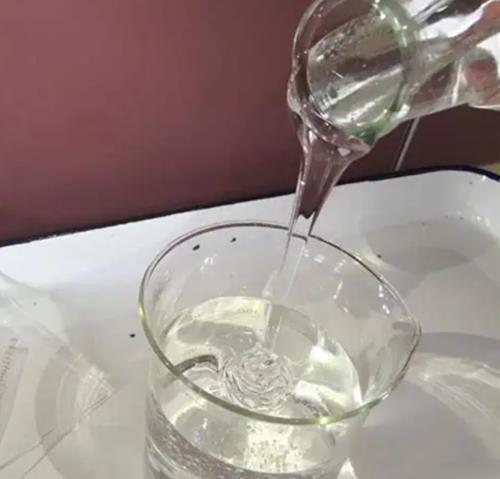
Synthesis of Vinyl terminated polydimethylsiloxane in An Active Medium
Polysiloxanes are extensively applied in many fields, including the cosmetic industry, electronics, biomedicine, artificial muscles, etc. Such a diversity of applications is owing to the unique properties of polysiloxanes: a wide range of working temperatures, weather resistance, inertness, hydrophobicity, chemical stability, low dielectric permittivity, etc. Among polysiloxanes, polydimethylsiloxanes (PDMSs) are renowned and form the base for silicone sealants, compounds, and rubbers. The main industrial method for obtaining Vinyl terminated polydimethylsiloxane involves the hydrolytic polycondensation of dimethyl- and methylvinyldichlorosilanes followed by the catalytic rearrangement of the hydrolysis product. However, this method presents complexities in controlling product composition, generates hydrochloric acid waste, and requires additional purification stages, including the stage of purification of the target copolymer from the equilibrium amount of cyclosiloxanes (10–15%) formed during the second stage. Considering the fact that the initial monomers for polymerization—cyclosiloxanes—are also obtained by the polycondensation of functional silanes, it seems a promising task to develop polycondensation approaches to Vinyl terminated polydimethylsiloxane PDMS synthesis that do not contain cyclic impurities, allowing for the control of the content of vinyl groups and molecular weight characteristics and not requiring equilibration processes.[1]
An alternative method for the preparation of vinyl-containing siloxanes is the ring-opening equilibrium copolymerization of octamethylcyclotetrasiloxane and 1,3,5,7–tetramethyl, 1,3,5,7–tetravinylcyclotetrasiloxane. Commercially available methylvinyldimethoxy- MeVinSi(OMe)2 and dimethyldiethoxysilane Me2Si(OEt)2 served as initial reagents to synthesize Vinyl terminated polydimethylsiloxane. Previous research has shown that the polycondensation process of alkoxysilanes in an active medium proceeds through a series of steps: the acidolysis of alkoxy groups, esterification involving free alcohol and acetic acid, the hydrolysis of acetoxy derivative from acidolysis with water, and the heterofunctional polycondensation of acetoxy- and hydroxy-derivatives, leading to the siloxane bond formation. The division of the process into two stages is formal, since at the postcondensation stage the distillation of cycles occurs simultaneously, which makes it possible to obtain a final polymer free of cycles. In this case, the composition of the resulting Vinyl terminated polydimethylsiloxane corresponds to the calculated ratio of monomers. The microstructure study of the copolymers synthesized revealed that the formation of the products was characterized by a random distribution of units (R~1) during copolymerization. However, an increase in the number of vinyl-containing monomers leads to an increase in the R parameter, thereby increasing the tendency for alternating links in the copolymer.
Polydimethylsiloxane–Polytetrafluoroethylene-Based Composit
Silicone-based elastomers are some of the most versatile functional materials with their stronghold in a vast array of applications since their commercialization in the 1940s. These elastomeric materials possess good tolerance with respect to a wide range of temperatures (−50 to 300 °C). The present work reports a systematic and detailed study on the effect of loading of fluorine-based reinforcing agents in the PDMS matrix at different mixing temperatures along with the hydride cross-linker ratio, particle size of the filler, and length of cross-linker taking into account the composites’ thermal and mechanical properties. Karstedt’s catalyst, Vinyl terminated polydimethylsiloxane with a vinyl content of 0.026 mmol g–1 and a viscosity of 65 Pa·s, octamethylcyclotetrasiloxane (D4), and hydride containing the PDMS cross-linker with an active hydride content of 7.91 mmol/g were provided by Momentive Performance Materials Gmbh, Leverkusen, Germany. Typically, the composites are prepared by mixing fluoro-based additive with the two-part LSR compositions. A two-component siloxane-based elastomeric material LSR 2050 and PTFE powder (>40 μm) were taken and blended together in various ratios, with PTFE loading varying from 5 to 10 wt %. The LSR compositions are made up of Vinyl terminated polydimethylsiloxane, hydride-terminated PDMS, and Pt catalyst. The compositions prepared were denoted by acronym LSF for liquid silicone fluorinated. Various blended formulations from LSF 5 to LSF 10 were prepared.[2]
By and large, most of the commercial two part addition curable silicone elastomer contains mixture of PDMS of different chain lengths. Hence, to further study the impact of incorporation of PDMS of different chain lengths, divinyl-substituted PDMS polymers were synthesized and were mixed in the optimized formulation. The model “D” systems used for the same are D100 and D150. Acid-catalyzed ring-opening equilibration reaction was performed for the preparation of desired chain length of Vinyl terminated polydimethylsiloxane. The effect of addition of Vinyl terminated polydimethylsiloxane linker containing different D lengths (D100 and D150) showed that the addition of smaller vinyl-terminated polymer (D100) was found to have a significant effect on the tensile strength, elongation at break, and tear strength of the material. A structure–property relationship of fluorine-based reinforcers for silicone polymers was made by evaluating the thermal, mechanical, optical, and morphological properties along with studying the effect of processing temperature, cross-linking ratio, filler loading and particle size, at various levels of the cross-linker.
References
[1]Khmelnitskaia AG, Kalinina AA, Meshkov IB, Tukhvatshin RS, Cherkaev GV, Ponomarenko SA, Muzafarov AM. Synthesis of Vinyl-Containing Polydimethylsiloxane in An Active Medium. Polymers (Basel). 2024 Jan 16;16(2):257. doi: 10.3390/polym16020257. PMID: 38257056; PMCID: PMC10819907.
[2]Kaur B, Kumar S, Mondal T, Phukan M, Saxena A, Dalavoy T, Bhowmick AK, Bhat S. Controlled Methodology for Development of a Polydimethylsiloxane-Polytetrafluoroethylene-Based Composite for Enhanced Chemical Resistance: A Structure-Property Relationship Study. ACS Omega. 2020 Aug 27;5(35):22482-22493. doi: 10.1021/acsomega.0c02585. PMID: 32923807; PMCID: PMC7482242.

You may like
See also
Lastest Price from Vinyl terminated polydimethylsiloxane manufacturers
US $0.00/KG2025-06-12
- CAS:
- 68083-19-2
- Min. Order:
- 1KG
- Purity:
- 10cs-100000cs
- Supply Ability:
- 200mt per month
US $60.00/kg2025-04-15
- CAS:
- 68083-19-2
- Min. Order:
- 1kg
- Purity:
- 99
- Supply Ability:
- 5000