Xanthohumol: Hop-Derived Bioactive Antioxidant
Xanthohumol (Xn) is a Bioactive Flavanoid Antioxidant molecule found in the flowering Hops Plant. It is 200 times more powerful than Resveratrol, the world renowned Antioxidant found naturally in Red Wine. The health benefits of Xanthohumol have been known for years, and in more than 200 research studies, it has been linked to a wide range of potential benefits.
Antioxidant Potential of Xanthohumol in Disease Prevention
Xanthohumol (XN) and its derivatives Isoxanthohumol (IXN), 8-prenylnaryngenin (8-PN), and 6-prenylnaryngenin (6-PN) belong to the group of flavonoids, naturally occurring and synthesized in plant cells with a particularly high abundance in common hops (Humulus lupulus L.). Flavonoids, including XN and its derivatives, play an essential role in proper plant development, being their first line of defense against environmental stressors, insects, and herbivores. These compounds affect the formation of unpleasant odors and tastes, which protects them from pests and neutralizes reactive oxygen species (ROS) through antioxidant action. Xanthohumol is abundant in hops, especially in the cones of this plant. Female hop inflorescences, used in the production of beer, are characterized by a high content of phenolic compounds, which give beer the characteristic bitterness desired by consumers. While traditionally considered waste, hop sludge (hot trub) and other by-products of brewing are now recognized as valuable sources of bioactive compounds, including XN and its derivatives. The aim of this study is to review current scientific evidence on the antioxidant functions of XN and its metabolites, focusing on their effectiveness as supplements in human and animal models. By consolidating findings from various studies, we seek to clarify the potential of Xanthohumol in preventing oxidative stress-related diseases and enhancing overall human health.[1]
This review emphasizes the antioxidative properties of xanthohumol (XN) as a central feature in its potential for supporting health, particularly in the context of modern diseases. XN’s strong antioxidant effects play a significant role in reducing oxidative stress, a contributor to inflammation and disease progression in conditions such as large intestine tumors, gastric ulcers, and neurodegenerative disorders. While conventional therapies often involve drawbacks like drug resistance and chemotherapy-related side effects, xanthohumol presents a promising alternative due to its antioxidative action and low toxicity, allowing it to be administered in varying doses without histopathological damage. Research suggests that XN’s antioxidative mechanisms also interact with cellular pathways linked to energy regulation and autophagy, especially in malignant tumors. Although this dual role has the potential to disrupt energy balance within cancer cells, it also highlights the complexity of XN’s effects in cancer treatment, particularly in cancers such as prostate and glioma, where antioxidative and metabolic actions could both suppress and inadvertently support tumor cell survival.
Beneficial Effects of Xanthohumol on Metabolic Syndrome
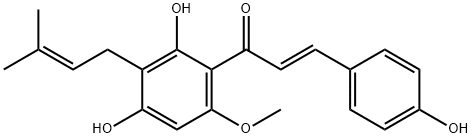
Metabolic syndrome refers to the simultaneous occurrence of several disorders including insulin resistance, (central) obesity, dyslipidemia, and hypertension. The aim of the present narrative review is to present the scientific evidence available on the beneficial effects of the phenolic compound xanthohumol in the prevention and/or treatment of several components of metabolic syndrome, obesity, dyslipidemia, insulin resistance, and fatty liver. To date, reported studies have been conducted either in culture pre-adipocytes, mature adipocytes and hepatocytes, or in animal models, but the studies addressed in human beings are lacking. Xanthohumol is a phenolic compound belonging to the group of flavonoids, more specifically to prenylflavonoids, which presents a structure of chalcone. It is found in the female inflorescences of Humulus lupulus (Cannabaceae), also known as hops (0.1–1 g/100 g dry weight). This compound belongs to a class of compounds that contribute to the bitterness and flavor of hops.[2]
The in vitro and in vivo studies gathered in the present review suggest that xanthohumol is a polyphenol with potential applications in obesity because it is able to reduce body weight and adipose tissue weights in animal models, as well as to improve some metabolic alterations related to this pathology, such as dyslipidaemias, insulin resistance, and fatty liver. Nevertheless, several drawbacks exist, and thus further investigation is needed. More studies should be addressed to establish a range of effective doses and to better characterize the mechanisms of action underlying the beneficial effects induced by this polyphenol. Finally, taking into account that the only relevant source of xanthohumol is beer, and that the amount of this polyphenol in this drink is low, probably the best way to enjoy the health benefits of xanthohumol is by using it as a nutraceutical in functional foods.
References
[1]Piekara J, Piasecka-Kwiatkowska D. Antioxidant Potential of Xanthohumol in Disease Prevention: Evidence from Human and Animal Studies. Antioxidants (Basel). 2024 Dec 19;13(12):1559. doi: 10.3390/antiox13121559. PMID: 39765887; PMCID: PMC11674025.
[2]Gómez-Zorita S, Proença C, Fernández-Quintela A, Moreno-Indias I, Portillo MP. Beneficial Effects of Xanthohumol on Metabolic Syndrome: Evidence from In Vitro and Animal Model Studies. Int J Mol Sci. 2024 Nov 19;25(22):12434. doi: 10.3390/ijms252212434. PMID: 39596505; PMCID: PMC11594861.
Lastest Price from Xanthohumol manufacturers
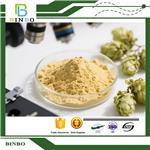
US $0.00/kg2025-11-04
- CAS:
- 6754-58-1
- Min. Order:
- 1kg
- Purity:
- 3% 5% 7% 30% 90% 98% 99%
- Supply Ability:
- 1000 kg
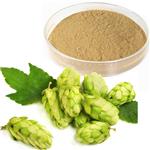
US $0.00/kg2025-04-21
- CAS:
- 6754-58-1
- Min. Order:
- 1kg
- Purity:
- 3%-99% HPLC
- Supply Ability:
- 1000kg